|
CONSTITUENT SPOTLIGHT
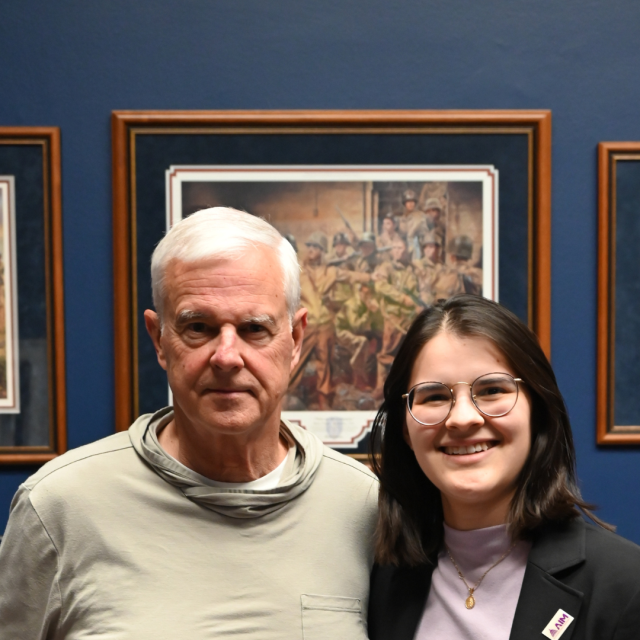
This week’s constituent spotlight goes to Magdalena Macias of Springdale.
I met Magdalena last week in Washington when she was visiting my office with the Alzheimer’s Association. This organization seeks to end all forms of dementia through research, early detection, and providing care.
Originally from Springdale, Magdalena graduated from the University of San Francisco in 2024 with a degree in biology and minors in both neuroscience and chemistry. Since graduation, she has worked as a research fellow at the National Institutes of Health (NIH). In the fall, Magdalena will continue her studies at John Hopkins School of Medicine.
I had the chance to ask Magdalena about her plans and passion for Alzheimer’s and dementia research. Read more below.
During our meeting, you shared your personal connection to dementia research and treatment. How has this experience motivated your work and studies?
Many people think of dementia as a single disease, but it is actually an umbrella term for conditions that cause a decline in cognitive abilities severe enough to interfere with daily life. Alzheimer’s disease is the most common form, but there are several others, including Frontotemporal Dementia (FTD).
When I was a teenager, my dad, Juan Antonio Macias—a hardworking and loving man who was always there for the people around him—began to change in ways our family couldn’t explain. What started as shifts in his mood and personality gradually progressed into speech difficulties, behavioral changes, and motor impairments. Several years after his symptoms first appeared, he was diagnosed with FTD. Unlike Alzheimer’s, FTD often affects behavior, personality, and language before memory and tends to occur in younger individuals. For our family, that diagnosis helped us understand what he was going through and how to best support him.
Watching him gradually lose the ability to communicate and engage with the world is what continues to drive my interest in neuroscience and my commitment to improving care and support for families navigating diseases like this.
Can you tell me more about your fellowship program at NIH? What has been the focus of your research?
For the past two years, I have been a postbaccalaureate research fellow at the NIH Center for Alzheimer's and Related Dementias (CARD). My research focuses on FTD, a young onset dementia that affects behavior, language, and personality. We are particularly interested in how changes at the molecular and cellular level contribute to disease pathology.
I’m surrounded by dedicated scientists working to answer some of the toughest questions in the field and advance understanding of diseases that affect a person’s thinking, communication, and independence. Given my family's experience with FTD, the work can be difficult at times, but it also gives me a great deal of hope. Seeing the determination of the people around me and the progress being made every day leaves me excited to learn, contribute, and be part of that effort.
What drew you to the John Hopkins program?
Choosing a medical school was a difficult decision, but Johns Hopkins felt like the right place for me. I was drawn to its strong neuroscience community, emphasis on innovation, and commitment to service rooted in patient-centered care. These three pillars have continued to shape my own path. Through my family's experience with frontotemporal dementia and my research at the NIH, I have seen both the urgency of scientific discovery and the importance of human connection in medicine. I believe Hopkins will challenge me to grow as both a physician and a scientist, preparing me to care for patients and families facing devastating diseases while also helping bring future families the answers and treatment options that mine never had.
You also mentioned that you have been participating in an early screening process for Alzheimer's and other forms of dementia. How does this process help individuals understand more about their genetic predisposition towards these diseases? How does it help dementia research as a whole?
Early detection in dementia is not just about awareness, but also about intervention. There are available treatments specifically for Alzheimer's to manage symptoms and slow the disease's progression; however, they are most effective at early stages, before significant cognitive decline has occurred.
Because of my family history, I chose to have a brain MRI done to establish a personal baseline for my brain health. It was a meaningful step, but also a time-intensive and expensive one, even with insurance. More recently, blood-based biomarkers have emerged as a promising and more accessible way to detect Alzheimer’s-related changes earlier than ever before. While these advances are exciting, they are not diagnostic on their own and must be interpreted in the context of a full clinical evaluation by a neurologist or specialist.
That experience reinforced for me how important early detection and accurate diagnosis are for patients and families. Research focused on genetics and biomarkers helps scientists better understand how these diseases develop long before symptoms appear, and how they might be identified and monitored earlier. It also gives individuals who participate in studies the opportunity to better understand their own risk while contributing to discoveries that move the field forward.
The impact of these advances depends not only on scientific progress, but also on access. If early detection is going to improve outcomes, it cannot be limited to those who are able to afford it. Expanding access to tools ranging from imaging to blood-based testing is one of the most important steps we can take for patients, families, and the future of the field. After all, progress in dementia research is made possible through the participation of individuals and families who choose to contribute to the search for answers.
Is there anything else you'd like to share with readers about yourself, your research, or your family?
Growing up in Arkansas, including my time in the Medical Academy at Springdale High School, taught me the importance of community, resilience, and service to others. That is where my interest in medicine first began, and I now carry that foundation with me as I begin training as a medical student. Those values continue to shape my belief that progress in medicine depends on both scientific discovery and human connection.
Also, my family’s experience with FTD has shown me how isolating and complex these diseases can be, and how important it is to have organizations such as the Association for Frontotemporal Degeneration and the Alzheimer’s Association that provide education, support, and connection for patients, as well as the families and caregivers who walk alongside them.
Although my journey now continues in Baltimore, my roots will always remain in Arkansas and in the people who shaped me, especially my parents. I carry that perspective with me and the reminder that it is communities and relationships that make it possible to face even the most difficult challenges. |