|
We Cannot Subsidize Our Way Out
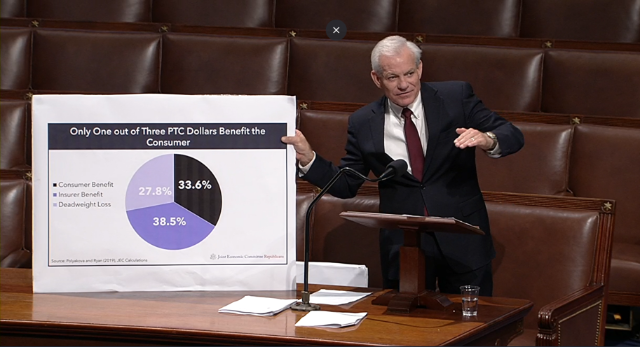
On the House floor, I walked through a reality Washington keeps dodging. Some economists now warn that, under current policy, we would need 104% of a child’s lifetime income to cover pension and health care promises. That is not politics. That is math. We have fewer 18-year-olds than 20 years ago, and nearly double the number of Americans 65 and older. Interest is now the No. 2 expense in the federal budget, ahead of Medicare and defense. We are still on track for roughly a $2 trillion deficit, and in the first quarter we spent $1.62 for every $1 that came in. On health care, the Affordable Care Act covers about 7% of the market, yet massive subsidies are growing, and fraud is rampant. Meanwhile, Medicare spending is projected to double from $1 trillion to $2 trillion within seven years as the trust fund runs out. We can keep writing bigger checks, or we can legalize and deploy innovation that lowers costs and improves outcomes.
Stop Paying More for Less
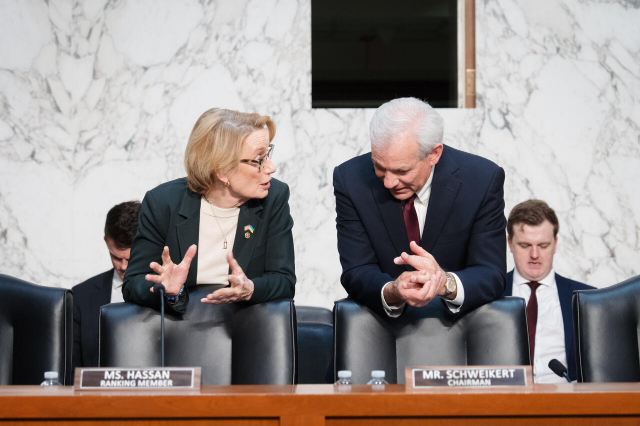
This week, I chaired a Joint Economic Committee hearing on a problem Washington keeps dodging. We have turned health care into financial engineering. We argue about who gets subsidized and who pays. We do not obsess over what actually makes people healthier or what drives prices down. The math is getting uglier. Our model shows the Medicare trust fund is empty in seven years. Medicare spending goes from about $1 trillion to $2 trillion over that same period, driven by demographics and inflation. That is not just an ACA issue. It hits the entire health system. What frustrates me most is how many innovations are illegal or blocked by bureaucracy and rent-seeking. We have medical breakthroughs that would have sounded like science fiction a generation ago, yet costs keep outrunning those breakthroughs. We have to realign incentives toward prevention and outcomes. Two years ago, our JEC work found obesity could drive $9.1 trillion in added health spending over 10 years. We are also modeling what new technologies could mean for Medicare, including the fact that we estimate 31% of the Medicare population is diabetic.
Recognizing Some Amazing Constituents of AZ-01!

It is an honor to announce the winners of the 2025 Congressional App Challenge. We had many talented students compete and show off their coding skills. Congratulations to our winners and thank you to all who participated!
1st Place – Humaid Jaffery with his app DreamSeal. DreamSeal looks to improve the CPAP experience using facial scanning and 3D printing to create customs fitted masks for users.
2nd Place - Anagha Vippagunta with her app RetinAlyze. RetinAlyze uses AI-powered tools to detect diabetic retinopathy and connect users with doctors, ask questions, and store data.
3rd Place - Ishita Sathe with her app HearMee. HearMee addresses the need for mental health support for youth by allowing users to engage with each other on discussion topics and use AI-powered tools to help navigate user challenges.

It is an honor to recognize Dante Cericola for obtaining the rank of Eagle Scout. Dante has proven to be an exemplary young man, serving his fellow scouts and his community with distinction. Dante worked diligently towards this goal and completed maintenance of the trailheads at Piestewa Peak for his Eagle Scout project. Congratulations Dante, thank you for your service to our community!
New Scholarship Tax Credit for K-12 Scholarships Starts in 2027
Treasury and the IRS just issued Revenue Procedure 2026-6 to help states get ready for a new federal tax credit created by the One, Big, Beautiful Bill. Starting Jan. 1, 2027, taxpayers can claim a nonrefundable credit of up to $1,700 for cash contributions to Scholarship Granting Organizations that provide scholarships for K-12 students from low- and middle-income families. For a contribution to qualify, the SGO must be on a state list, and the state must voluntarily elect to participate. States can now make an Advance Election using Form 15714, which is available on IRS.gov. The form can be submitted on or after Jan. 1, 2026, and it must be filed before the deadline for submitting the state’s SGO list. Treasury and the IRS will provide more guidance on the SGO list process and on elections for future years.
What I'm Reading and Why it Matters
UBS chief strategist: Market is not in a ‘bubble’, but US debt poses the real risk
I’m tracking a new warning from UBS chief strategist Bhanu Baweja that today’s market is not in a classic “bubble,” even with narrow leadership, but that the real volatility risk is America’s debt trajectory. He noted that nine companies in the Russell 3000 have driven 72% of recent gains, yet he argues today’s market leaders have stronger margins and lower net debt than past eras. His bigger concern is the pace of federal borrowing: The U.S. built about $27 trillion in debt over roughly 235 years, and he warns we could issue the next $27 trillion in the coming decade. That flood of Treasury supply could start to erode the “risk-free” assumption behind Treasuries and ripple through rates, mortgages, and household costs |