|
What the Calculator Says About Our Debt
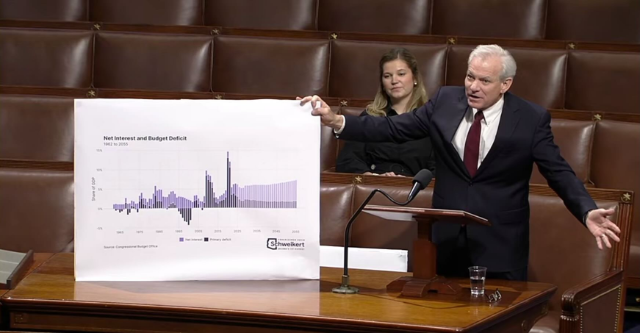
Most weeks I come to the House floor for what I half-jokingly call “therapy with a calculator.” My job is to put hard numbers on problems that usually get buried under slogans.
Right now the headline is simple. The economy looks surprisingly strong on paper, but the federal balance sheet is on a path that will crush the next generation if we do not change course.
From a GDP standpoint, growth has been running north of 5 percent, roughly double what many forecasts expected a year ago. Tax receipts are up as well. For years the federal government took in about 17.1 percent of the economy in taxes. We are now a little over 18 percent.
If you stopped there, you might think we had turned the corner.
Here is the problem. Even with that growth and higher receipts, Washington spent the equivalent of 23.4 percent of the economy. Last year, for every dollar that came in, we spent about $1.43. The drivers of our debt are not a mystery. They are demographics, interest and health care.
Demographics first. We have roughly the same number of 18 year olds today as we did 20 years ago. We have about twice as many Americans who are 65 and older. That is not partisan. It is just math. As more of our brothers and sisters move into their earned benefit years, the cost of keeping the promises we have already made explodes.
In just a few years, about half of every dollar Washington spends will go to those 65 and up. Around 2035, roughly 30 percent of all federal tax receipts will go just to interest on the debt. Not defense or infrastructure. Just interest.
One economic paper put it in even starker terms. Using a standard discount rate, a child born today would need 104 percent of their lifetime earnings just to cover federal pension obligations such as Social Security, Medicare, military and federal retirement. Every dime they earn over a lifetime, plus more, to pay for promises we already booked.
On top of that, we are currently borrowing about $71,000 every second. A huge share of what we already owe has to be refinanced in the next few years at higher interest rates than we paid in the past. When bond markets get nervous about our seriousness, they demand higher yields. That does not just raise the cost of government borrowing. It flows through to credit cards, car loans, mortgages and business lines of credit.
Where is the money going? Social Security is now the largest line item. Interest on the debt is number two at roughly $1.2 trillion last year. Medicare is number three. Medicaid and health care subsidies are number four. Defense is fifth.
That surprises a lot of people. It is why I keep saying you cannot fix this with a slogan about “cutting waste in Washington.” Discretionary spending matters, and there is fraud to go after, but it is not the main driver of the long term debt.
Health care costs are. Medicare spending alone is on track to double from about $1 trillion to $2 trillion over the next seven years. Major federal health programs grew around 9 percent in a year when the economy grew around 5 percent. That gap is the deficit.
The most striking example is Medicare Advantage. Seniors like it. I want to protect it. But the MedPAC reports tell us it now costs about 120 percent of traditional fee for service Medicare, even though the program was designed to come in at 95 percent. That 25 point spread translates into nearly $2 trillion in misaligned payments and games over 10 years.
That is where an honest Congress would start.
If we are serious about saving the programs seniors depend on and protecting the next generation from a tax code that has to be doubled just to keep the lights on, we have to go after two things.
We need to fix Medicare Advantage so it delivers the care seniors want at the price we actually promised instead of rewarding risk coding games and creative accounting. And we need to finally legalize the technologies and care models that can crash the cost of health care instead of treating them as threats to the status quo.
None of this is easy. It is much simpler to give another speech that pretends the problem is someone else’s line item. But I believe the American people are smarter than Washington gives them credit for. They are ready to hear the truth about the math, and they deserve a Congress that stops lying about how this ends if we do nothing.
Fixing the Medicare Advantage Math
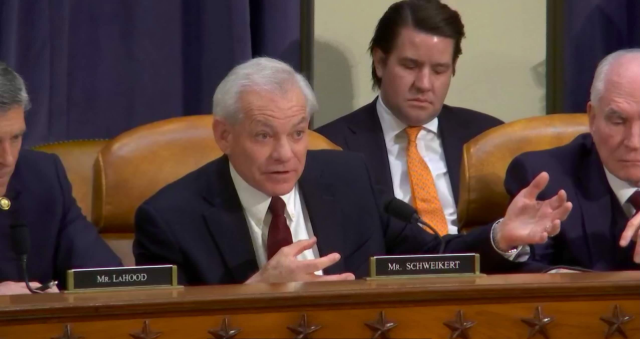 At this week’s Ways and Means hearing with the big insurance CEOs, I pressed Stephen Hemsley, who leads UnitedHealth Group, on a basic piece of math. Medicare Advantage was created to save money. So why has MedPAC warned for a decade that it is costing around 120 percent of traditional Medicare when Congress designed it to come in at 95 percent or less? At this week’s Ways and Means hearing with the big insurance CEOs, I pressed Stephen Hemsley, who leads UnitedHealth Group, on a basic piece of math. Medicare Advantage was created to save money. So why has MedPAC warned for a decade that it is costing around 120 percent of traditional Medicare when Congress designed it to come in at 95 percent or less?
Here is the blunt reality. Medicare is on track to double in cost over the next seven years, from roughly $1 trillion to $2 trillion. The Medicare Part A trust fund is projected to be insolvent in about six and a half years. If we duck the hard work now, the only options left later will be painful cuts or massive tax hikes on the next generation.
In the hearing, I told Mr. Hemsley I am willing to put my Joint Economic Committee health care economists at the table with his actuaries and walk through the numbers together. My view is that we need to realign the incentives in Medicare Advantage so that plans are rewarded for helping people stay healthier, not for gaming the code book. That means cleaning up overpayments and misaligned bonuses, restoring real risk sharing based on outcomes, and embracing technology that actually drives costs down instead of just moving them around.
If we get the design right, we can protect seniors’ access to the plans they like, protect taxpayers, and keep Medicare sustainable for the long term. But that starts with telling the truth about the math.
International Holocaust Remembrance Day
 On International Holocaust Remembrance Day, we remember the six million Jews murdered in the Holocaust and the communities erased with them. Our responsibility is to confront antisemitism wherever it appears and tell the truth about this history so this kind of evil is never allowed to happen again. On International Holocaust Remembrance Day, we remember the six million Jews murdered in the Holocaust and the communities erased with them. Our responsibility is to confront antisemitism wherever it appears and tell the truth about this history so this kind of evil is never allowed to happen again.
Tax Filing Season Has Officially Started

The IRS opened the 2026 tax filing season on January 26. It is now accepting 2025 individual income tax returns, and the filing and payment deadline this year is April 15. The agency expects to receive about 164 million returns, with most filed electronically.
This is the first year many provisions of the One Big Beautiful Bill are fully in effect on tax returns. Key changes include: no federal income tax on overtime pay, no federal income tax on tips, no federal tax on Social Security benefits for roughly 88 percent of seniors who receive them, an expanded Child Tax Credit and Adoption Tax Credit, and an enhanced standard deduction. There are also broader small business tax breaks and new Trump Savings Accounts to help households save on a tax-favored basis.
Taxpayers can find updated forms, guidance, and online tools for filing and refunds at IRS.gov
What I'm Reading and Why it Matters
AI-powered wearable boosts preventative care for the elderly
University of Arizona researchers just built a soft mesh “sleeve” that goes around a person’s thigh and quietly tracks how they walk. The device uses on-board AI to flag early signs of frailty and sends a simple result to a phone, without streaming huge amounts of data or needing high-speed internet.
Frailty hits about 15 percent of Americans over 65 and often shows up first as a fall and a hospital bill. I pay attention to work like this because it is exactly the kind of preventive, low-friction technology that can help seniors stay independent and bend long-term health costs in the right direction. |