|
Security Alerts: Travel in Parts of Mexico
Security Alert: Travel in Parts of Mexico
The U.S. Embassy in Mexico has issued an updated security alert for several regions, including parts of Jalisco (Guadalajara, Puerto Vallarta), Baja California (Tijuana, Ensenada), Quintana Roo (Cancún, Cozumel, Playa del Carmen, Tulum), Nayarit, Sinaloa (Mazatlán) and other states. Because of security operations, roadblocks and criminal activity, U.S. citizens in the affected areas are being urged to shelter in place. U.S. government staff in several cities will also shelter in place and avoid travel to Mazatlán through Wednesday, Feb. 25.
Most domestic and international flights in and out of Guadalajara and Puerto Vallarta have been canceled. Rideshare services are suspended in Puerto Vallarta, and some businesses have temporarily closed. Mexican authorities have also reduced operations on select toll roads because of blockades.
If you or a family member are in one of the affected areas:
Seek shelter and avoid nonessential travel.
Stay clear of areas with active law enforcement operations.
Monitor local media and check @CAPUFE on X for road closures.
Follow local authorities’ instructions and call 911 in an emergency.
Keep family and friends informed of your location and safety.
For assistance, U.S. citizens can contact the U.S. Embassy and Consulates in Mexico at (55) 2579-2000 (from Mexico) or 011-52-55-2579-2000 / +1-301-985-8843 (from the U.S.), or the State Department’s Consular Affairs line at +1-888-407-4747 or +1-202-501-4444. Additional information and updates are available through the Embassy’s contact form, the Mexico International Travel Information page and the Smart Traveler Enrollment Program (STEP).
Supreme Court Tariffs Ruling
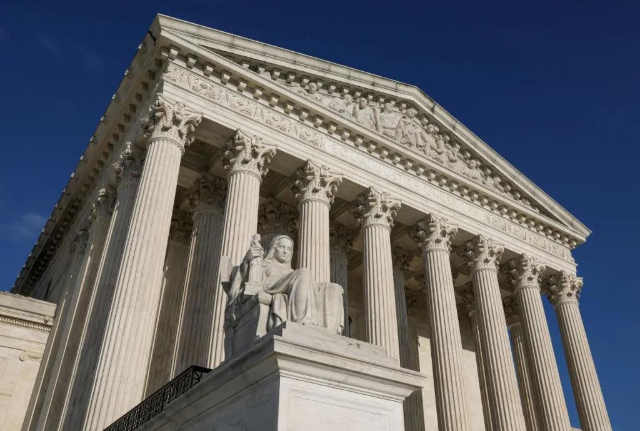
This week the Supreme Court ruled that under the International Emergency Economic Powers Act the President does not have the authority to impose tariffs. That decision wiped out part of a tariff-based approach to trade and showed again how unstable that tool can be.
As federal spending keeps climbing we have to be honest about the math. If we want to sustain essential programs and protect our fiscal health we need a tax system that produces stable, predictable receipts without choking off growth.
I believe the better path is a border adjusted, destination based cash flow tax. It taxes business activity based on where goods and services are bought and used rather than where they are made. Imports are taxed and exports are not, so the tax base follows what Americans consume here at home.
Because it is a cash flow tax, businesses are taxed on what they earn after their costs, with immediate deductions for investment. That helps simplify the code and encourages companies to reinvest and grow. By taxing imports and exempting exports it is designed to strengthen U.S. competitiveness and reduce the incentive to move production overseas. Economists expect the value of the dollar or prices in the economy to adjust so we do not see a permanent jump in the cost of imported goods.
For me this is about keeping U.S. workers and production competitive while building a more reliable stream of revenue as federal spending pressures keep building.
March 5th: "Slam the Scam" Day

On March 5, 2026, during National Consumer Protection Week, Social Security and its Office of Inspector General are holding National Slam the Scam Day to help people spot imposters and hang up before they get your money.
Key red flags to watch for:
Someone calls, texts, or emails you out of the blue about a “problem” or surprise benefit.
They push you to act right now.
They demand payment in gift cards, crypto, wire transfers, gold bars, or cash and may claim it is to “protect” your accounts.
What you can do:
Learn more at ssa.gov/scam and share the information with friends and family.
Report Social Security-related scams to the SSA Office of Inspector General at oig.ssa.gov/report.
Report other fraud to the FTC at reportfraud.ftc.gov.
Raising awareness and reporting suspicious calls is still the simplest way to starve these scams of victims.
Phoenix Area FAA Modernization
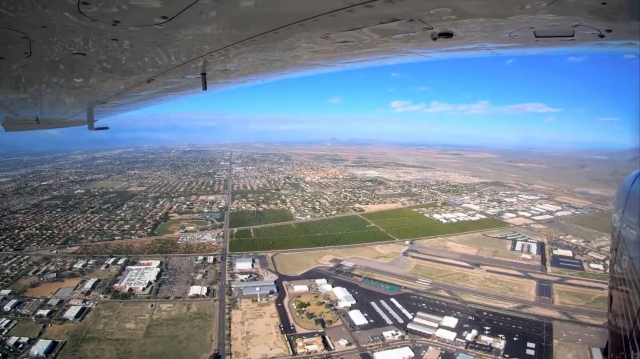
The FAA is planning new satellite-based flight paths for Sky Harbor and nearby airports. These “Performance Based Navigation” routes are meant to tighten safety, move planes on more direct paths and cut down on delays.
The FAA will hold four virtual public workshops in May to explain the proposed changes, the draft environmental assessment and a new noise map tool:
May 13, 10–12 p.m. MT: Phoenix Sky Harbor (PHX)
May 14, 5–7 p.m. MT: West Valley (Glendale, Goodyear, Buckeye)
May 19, 5–7 p.m. MT: North Valley (Deer Valley, Scottsdale)
May 20, 5–7 p.m. MT: East Valley (Falcon Field, Mesa Gateway, Chandler, Stellar Airpark)
Spanish translation will be available. No pre-registration is required. The FAA will post the draft EA and the interactive noise map about two weeks before the workshops so neighbors can review the information and come prepared with questions.
What I'm Reading and Why it Matters
AI agents emerge as a key retail trend for Arizona businesses
AI agents are starting to show up in small and mid-sized Arizona businesses. They watch sales and stock in real time and help owners decide what to order, when to move product, and how to set prices. That can mean fewer empty shelves, less cash stuck in slow inventory, and a little more breathing room on tight margins. This is the kind of quiet innovation that helps local employers stay alive in a very unforgiving market.
|