|
|
|
LAST THREE WEEKS IN REVIEW |
|
Good morning. I’m your Representative in Congress, and I write to keep you informed. Happy Hanukkah and Merry Christmas.
|
|
|
|
|
|
|
Going to bat for the independent pharmacists who dispense drugs and the medical scientists who invent them
|
|
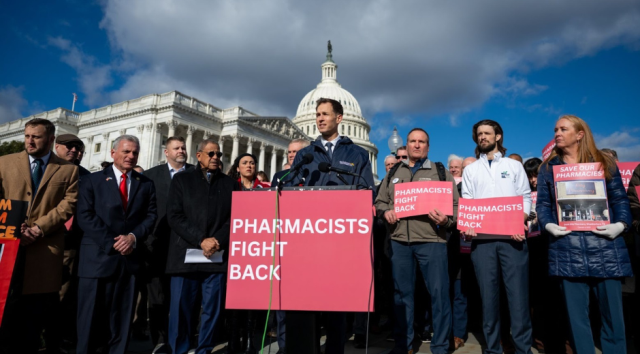
Pharmacists Fight Back: Americans want lower prices and a fair shot for small businesses. Too much of the economy is captured by monopolists and middlemen. Pharmacy Benefit Managers (PBMs), the brokers of Rx drug pricing, are both. Last week, I introduced the Pharmacists Fight Back Act – the most muscular PBM reform introduced this Congress. This bipartisan legislation will stop unfair tactics, support community pharmacists, and lower Rx drug prices.
Over 50 independent pharmacists from 18 different states attended the press conference in front of the Capitol. With support from left to right, from Rashida Tlaib to James Comer, Pharmacists Fight Back has broad momentum because it puts independent pharmacists and patients on the level playing field they deserve.
Here’s a portion of my remarks from the press conference:
“On average, one independent pharmacy closes every day in the United States. These are our neighbors, Main Street fixtures, and trusted medical providers. Their struggle to simply stay in business and serve patients is an exemplar of a U.S. economy that increasingly favors monopolists and middlemen instead of small businesses and their customers. Congress must act to restore an economy that works like Legos, not Monopoly, and it starts with fighting for independent pharmacists.
You can see by the ideological diversity of the members of Congress who are on this legislation, that this is an idea whose time has come. I'm grateful to the 57 pharmacists who made it here today, many of whom in rural areas, are their town's only health care provider. With their support, we reached 55 co-sponsors for Pharmacists Fight Back by the end of last Congress…We won't stop there. I encourage my fellow members to sponsor the Pharmacists Fight Back Act and pass PBM reform.”
Erik Jacobs/Anthem Multimedia
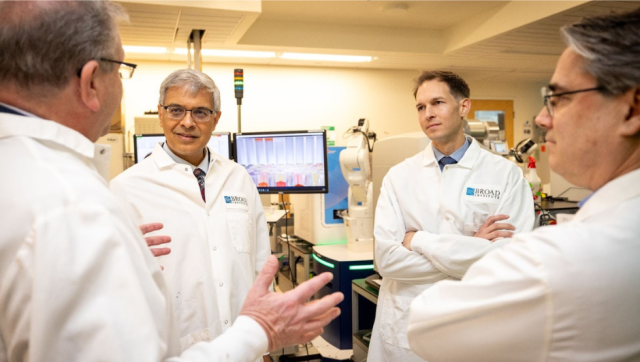
Bringing the NIH Director to Boston: I recently hosted Dr. Jay Bhattacharya, Director of the National Institutes of Health, in Massachusetts.
Representative Richard Neal and I convened a conversation in Boston between the Director and 60+ CEOs and R&D executives from across our Eds & Meds economy. These leaders listened to the Director's priorities, including reproducibility and more support for high-risk and early-career research. They also conveyed the damage from last year's funding disruptions and expressed concern that, even if freezes do thaw moving forward, a pivot to multi-year grants (pushed by Russell Vought at Office of Management and Budget) will deny many investigators any funding at all for promising ideas.
The Broad Institute of MIT and Harvard then showed the Director frontier science that's too big & cross-cutting for typical academic labs to take on. These projects include automated bio-manufacturing, genetic surgery, DNA sequencing in hours for at-risk newborns, and the genetic etiology of schizophrenia, Parkinson's and Alzheimer's disease. The ROI of this research is not just single treatments – it is new platforms and possibilities for whole domains of science. The NIH makes it possible, and Massachusetts makes it happen.
Finally, I interviewed the Director at Massachusetts Institute of Technology in front of 200 scientists, who then asked him questions. The Director made the case for his unified portfolio strategy, in which Institute Directors have more prerogative to fund innovative grants that don't make the payline cut. The Director argued that study sessions have become too cautious. Scientists in the audience agreed that peer review culture needs to be less negative but were concerned that weakening the payline would introduce politics into funding decisions. The Director also heard, again, that morale among scientists is low. You can watch the fireside chat here.
Improving this morale is a primary reason I arranged for the NIH Director to engage directly with Bay State researchers. The NIH and Massachusetts need one another, and that relationship needs to be built upon trust, dialogue, and accountability.
|
|
|
Introducing the UnAnxious Generation package of social media regulations
|
|

Bulldozing the social media corporations: The typical child in America spends less time outdoors than a federal inmate. Ahead of the Energy and Commerce Committee’s December 2nd hearing “Legislative Solutions to Protect Children and Teens Online," I introduced my legislative package, The UnAnxious Generation. My legislation bends the business models of these trillion-dollar social media companies towards accountability and away from an economy of endless scrolling.
Charlotte Alter of TIME broke down each of my three bills – two of which are bipartisan – designed “to tighten oversight of social media platforms, expand safeguards for children, and tax advertising revenue from major tech companies to fund education initiatives.”
“Tackling legal immunity
First, the bipartisan Deepfake Liability Act—cosponsored with Utah Republican Rep. Celeste Maloy— revises Section 230 of the Communications Decency Act, which provides broad immunity for digital platforms hosting user-generated content. The bill would make that immunity conditional on establishing a duty of care to address deepfake [intimate image violations], cyberstalking, and digital forgeries. It also clarifies that AI-generated content is not covered under Section 230.”
“Taxing digital advertising revenue
Auchincloss also introduced the Education Not Endless Scrolling Act, which would implement a 50% tax on digital advertising revenue over $2.5 billion. “This is for the major social media corporations,” he explains, “not the recipe blogs.” That money would then go towards funding a national one-on-one tutoring program in American schools, a local journalism trust, and a career and technical education fund for kids.”
“Expanding safeguards for young users
Finally, the bipartisan Parents Over Platforms Act— cosponsored with Rep. Erin Houchin, an Indiana Republican— would close loopholes that allow kids to evade age restrictions on social media apps. Currently, many apps like Instagram and TikTok ask users their age upon sign-up but have no way to independently verify that information. At the same time, critics of age-related internet laws worry about the privacy implications of kids providing personal data across dozens of apps. Under the bill, parents would provide a child’s age to the App Store when setting up their phone. The App Store would then be required to communicate that age range to relevant apps, ensuring that kids under 13 are unable to access restricted platforms.” |
|
Should Congress create an age assurance framework to give parents more confidence and control over their children’s access to apps? |
|
|
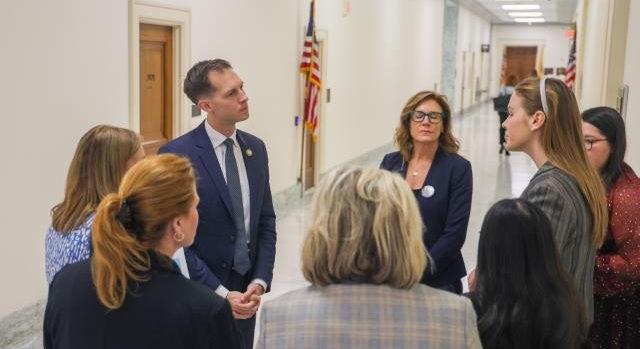
Parent advocates in Washington: Parents RISE was recently founded by parents who have lost children to online harassment and are pushing back against predatory social media platforms. They have teamed with the Young People's Alliance, a youth-led and youth-run nonprofit that has 55 campuses across the country, working to bring young voices into policy formation.
I discussed my package of social media bills, The UnAnxious Generation, and my efforts to take on Meta and other social media giants to empower families and restore parental control. I'm grateful for their support and look forward to working closely with them as we battle the most powerful lobby in Washington.

250 years of America with The Atlantic: I sat down with Jeffrey Goldberg, editor-in-chief of The Atlantic, for the inaugural event of its “America at 250” series in Boston, discussing the future of democracy and the lessons from our founding ideals. Here’s an excerpt in response to a question about young men in which I discuss channeling them away from digital dopamine and towards building the next 250 years of our nation’s history, IRL:
“You tell them where they’re going and what they’re building. You say we need you. This country needs you. We’ve got 5 million homes to build, we’ve got to build 5 Hoover Dams’ worth of nuclear energy, we’ve got to build more ships than the Chinese Navy. Get to work, go to a trade school, join a local union – join the military. There’s a lot of ways to be part of a team that’s building stuff, but go build.”
|
|
|
Opposing blood for oil in Venezuela
|
|
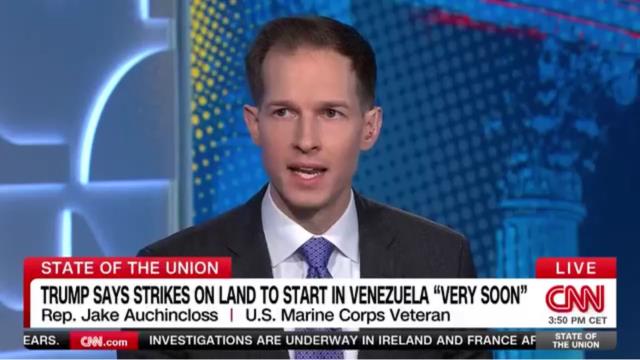
Venezuela is about oil not drugs: I joined CNN’s “State of the Union” panel with Dana Bash to discuss Trump’s saber-rattling in Venezuela. He’s threatening to repeat the mistakes of Iraq, where President George W. Bush claimed democracy was at stake but in reality wanted access to oil. Blood for oil was wrong then, and it’s wrong now.
I voted for two different measures this week to remove the president’s power to engage in what the administration calls ‘non-international armed conflict’ with Latin American nations or organizations, absent congressional authorization. The president and Secretary Pete Hegseth are violating the law by turning law enforcement operations – the interdiction of drugs – into military action. Furthermore, the Secretary has no justification for his order to kill shipwrecked crew members.
The United States should support María Corina Machado as the rightful leader of Venezuela using both carrots and sticks against the Maduro regime. It should also disrupt narco-trafficking, within the bounds of law, from both Latin America (cocaine) and China (fentanyl). But it should not deploy the military against Venezuela or other organizations without congressional authorization.
|
|
|
Mourning & reflecting with constituents in the district
|
|

Reflecting on Hanukkah and the Bondi Beach attack: On the first night of Hanukkah, I spoke at the menorah lighting ceremony on the Newton Centre Green to commemorate the tragedy that occurred in Australia earlier that day. Jews were targeted during a menorah lighting ceremony on Bondi Beach in an antisemitic terrorist attack. I shared a joint statement from my 24 fellow Jewish House Members:
“On a night meant for celebration, Jewish families in Australia, gathering in joy and peace on the first night of Chanukah, were grotesquely targeted with hate and murderous intent. Sadly, this attack does not come as a surprise to the Jewish community of Sydney, who have been raising a clarion call for local and national authorities to take concrete steps against a rising tide of antisemitism.
We stand in solidarity with the Australian Jewish community and together extend our condolences to the family and friends of the people murdered, and are praying for the complete recovery of the dozens wounded and the entire Jewish community feeling besieged. Antisemitism is a cancer that eats at the core of society, whether in Australia, the United States or anywhere it is allowed to take root and grow.
We join leaders around the globe in condemning this evil act and in calling for justice, peace and unwavering support for those affected. We also call on all leaders to do better, to do better in standing up to antisemitism, bigotry and hate. We must also do better in our work for a world where everyone can celebrate their faith and traditions.”
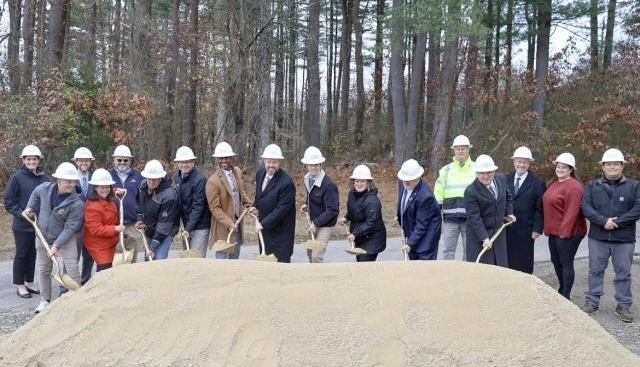
Upgrading Plainville’s water infrastructure: Working with Plainville's state & local officials, I secured $1.5M in federal funding to help upgrade the town's water treatment facility. The Bipartisan Infrastructure Law made possible greater federal investments in clean water, which is especially impactful for Massachusetts because the Commonwealth has aging water infrastructure and a legacy of industry that operated before science and standards to protect the environment. Serving on the committee with jurisdiction over the Environmental Protection Agency, I'm committed to supporting continued investments in clean water, air, and soil that reflect the best evidence on human and environmental health.
The shootings at Brown University and in Brookline: South and north of the Massachusetts Fourth were rocked by violence this past week. A mass shooting at Brown University, just across state lines to the MA-04 and employer to many of my constituents, robbed two young students of their lives and traumatizes the community. In Brookline, MIT Professor Nuno Louriero, father of three children, was gunned down at the entrance to his home.
Reporting this morning indicates that both attacks have the same gunman, who has been found dead in New Hampshire.
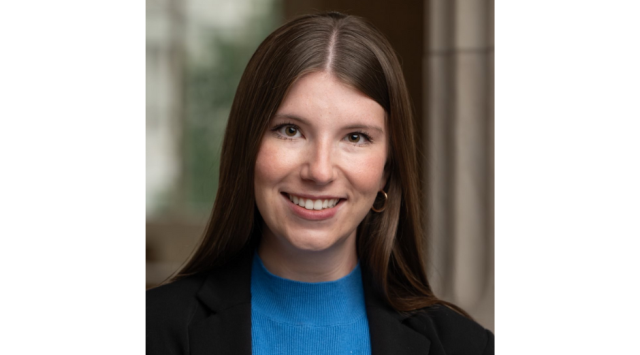
Team Auchincloss’ operational linchpin: My scheduler, Jessica Pettis, was recently honored at The Ripon Society and Franklin Center’s 14th Annual Unsung Heroes Awards bipartisan luncheon. This year’s honorees included several Deputy Chiefs of Staff, Operations Directors, and Schedulers – all who keep Capitol Hill running behind the scenes. Jessica is professional, responsive, and organized at all times and a credit to our office.
|
|
|
Town hall: the year in review
|
|
|
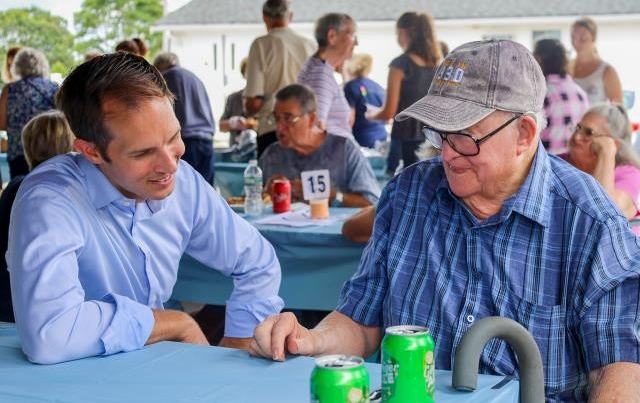
Hundreds of constituents joined me for a year-in-review Zoom town hall. My incoming District Director and Legislative Director shared debriefs on constituent services and policy development, while I shared my outlook on the state of play in Congress for health care, social media regulation, and reining in the president's abuse of the military and ICE. The final 45 minutes were questions from attendees, ranging from drug-pricing reforms to Venezuela to a governing philosophy for Democrats.
While it's frustrating to serve in the minority in Congress at a moment when the Speaker is sidelining Article One in the fight against Orbanism, my staff and I have still been able to deliver on values and priorities for the district. We've held more than two dozen town halls, completed 1,200 casework requests and helped return $14M in tax returns.
We've also assisted immigrants in our district under duress. The president’s recent orders to collectively punish Afghans, cancel naturalization ceremonies, and harass law-abiding foreign-born residents are a stain upon a national history written by immigrants. I reiterate to all my immigrant constituents that my office is here to help.
I also gave an overview on my recent work in Washington referenced above; introducing hard-hitting, bipartisan legislation to hold accountable social media corporations and the middlemen of drug pricing, pharmacy benefit managers. Both sets of bills will move. Through oversight measures, I've also been able to counter RFK Jr. and his crew of conspiracists as they wage war against vaccines and engage in industrial-scale grift in the wellness industry.
The minority is a challenge but not an excuse. In this next year, I'll continue to use every lever of power available to me to defend democracy, lower prices, and protect public health and safety.
|
|
|
|
Question: In a previous newsletter, you said: "Democrats should make curing Alzheimer's Disease the nation's flagship scientific project."
How do you plan to rally support from your fellow Democrats to gain momentum around this important project? And given the current state of public health in our country with RFK Jr. at the helm, what can Democrats do to bring their Republican colleagues on board so that this initiative has bi-partisan support? Alzheimer's Disease does not care what your party affiliation is - it wrecks havoc and is extremely costly no matter who you voted for. I would hope that finding a cure for it would be an issue with universal support.
- Caitlin, Newton
Answer: By 2050, it is projected that 15 million Americans will suffer from Alzheimer’s. Each will require up to three caregivers. To avert this staggering moral and material burden, the United States should make it its mission to cure this disease. I’m working on three bipartisan ways to help. First, I’m seeking to protect the funding and integrity of the National Institutes of Health from political interference, while working to increase its budget and its propensity to support high-risk, contrarian, and early-career research. Second, I’m working with research institutions and other members of Congress to launch a bio-bank initiative, in which human tissue can be appropriately shared to unlock frontier research into genetic and environmental causes of disease. And finally, I’m working across the aisle to make clinical trials better, faster, and cheaper. Clinical trials are the most expensive & laborious part of drug development, so improving them gives researchers more shots on goal for testing ideas in evidence-generating settings.
You can listen here to an interview in which I discuss the Alzheimer’s project.
You can submit a question for a future newsletter here. Please note that casework inquiries for federal agencies must be submitted to my website here. My casework team will respond to these in a timely manner. |
|
Happy holidays! |
|
|
|
Jake |
|
|
|
|
|
|

|
|