|
|
|
LAST TWO WEEKS IN REVIEW |
|
Good morning. I’m your Representative in Congress, and I write to keep you informed. |
|
|
|
| RFK Jr. hearing: giving voice to sidelined FDA scientists |
|
|
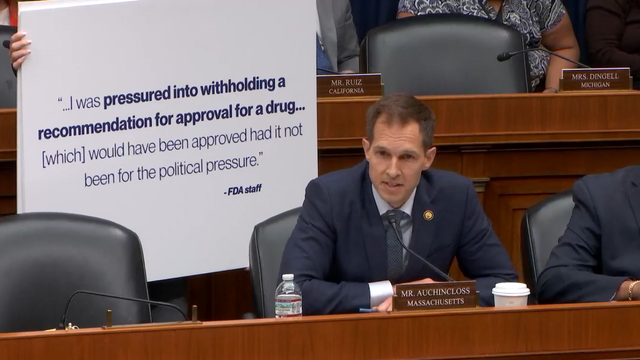
When RFK Jr. came to my committee this week, I used the opportunity to give voice to FDA scientists who have been filing protected disclosures with my office about the failure of Commissioner Marty Makary, who needs to be fired. Here are some excerpts:
- "FDA staff have been subject to a steady, unrelenting compromise of our scientific standards"...
- "I was pressured into withholding a recommendation for approval for a drug that was intended for a rare disease by Dr. Prasad and other FDA leadership"...
- "Direct lobbying to the Commissioner's office [is] a smart and productive business practice for companies to get what they want.”
I also pressed RFK Jr. about the illegality of the president and commissioner’s actions to curry favor with Joe Rogan by favorably reviewing psychedelic mushrooms. I’ve included a portion of our exchange below, lightly edited for clarity:
Secretary Kennedy: I can tell you that all the decisions that have been made at that agency are made with the approvals of panels of career scientists.
Auchincloss: That is categorically false, because there is, in fact, a program called the Commissioner's National Priority Voucher Program. I've been investigating that as well for the last six months. This program expressly allows political leaders to short-circuit science and pick and choose politically favored treatments. White House and FDA leadership have pressed staff to award vouchers to certain companies as part of White House pressure campaigns. Most recently—and egregiously—the FDA just issued three of those vouchers for psychedelics based on a text from Joe Rogan. And one of those psychedelics was denied by the FDA in 2024.
Let's just go through what happened here. Joe Rogan had a guest on his podcast, and the guest was talking about psychedelics. Joe Rogan texted the President of the United States, and the President texted back: ‘Sounds great. Do you want FDA approval? Let's do it.’ That was from the President of the United States.
Just to be clear, is the President of the United States allowed to grant FDA approval?
Secretary Kennedy: The career staff—
Auchincloss: Is the President of the United States allowed to grant FDA approval?
Secretary Kennedy: Career staff at FDA have all supported that decision.
Auchincloss: Is the President of the United States allowed to grant FDA approval? Because he thinks he is. Is he wrong?
Secretary Kennedy: He doesn't do it.
Auchincloss: He doesn't do it. And yet the FDA, within hours, issued three priority vouchers from this illegal, unauthorized program to respond to political pressure from the White House. Secretary, this flies in the face of your stated commitment to putting science over politics. |
|
| Q&A for constituents with Iranian expert |
|
|
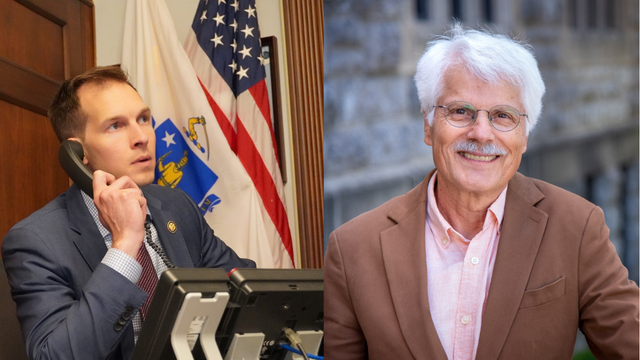
Over the last two weeks, I've held two tele-town halls. One recurring question in the first session was about election integrity. We must be on guard for the president to try to steal or undermine the midterms. I am engaged with the House Committee on Administration on this critical issue. The Democratic leadership has compiled more than 150 vulnerabilities and conducted a gap analysis to discern how to harden those soft spots; it is now coordinating with election-integrity outfits to ensure coverage. Additionally, we must 'pre-but' the president's gaslighting by meeting with local journalists this summer and fall to lay out and debunk his likely lies. I will stay on this; more to come.
In the second town hall, I invited an Iranian professor and expert on the Middle East to discuss the war in Iran. He offered the perspective of the Iranian middle class: beaten down by inflation, angry at the socially repressive regime, and still attracted to the values of America – but also not supportive of the deployment of hard power by America & Israel and skeptical of new mass protests. Conversations like these 'complicate the narrative,' forcing all of us to consider fraught issues from new angles. Better policy comes from that dialogue & diversity of perspectives; regrettably, this president took no advice, consulted no allies, and ignored Congress. The result: he lost a war and weakened America.
|
|
Tackling bipartisan immigration reform on Capitol Hill
|
|
|
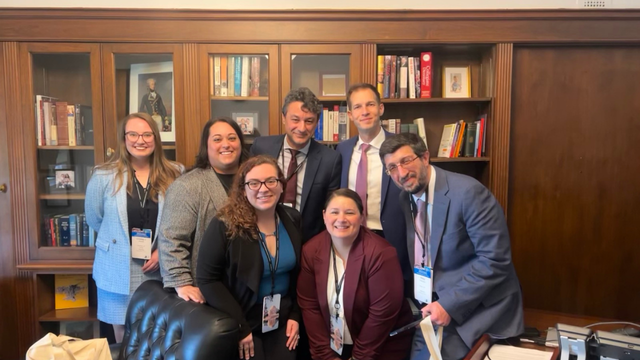
An update on immigration cases from Bay State lawyers: Immigration attorneys from Massachusetts met with me to discuss the cases and impacts they’re seeing across family, employment and asylum practices. Individuals are being detained right before citizenship ceremonies, or denied without cause at interviews. Afghans and Ukrainians had the rug pulled out from them. Nurses and scientists are scrambling to work and recruit. The $100K fee on H-1B visas is turning away top talent at our universities and businesses.
Americans voted for a secure border & for a focus on criminals for deportation. What they got was cruelty, incompetence, and higher costs. Now Republicans are trying to double down by giving Immigration and Customs Enforcement (ICE) tens of billions more, with no changes.
There’s another way. The Dignity Act, which I co-lead, is a bipartisan fix for a broken system.
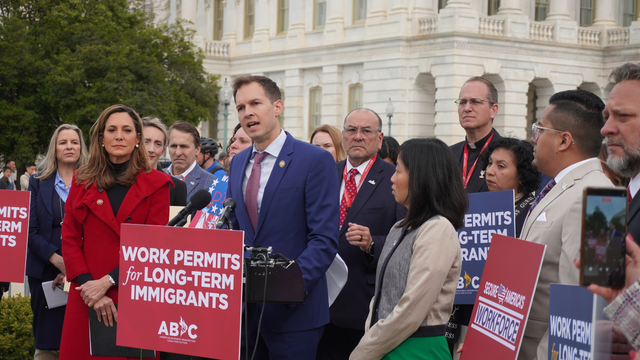
Advocating for the bipartisan Dignity Act: The long road to cleaning up our toxic politics starts with a deal on immigration. I've been a co-lead of that deal since first introduced last term. The bipartisan Dignity Act is the best chance for Congress to pass immigration reform. It ensures border security and strong asylum & E-Verify standards. It modernizes rules for existing visa programs. And it offers new, structured pathways to legal status for the long-term undocumented. |
|
Would you support bipartisan immigration reform? |
|
|
| Health R&D: an engine of our economy |
|
|
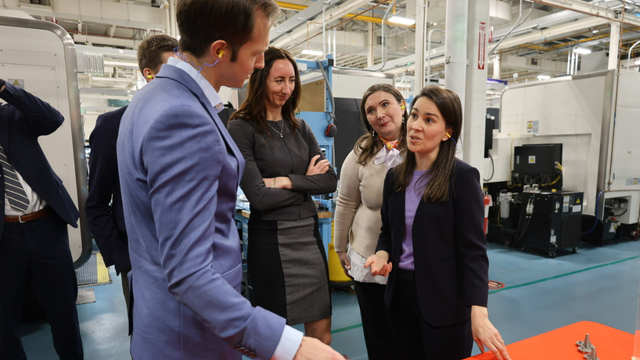
Visiting Johnson & Johnson’s (J&J) MedTech Facility: J&J’s orthopedic device business has a major training and manufacturing facility in Raynham. I visited to see a demo of robotic spine surgery, walk the factory floor where knee implants are fashioned, and take questions from employees. MedTech is a major employer and engine of the Massachusetts economy, and on the Health subcommittee I support measures that help it invest & hire more in the Bay State.
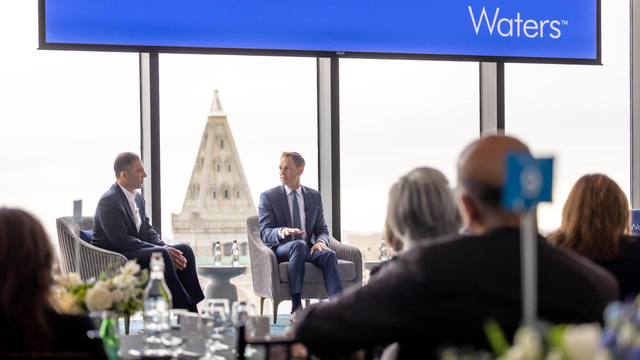
Speaking at a fireside chat at Waters Corporation: The R&D economy has an immense impact on Massachusetts, indirectly generating $400B in economic activity & 40% of all wages paid in the commonwealth. In a recent public conversation on federal R&D policy, I spoke with the CEO of Waters, an R&D tools company HQ'd in my district, about drivers of R&D success in the United States & Massachusetts, including:
- doubling basic research to at least 5% of U.S. GDP
- stabilizing & streamlining the FDA's regulation, which has degraded over the last year
- paying for the value of new medicines and ensuring old ones go generic without undue delay
Meeting with the Midsized Biotech Alliance of America: I met recently with biotech leaders to discuss how bad deals are undermining the clear rules that industry needs to succeed.
Medicines are researched, developed and distributed through both public and private action. Taxpayers fund basic research that describes disease mechanisms and identifies potential targets for therapies. Biotech investors & entrepreneurs develop those therapies in laboratories and prove out safety & efficacy through extensive clinical trials. Multi-national pharmaceutical companies research, acquire, manufacture and market medicines across many disease types & geographies.
Clear & consistent rules are essential for this system to work well. Rules about how basic research is funded through peer review. Rules about how the FDA defines safety & efficacy. Rules about how public & private payers negotiate formularies and set co-insurance and prior authorization.
Too often, clear & consistent rules are being undermined by sketchy deals. One-off deals between the multi-national pharma companies & the Trump administration over Most-Favored-Nation pricing that throw small & midsize biotech companies under the bus. Unwritten deals between the White House and the NIH & FDA over what research gets funded & which medicines get fast-tracked for approval. Non-arms-length deals within byzantine insurance conglomerates over how pharmacy benefit managers steer & price-gouge specialty drugs to make money for the parent insurance company.
I engage extensively & deeply with all actors in this value chain – biomedical researchers & regulators, investors & entrepreneurs, manufacturers & pharmacists, and public & private insurance decision-makers. I am working to reinforce rules that work but are being undermined by sketchy deals and to establish new rules where old ones have failed to police bad actors. |
|
| Alzheimer’s & Rx drugs: discussing medical care with constituents |
|
|
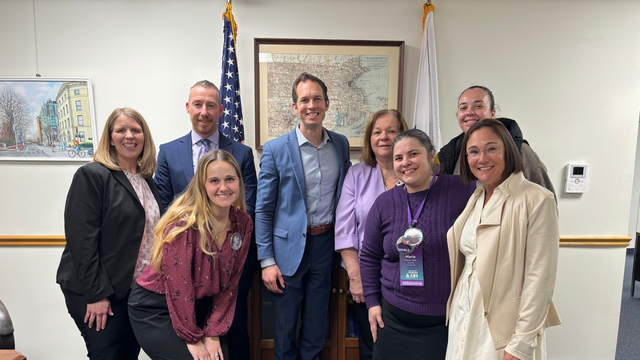
Meeting with the Alzheimer’s Association: Constituents from the Alzheimer's Association met with me in my district office to discuss the Alzheimer’s Screening and Prevention (ASAP) Act. I am a co-sponsor of the bipartisan ASAP Act, which would allow Medicare to cover routine dementia blood test screening. We also discussed my recent call-to-action for Congress to make curing Alzheimer's the nation's flagship scientific endeavor, which will require intensive R&D, extensive screening, and commercialization & access pathways for industry & patients.
I particularly appreciated hearing from one constituent who has been diagnosed with early-onset Alzheimer's Disease. Their story and fortitude bring home the urgency for big, bold policy that sends this disease the way of polio – something our grandchildren read about but do not experience.
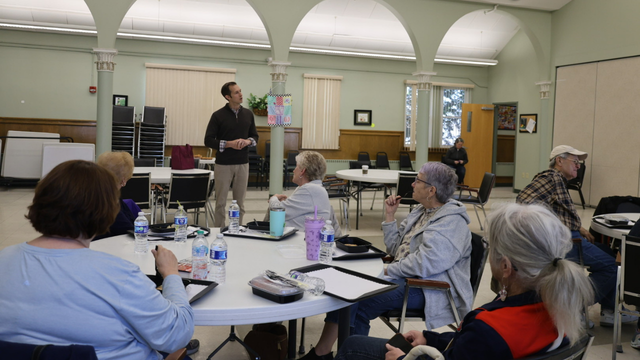
Answering pharmacy access questions for seniors: The Swansea Council on Aging welcomed me for a Q&A with seniors. We discussed my work on drug pricing, particularly:
- the cap on Rx out of pocket costs in Medicare, as well as a payment smoothing program
- regulating pharmacy benefit middlemen to prevent price gouging
- promoting new medicines through pro-innovation policies
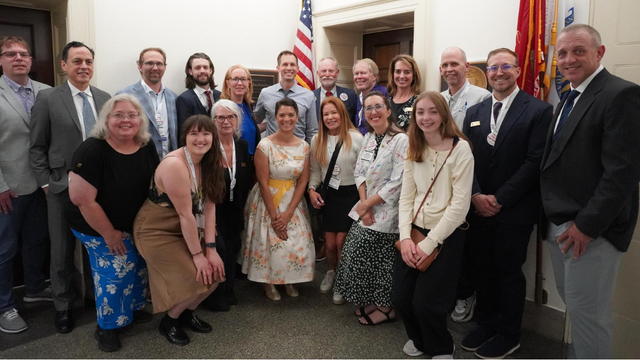
Fighting back with pharmacists: Independent pharmacists from across the country flew into Capitol Hill to meet with lawmakers about my legislation, the Pharmacists Fight Back Act. The bill helps pharmacists as both small business owners and medical professionals. It ends predatory practices by the Big 3 pharmacy benefits managers – CVS Caremark, United's Optum, and Cigna's Express Scripts – that are weekly driving pharmacies into bankruptcy and raising co-pays for patients who need specialty medications.
Independent pharmacists know & care about their local communities and they put patients first. But they're under siege in a healthcare economy that's stacked against small providers. We're working together to drive Pharmacists Fight Back, which has broad bipartisan support, towards a hearing & passage.
|
|
| Holocaust Museum coming to Boston |
|
|
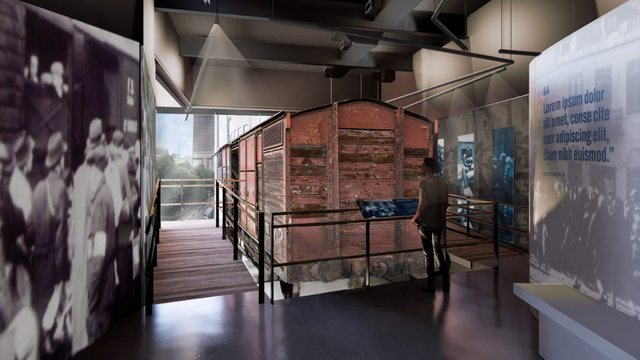
Image: Holocaust Legacy Foundation
Boston will soon host its own Holocaust Museum. I visited the site for a preview of the programming, which will connect the Shoah to the present day and ask each visitor to wrestle with moral courage and personal responsibility. Located right on the Freedom Trail, Holocaust Museum Boston will be an important new destination for tourists, school groups, and Bay Staters, and a vital addition to the city's tradition of leadership in education, democracy, and human rights.
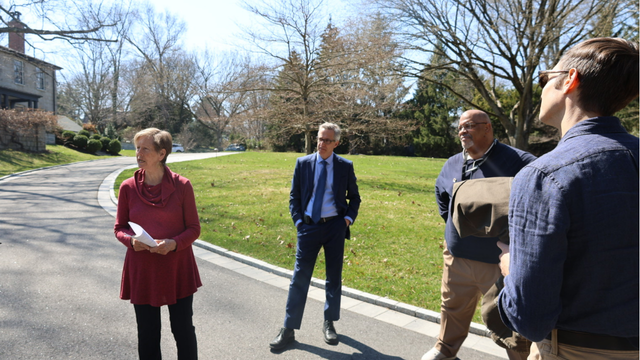
Touring Hidden Brookline: Thanks to Barbara Brown and Malcolm Cawthorne for giving me my own tour, where I learned about enslaved Brookline men who fought in the Revolutionary War, antebellum slavery in the North, and Underground Railroad stops in the town.
It was also an opportunity to meet new Superintendent Bella Wong and hear about her priorities. |
|
| Promoting housing & energy development in MA-4 |
|
Energy policy to lower prices for Bay Staters: Last week, I engaged in constructive back-and-forth with Energy Secretary Chris Wright about how Massachusetts is at the whip end of global energy markets. Its swing fuel is oil & gas imported from the Middle East via Trinidad & Tobago. Bay Staters pay more and suffer severe swings in prices because our state does not have enough reliable & affordable power.
In conjunction with our New England neighbors and with support from the federal government, the commonwealth needs to build out more transmission to Maine & Canada, add reactors to Millstone & Seabrook Power Plants & site nuclear in Massachusetts, stand up virtual power plants, and continue to defend offshore wind from the Trump administration's arbitrary & capricious attacks.
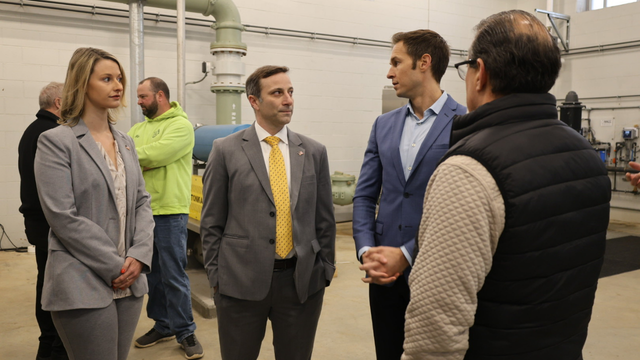
Partnering with Norton town officials on water treatment: In my first year in office, I directed $1.5M in federal funds to help Norton upgrade three wells. I returned to the water treatment facility this week for an update with town officials and engineers about next steps for Norton's water & sewer infrastructure. To ensure potable water for all residents and unlock housing & commercial development, I will continue to partner with State Senator Paul Feeney on channeling federal & state funds for treatment and sewer upgrades.
Engaging on the future of Brayton Point: Brayton Point in Somerset has been a priority for redevelopment since I took office in 2021. Trump's attacks on offshore wind derailed Prysmian's plans for wire & cable manufacturing. I visited the site to discuss the potential for other uses, from battery storage to shipbuilding to energy. In conjunction with the landowner and state & local officials, I'm engaging where helpful on Brayton Point's next act. |
|
| Speaking with students about social media |
|
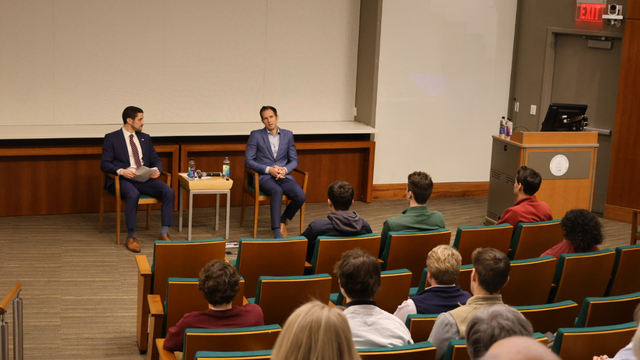
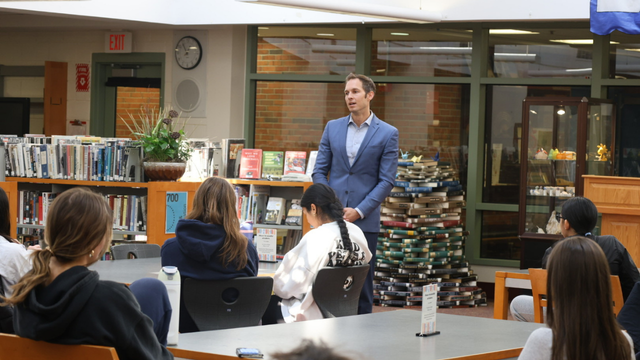
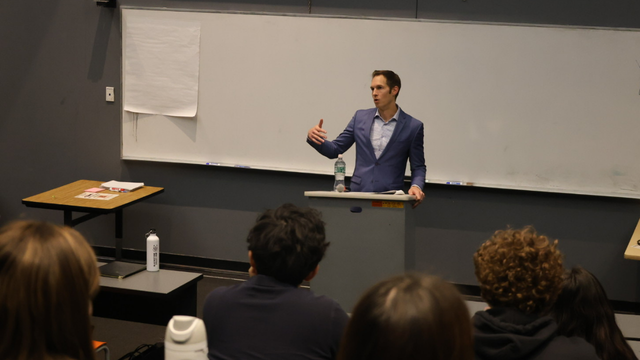
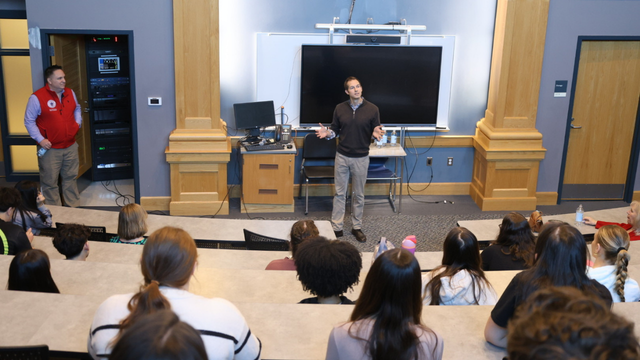
Social media & AI are dominant issues of 2026. I believe young people are most affected, so I've prioritized speaking with them. During this past district work period, I went to Babson College and the Dover-Sherborn, Newton North and Somerset-Berkley High Schools to hold Q&A sessions with students.
I found:
- positive response to raising the social-media age-limit to 16
- unease about banning phones in schools
- a mix of optimism & anxiety about the role of AI in the economy & education: students see potential benefits in domains like self-driving cars & healthcare, but share my concern about letting social media corporations use AI bots without regulation or liability.
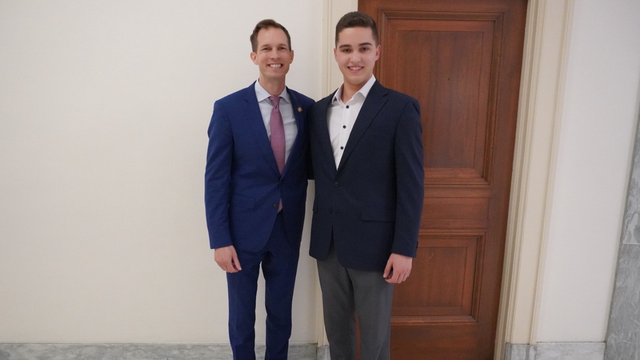
Congratulations to our own national congressional app challenge winner: Congratulations to Aaron Prager, whose app BoostT1D, a diabetes management tool, won the national congressional app competition in Washington. Aaron is a Newton high schooler who was our district's winner, and representative to Washington, in the local MA-4 app challenge. The whole district cheers for you, Aaron!
|
|
|
|
Question: What defense against Iran & Hezbollah is acceptable?
- Rachel from Brookline
Answer: Iran is the world’s largest sponsor of terrorism and Hezbollah is one of its terrorist proxies, which has immiserated the Lebanese people and murdered Israelis. Israel has a right to defend itself against both. Current actions by Israel and America, however, are:
- Granting a more hardened, hardline regime in Iran new leverage through chokepoint control of the Strait of Hormuz
- Putting the Lebanese state, a potential ally, in a political vise between Hezbollah and the Israeli Defense Forces, and
- Further isolating the United States and Israel from current and potential partners in NATO, Asia, and the Middle East
While a strong military is necessary to defend citizens against terrorists, warfare without a political endgame is just violence. Any military action must be scoped, as a last resort, within a broader project of architecting alternatives to Hamas, Hezbollah, and the Islamic Republic.
You can submit a question for a future newsletter here. Please note that casework inquiries for federal agencies must be submitted to my website here. My casework team will respond to these in a timely manner. |
|
Onwards, |
|
|
|
Jake |
|
|
|
|
|
|

|
|