|
|
|
LAST TWO WEEKS IN REVIEW |
|
Good morning. I’m your Representative in Congress, and I write to keep you informed. |
|
|
|
| New York Times interview with Bret Stephens |
|
|
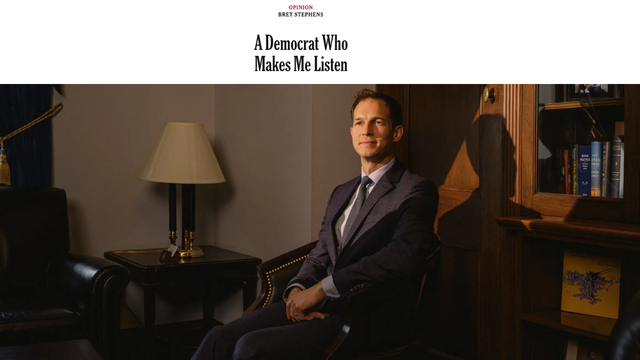
New York Times columnist Bret Stephens interviewed me on politics and current events. Read excerpts below:
…Auchincloss: If your core critique is that neither party has a plan for education, I 100 percent co-sign that. In many ways the school closures were a parable for where the Democratic Party went off the rails. We were renaming schools away from Abraham Lincoln and the schools were closed.
And we should say as a party: Closing the schools and opening the borders was wrong; not going to happen again. That then sets the stage for, well, what’s our program going forward? Rather than talk about it intellectually, I’ll just point you to a bill that I just introduced called the Education Not Endless Scrolling Act.
Stephens: Is that an acronym?
Auchincloss: No, I don’t really try to do the acronym stuff. Politicians are always [really torturing bill titles] to get that acronym.
It’s a levy on the digital advertising revenue of the social media platforms, which have productized our kids’ attention spans and have corroded our civil discourse. And it channels those monies, (1), to the construction of 1,000 trade schools across this country to train the next generation in a lifelong way to work with A.I., and (2), to one-on-one high-dosage tutoring for every student in America.
In Massachusetts, there was a pilot program that surged one-on-one, live, online, high-dosage literacy tutoring for first graders to a few hundred kids in my district. I went to the schools; I saw it. Unbelievable results. This stuff works. Teachers absolutely love it. It’s not that expensive, and it is not a fight with the unions, and it’s something that we can scale across states.
Stephens: You’re aware of the need for deep capital markets, for a culture of risk-taking and innovation. If you were having a conversation with a young Democratic Socialist, explain to that person where he or she goes wrong.
Auchincloss: Free enterprise is a core way that you make manifest our thesis as a party that every individual has inherent dignity and equality and that they should be able to pursue their happiness in the world. Because if you want to go start a socialist commune, you can. Go to a socialist country and try to start a capitalist commune, it doesn’t work out so well.
So what’s a Democratic case for how capitalism should work? To me, it’s an understanding that markets work, [but] markets can be impaired by government overregulation, and markets can be impaired by corporate monopolization. And while that is pretty obvious to most economists, it’s somehow become a partisan football in a way that’s just not productive.
For example, with housing, the problem is mostly the government, right? State and local land use laws have inhibited the construction of the several million units of housing that we need in this country, and our platform for housing should be very deregulatory. I’ve co-led legislation to do that at the federal level, and we’re seeing a strong faction within the Democratic Party to pursue that. |
|
| Pressing for public health at the FDA & EPA |
|
|
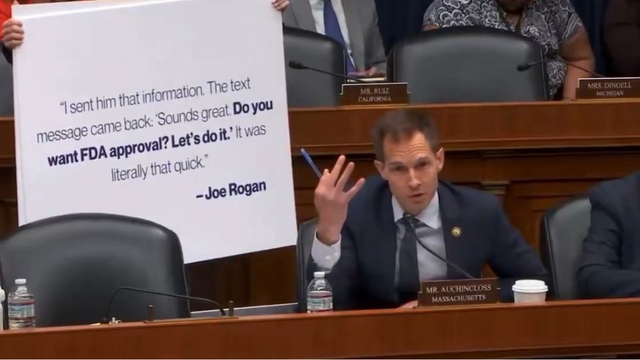
Giving voice to silenced FDA scientists: When Health and Human Services (HHS) Secretary Robert F. Kennedy Jr. came to my committee last month, I questioned him on Marty Makary’s incompetent leadership of the FDA. He could not defend him. The commissioner needs to be fired. Under Makary’s leadership, trust in the standard of safety & efficacy is collapsing. His Commissioner’s National Priority Voucher program, for example, is an illegal shortcut around career scientists to fast-track approvals for drugs from companies with ties to MAGA.
I recently spoke with Inside Health Policy’s James Jarvis to discuss my concerns and, more importantly, the concerns of scientists under political pressure from Makary, who have shared their stories through my office’s whistleblower channel. You can read excerpts of the piece below:
…“[Makary] does not take feedback well. He is creating a sense of paranoia, almost. And he is absolutely fixated upon White House approval instead of operating as a gold standard biomedical regulator,” Auchincloss said.
Scrutiny of the priority review voucher program intensified following FDA’s decision last month to issue three national priority vouchers to companies studying psilocybin for depression and methylone for post-traumatic stress disorder, after an executive order signed by President Donald Trump directing the agency to accelerate approval of and patient access to psychedelic drugs, including the plant-derived psychoactive alkaloid ibogaine.
Auchincloss argues the agency’s use of the vouchers in that context reflects what he sees as a broader pattern of political influence over the regulatory process and raises concerns that decisions are being driven by administration priorities rather than scientific review.
‘When the president texts Joe Rogan, ‘Sounds great. Let’s do it. Do you want FDA approval?’ and then, within hours, the FDA issues three national priority vouchers -- that undermines the credibility of the FDA,’ Auchincloss said. ‘The use of the commissioner’s national priority voucher to score wins for the White House degrades the agency’s adherence to safety and efficacy, and that has been validated to me by multiple whistleblowers and senior officials at the FDA…’”
“I want to be very clear . . . [the CNPV pilot program] is illegal. There is no congressional authorization for the commissioner’s national priority voucher,” Auchincloss said, adding he expects Makary to testify before lawmakers this summer on the program, including its recent use to support psychedelic drug development.
"I had a full and frank conversation with the commissioner about this... I expect the commissioner is going to be coming to Congress for a hearing this summer, and he's going to have to address this,” Auchincloss said.
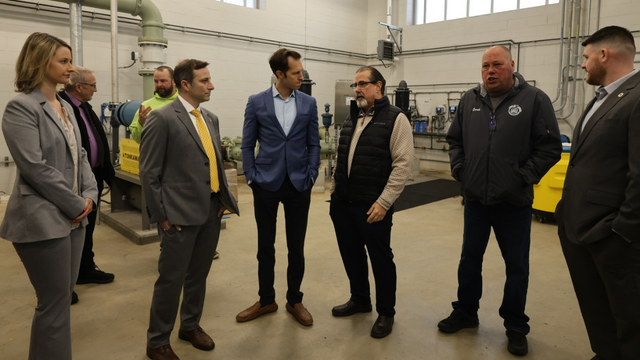
Touring a water treatment facility in Norton recently
Late last month, I also pressed Environmental Protection Agency (EPA) Administrator Lee Zeldin on his plans to cut funding for water treatment. I’ve included a portion of our exchange from the Environment subcommittee, below, lightly edited for clarity:
Auchincloss: You're proposing to cut, again, this cycle, 90% [from the principal program that mitigates PFAS]. I've now talked to your top staffers. I've talked to the top technologists. The technology isn't there. So how do we get rid of PFAS in municipal water supplies? You agree it's a problem. I agree it's a problem. It affects your state. It affects my state. [How do we get rid of it] with 90% fewer dollars?
Administrator Zeldin: So it's your position that there's no PFAS destruction technologies that merit any conversation here?
Auchincloss: There's tons. At the point of production, yes. For dredge at landfills, yes. I'm talking about municipal water supplies to get to 4 to 8 parts per trillion. I mean, it was your staff and the top technologists that were in my office—they were talking about this. [The technology] isn't there. So if you are a town in New York right now, one of the towns that you championed when you were a congressman for PFAS dollars, what are they going to do with 90% fewer dollars to get rid of PFAS?
Administrator Zeldin: Well, first off, as I referenced earlier, what we don't do in our proposed budget is factor in how much you are going to want to raid the SRF for earmarks. That's a decision for you to decide to make. Now, I'm not weighing in on the merits, and I'm not going to opine on what you choose to advocate for your district on. But at the same time, the President's FY27 budget proposal is not going to propose your earmarks for you. We're also not—
Auchincloss: Your EPA plan for clean water is to hope that members of Congress earmark it?
Administrator Zeldin: I'm not hoping that members of Congress are going to raid it. I know that members of Congress are going to raid it, and they've been doing it for a long time. There's a reason why the revolving fund is not revolving, is because there are members who take money out of the revolving fund, and they give it as earmarks to members of their district. And by the way, there are a lot of fantastic examples of how members, I'm sure, of this committee have secured these earmarks for their district.
Auchincloss: Administrator—I've gotten about $40 million back for my District for clean water.
Administrator Zeldin: The problem is, it’s not a revolving fund anymore, and that’s an issue. If you want to revolve, you can make sure it’s properly funded by getting rid of the congressionally directed spending. If Congress chooses not to, we're going to continue to have this problem.
Auchincloss: Administrator, You're in charge of the EPA budget. You're not in charge of earmarks–
Administrator Zeldin: I didn’t say that.
Auchincloss: And hope is not a strategy. |
|
In-real-life connection over digital dopamine
|
|
|

Taking on Meta, TikTok & the rest on Capitol Hill: Trillion-dollar social media corporations have become the merchants and miners of digital dopamine, attention-fracking an entire generation of American kids while eroding our civil society with click-bait and slop. I am working in Washington to revoke the immunity that shields them from liability and to pass my UnAnxious Generation legislative package to impose a duty of care upon these powerful platforms.
You can read more about my bipartisan efforts to address this public health issue in a recent NOTUS article:
“This White House is carrying the water of Big Tech,” said Rep. Jake Auchincloss, a Democrat who is leading the charge in the House to regulate social platforms.
…Auchincloss told NOTUS that regulating social media companies like pharmaceutical companies is more politically and legally viable than anything that’s been tried yet.
“The framing of this, of social media, is starting to change from a publisher of things that people say to a pharmaceutical intervention that really is about the manipulation of your ventral striatum and the distribution of dopamine in your brain,” Auchincloss said.
That version of the fight, Auchincloss said, is where he’s found Republican support.
“These sort of family values groups, they and I are not going to agree on reproductive rights,” Auchincloss said... But we are going to align on social media as a temperance movement.”
Brookline Kids Unplugged: Joined by State Representative Tommy Vitolo, I huddled with the parents leading Brookline Kids Unplugged to compare notes on federal, state & local action to achieve the Four Norms advocated by Jonathan Haidt in his book, The Anxious Generation:
- No Smartphones Before High School
- No Social Media Before 16
- Phone-Free Schools
- More Independence and Free Play
My bipartisan bill, the Parents Over Platforms Act, establishes the technical-legal framework for a 16-year-old age of Internet adulthood. It has momentum in both the House & Senate.
State Representative Tommy Vitolo shared the state of play on state legislation for bell-to-bell smartphone restrictions in schools and social media age limits, which are being negotiated between the upper and lower chambers.
And Brookline Kids Unplugged shared how they are recruiting parents and students to collective action around more screen-free experiences.
Social change happens when laws & norms are mutually reinforcing, each gear helping to spin the other. My legislative work is expressly designed to support the efforts of parents like Michelle, Hazhir, Sara and Laura. Connect with them here: brooklinekidsunplugged@gmail.com
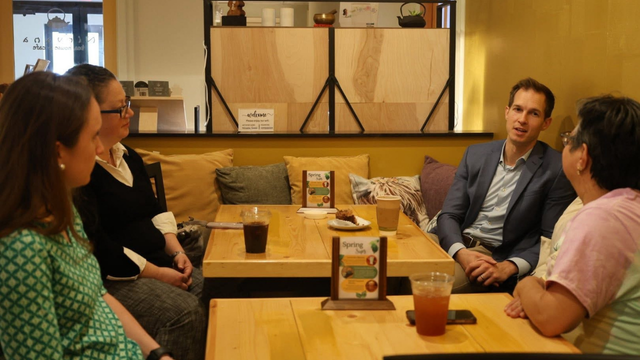
Millis IRL: I spent the day in Millis talking about forging in-real-life connection & community in our overly online age. At the Nirvana Tea House, owner Kathy Halamka talked about creating a third space where patrons can linger, work, and enjoy; not just grab-and-go. She also shared with me her work at Unity Farm Sanctuary in Sherborn, where pre-schoolers learn & play outdoors.

The Niagara Coffee Haus is a concert & live music venue operating out of Millis’ historic firehouse museum. It hosts folk, rock, jazz, blues, open mics, comedy shows, & more. Get tickets here.
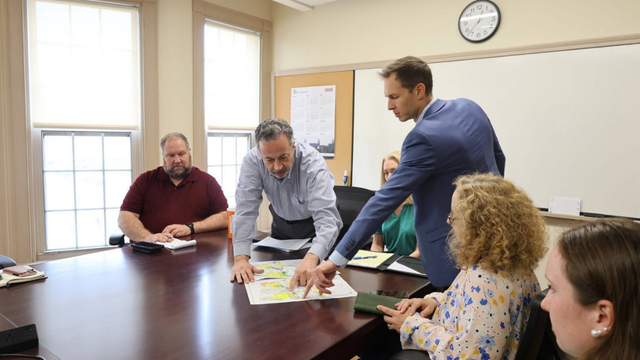
Then I spoke with Millis town officials about local priorities & federal funding. My previous earmark helped complete the town's water treatment facility, and my next earmark is intended for improving Village Street sidewalks. Walkability enhancements help small businesses, improve safety, and bring residents together in our downtowns.
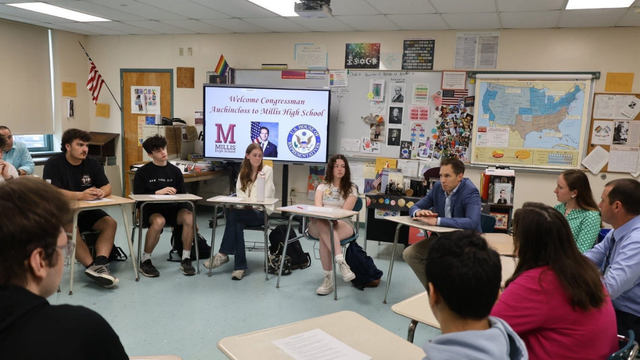
I closed the day at Millis High School, where I took questions from students about social media, AI, and civic engagement. I am driving federal laws & regulations to hold accountable the social media corporations that surveil, exploit & manipulate the attention spans & dopamine systems of our youth. Our culture needs more IRL engagement and less dopamine-mining by corporations. |
|
Do you support phone-free schools? |
|
|
| Grappling with the president’s expensive failure in Iran |
|
|
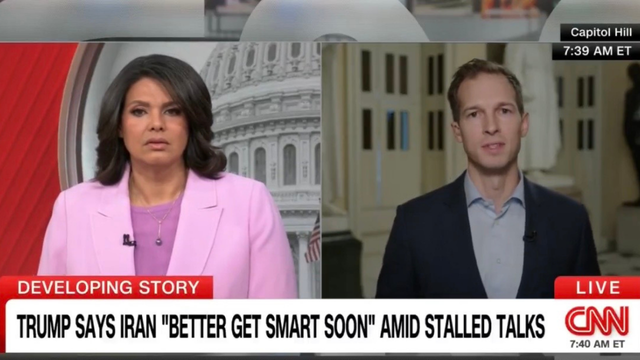
After more than two months, this president’s illegal war of choice continues. On CNN, I argued the war was illegal on Day 1, and it remains illegal today. While oil markets are currently pricing in a secret deal or an easy Iranian surrender, there is no strategic basis for either bet as the president continues to grasp for an “easy button” to end this war that simply doesn't exist. I laid out some ideas for how to build back from strategic failure in my interview with Bret Stephens, which you can read below:
Auchincloss: So you’ve got a few projects underway. One is, you’ve got an air-defense concept of an Abraham Accords air-defense system. [Under relations established by the Abraham Accords, Israel is said to have sent air-defense systems to the United Arab Emirates to defend against Iranian attacks.] That needs to be put on the urgent level where you bring in Ukraine.
Ideally, you actually take the Russian frozen assets, you use them to invest in the Ukraine defense industrial complex, and you help Ukraine monetize its drone and counter-drone capabilities by selling them to the Gulf states to harden their energy infrastructure, which they desperately need.
Then we need to double down on IMEC, the India-Middle East-Europe Economic Corridor, which was put in place a few years ago. It’s sometimes called the new Golden Road — really the counter to China’s Belt and Road Initiative. Functionally, it’s a series of energy and infrastructure investments that knit together India, the Middle East and Europe.
Stephens: Is part of the idea here a strategy of containment for the newer, younger, more hard-line Iran that emerges from this war as you see it?
Auchincloss: Yes, it’s neutralizing not just Iranian, but I would argue Sino-Iranian influence. In an even bigger context, it is finally making good on President Obama’s pivot to Asia.
It’s basically saying to NATO and to the Abraham Accords, all right, we’re going to work with you. We’re going to invest in you. We want to do all these things with you as allies. But you’re paying for it. And you’ve got to harden yourselves and knit yourselves together because we can’t let China have home field advantage in the Indo-Pacific. We’ve got to be there in the South China Sea. We’ve got to be there in Southeast Asia. And that’s where our focus has to be.
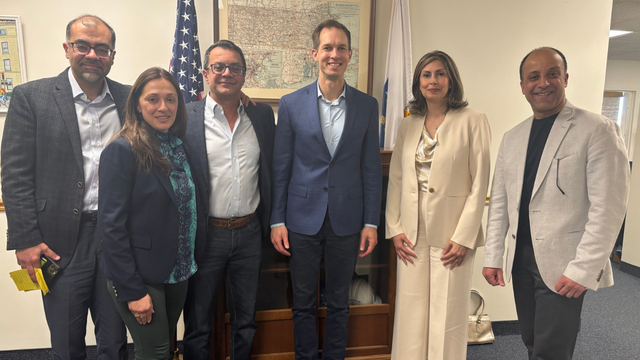
Meeting with Iranian-American constituents: I invited Iranian-American constituents to meet with me to share their perspective on the war. They relayed what their friends & families in Iran are telling them about fear and inflation; their own analysis of the power mechanics within the Ayatollah's brutal regime; and how an effective opposition might form. This war is personal for them, and their experience informs my voice and vote on Iran policy. |
|
| Town Halls in Sherborn and Somerset |
|
|
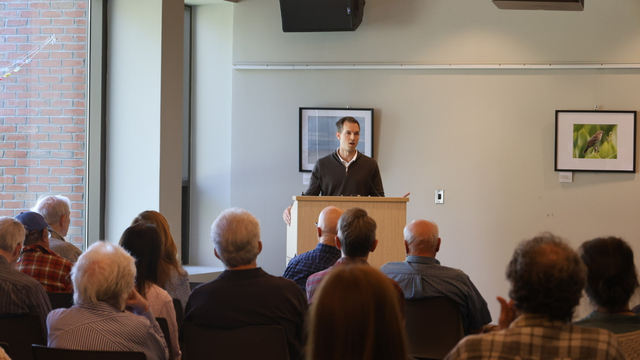
Sherborn residents came to a Town Hall for an afternoon Q&A with me. I highlighted three veins of effort:
- fighting back against Trumpist corruption & incompetence, particularly by:
- holding the line to fund Homeland Security ahead of the World Cup without dollars for ICE
- using oversight & investigations to sideline RFK Jr., protect NIH funding, and remove FDA Commissioner Marty Makary
- protecting midterm elections from interference
- supporting the Massachusetts economy, through:
- energy policy that promotes cheap, clean power through nuclear, geothermal, batteries, offshore wind & more
- promoting strong sectors for job & wage growth, like biotech, robotics, energy, precision manufacturing & medical devices
- infrastructure investments, particularly federal earmarks for water & sewer upgrades that support housing & commercial development
- regulating social media corporations and other merchants & miners of digital dopamine. As a young parent, it's personal to me!
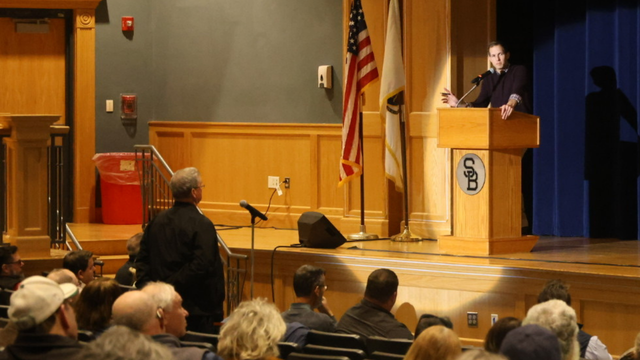
Constituents from Somerset & surrounding towns joined me for a Saturday town hall at Somerset-Berkley Regional High School. I talked through my oversight & investigations work on RFK Jr. and the Food & Drug Administration; my efforts to lower energy prices in Massachusetts; and my focus on protecting the integrity of the midterm elections. I took questions on the war in Iran, which I oppose; tax policy, where I highlighted my bill to levy the social media corporations; and many other issues animating Bay Staters in the southern end of the MA-4.
I will be hosting my next Zoom Town Hall on Monday, May 18, with Rep. Joe Morelle (D-NY), the Ranking Member of the House Administration Committee. We will discuss protecting the integrity of the midterms. You can sign up here. |
|
| Meeting with independent pharmacists in Sherborn |
|
|
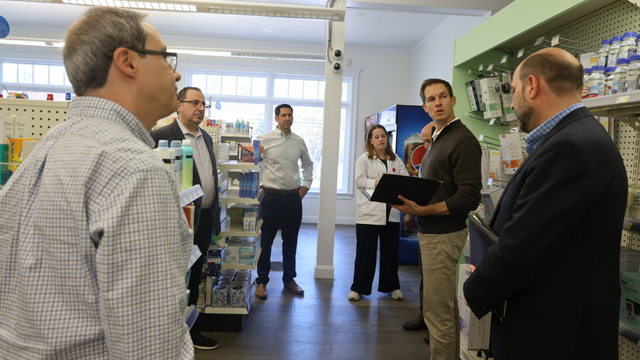
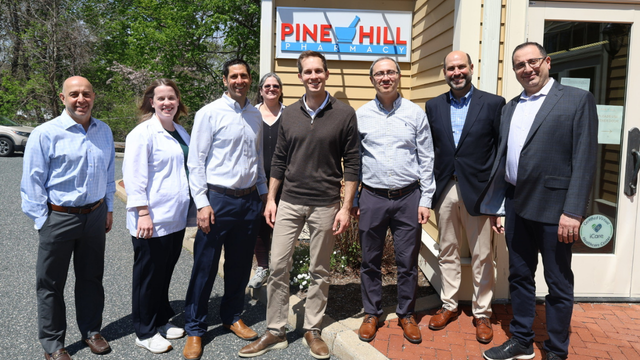
Last term, I introduced Pharmacists Fight Back: the most muscular federal legislation ever introduced to support independent pharmacists, and their patients, against the predation of health insurance companies. This Congress passed some reforms into law. But not enough. I've updated & reintroduced my bipartisan legislation to improve transparency, enact cost-plus pricing for generic drugs, and end self-dealing & price gouging by the Fortune 20 health insurance companies.
At Pine Hill Pharmacy in Sherborn, I huddled with independent pharmacists from across the district to listen and compare notes. These small business owners and trusted medical providers deserve lawmakers' support as they fight on the frontlines against onerous prior authorization, gag clauses, clawback fees, and other practices that represent the worst of corporate medicine. |
|
| Promoting walkable, affordable development through rule changes & funding |
|
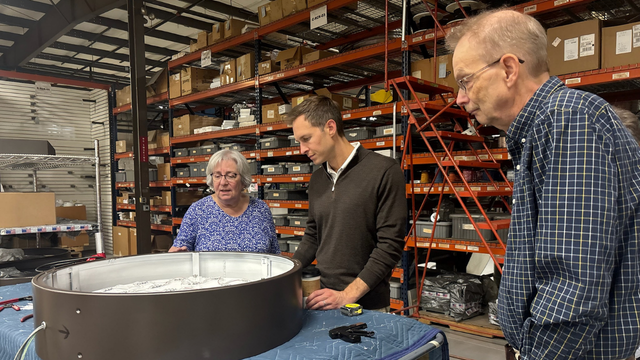
Discussing local issues in Medfield: Medfield Select Board Chairman Osler “Pete” Peterson & I met to discuss local issues, including my earmarks for Pleasant Street walkability improvements & the Rt 27 / West St intersection upgrade. Then we dropped in on Electric Time Company for a short tour. For a century, this family business has been making tower clocks and building clocks for downtowns, campuses & companies.
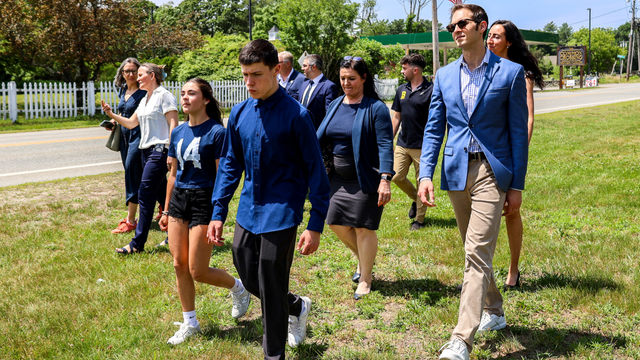
Walking the current route to Berkley Middle School with student leaders last June
From the classroom to the Town Common: Four years ago, a Berkley Middle School 8th-grade civics class started a campaign to make their walk to school safer; today, that vision is a reality. I’m thrilled to have secured $850,000 in federal funding to turbocharge their project into town-wide pedestrian & school-route safety improvements at the Berkley Town Common.
Advocacy for multifamily housing code changes: Rising housing costs is the greatest economic challenge facing Americans. Outdated building codes are one impediment, driving up construction costs for new apartments by more than 12 percent. I recently joined my colleagues in urging the International Code Council to adopt globally recognized standards that maintain safety while stripping away the red tape that makes U.S. housing unnecessarily expensive compared to our peers abroad. If we are serious about treating the cost disease in housing, we must remove these barriers and start building at the speed and scale that can deliver the 250,000 homes that Massachusetts needs. |
|
| Supporting youth mental health & special education with Walker Therapeutic & Educational Programs |
|
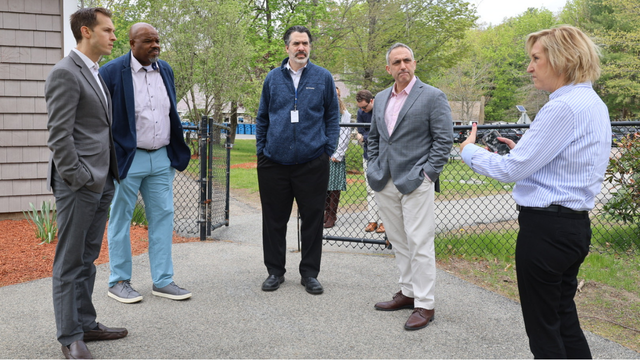
I visited the Needham campus of Walker Therapeutic & Educational Programs to meet the leadership & students and discuss federal & state policy. Walker, founded in 1961, offers intensive residential & day services & education to children with complex behavioral challenges that local school districts are unable to manage.
Joined by State Representative Josh Tarsky, a former school principal, we took questions from students, toured the campus, and discussed with Walker executives how federal immigration and Medicaid changes could disrupt their programming by making hiring harder and reducing reimbursement. Walker executives & faculty are dedicated educators whose work can be emotionally & physically challenging – they deserve the resources that set them up for success. |
|
| Lifting up student artists |
|
|
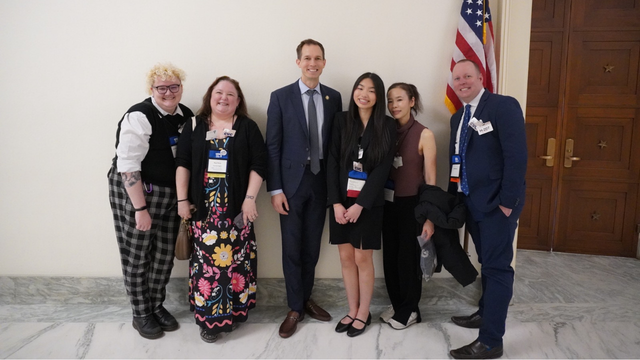
Congratulations to Nia Cao, student at Dana Hall in Wellesley, who was a finalist in the National Poetry Out Loud competition. Nia shared with me how poetry has given her voice & confidence. I was pleased to meet with her theater teacher, as well, who's been a strong supporter of her talent.
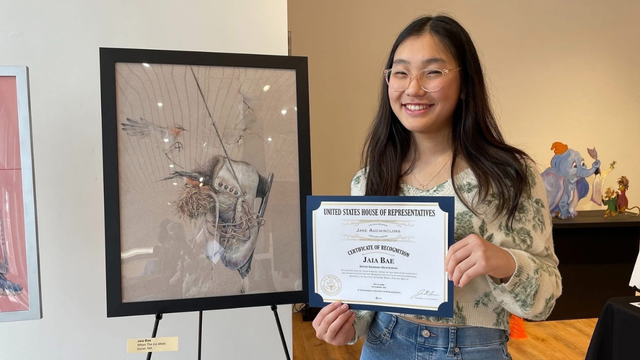
Congratulations to Dover's Jaia Bae for winning the 45th annual Congressional Art Competition in the Massachusetts Fourth. This year, my office received 54 submissions from students across the district. The talent on display at the Attleboro Arts Museum was tremendous, and I'm looking forward to seeing Jaia's 'When the Ice Melts' hanging in the Capitol's hallway. |
|
|
|
Question: What are your thoughts on reining in the national debt?
- Brett from Medway
Answer: The national debt is more than 100% of gross domestic product, and it is growing fast. Just like handing off a polluted environment is unfair to our children, so too is handing off unsustainable debt. The last time the budget was balanced was at the close of the 1990s, under Bill Clinton. There were three levers: economic growth, spending reduction, and tax increases.
Each will again be necessary, under bipartisan pressure. A politically potent Commission on Debt Reduction could force legislative compromise with measures to:
- Grow the economy: Boost productivity through investments in education, doubling science funding, passing immigration reform, and cutting housing regulations.
- Increase tax revenues: Simplify the tax code to eliminate loopholes & exemptions. Raise taxes on inherited & passive wealth, social media corporations, and carbon emissions.
- Address chronic-disease spending: Because healthcare outlays drive federal spending growth, spending reduction would need to focus on more efficiently treating chronic conditions like heart & kidney disease, diabetes, and arthritis, while also reducing hospital prices, which are the fastest-inflating element of healthcare.
You can submit a question for a future newsletter here. Please note that casework inquiries for federal agencies must be submitted to my website here. My casework team will respond to these in a timely manner. |
|
Onwards, |
|
|
|
Jake |
|
|
|
|
|
|

|
|