|
|
|
LAST THREE WEEKS IN REVIEW |
|
Good afternoon. I’m your Representative in Congress, and I write to keep you informed. |
|
|
|
Happy Fourth of July and 250th anniversary for the United States of America.
"The cause of America is in great measure the cause of all mankind." |
|
- Common Sense, 1776 |
|
| Working to clean up social media with my vote & voice |
|
|
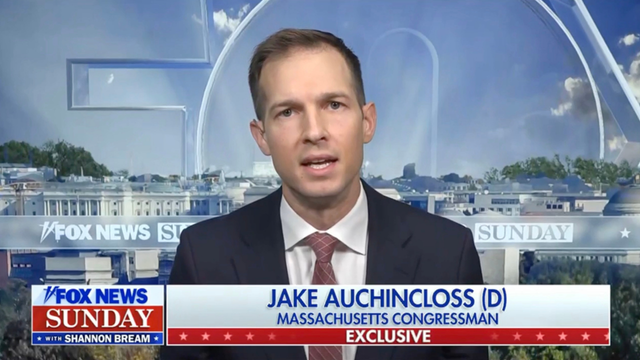
Building bipartisan action against Big Tech on Fox News Sunday: Last weekend, I joined Fox News Sunday and discussed, amongst other topics, rising antisemitism across the political spectrum & its roots in our increasingly corrosive online culture. Antisemitism mushrooms in failed societies. Meta, TikTok & the rest are platforming antisemitism because they host failed societies governed by algorithms that amplify the seven deadly sins. Only strong federal action against these trillion-dollar corporations can force change in the AI era. You can read a portion of the interview below:
Fox News: One of the ideological problems is something we know as antisemitism, and you've talked about actually experiencing that in your own life. So, the concern becomes then when you have people within your party who are saying Israel doesn't have a right to exist, that they would vote for Hamas over Israel. I mean, there are issues of, you know, aid to Israel and those continuing conversations, our relationship with them coming up. How do you respond to this vibe of antisemitism from within your own party?
Rep. Auchincloss: I reject the mushrooming of antisemitism within the Democratic Party, which is a problem. I reject it within the Republican Party, where it is a problem. You saw Thomas Massie run ads with a Star of David behind his opponent. You see Brandon Herrera in Texas wallowing in Nazi iconography. It's a huge issue on both sides. We have to condemn it on both sides, and I've done that clearly and unequivocally for the last five years.
We also have to look at the fundamental drivers of antisemitism, which I believe is social media in general. Scapegoating of Jews happens in failed societies. It happens when the pathologies of the moment are turned against the ‘other.’ And right now we're seeing anti-Semitism mushroom on social media because it's a failed society. There's no norms, there's toxicity, and we have to hold Meta and TikTok and Instagram and Snap and the rest of them accountable for the corrosion that they are platforming.
KIDS Act passes the House: This week, the House of Representatives passed the KIDS Act. I voted Yes because it takes modest federal action against the productization of children online, including privacy & targeting measures, while preserving states’ authority to pass stronger legislation, like social media age limits. What persistently holds back bolder federal action is the framing of social media regulation as an infringement upon free speech. Reach is not speech. Algorithms and design features are not neutral.
Social media companies are miners and merchants of digital dopamine; and they should be taxed and regulated to reflect that negative externality, particularly for our children. Critical to this effort is the imposition of a duty of care, enforced through litigation, that is guided by neuroscience and dedicated to the protection of developing brains from attention-fracking and dopamine manipulation.
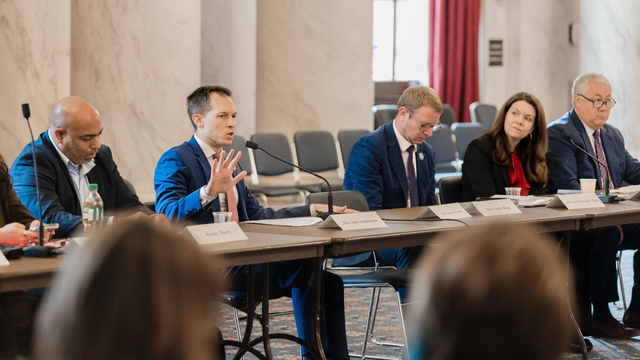
Discussing the Parents over Platforms Act and Deepfake Liability Act at an anti-trafficking roundtable: The Anti-Trafficking in Persons Policy Roundtable is a biannual gathering in the U.S. Senate that brings together leaders from anti-trafficking–and–exploitation organizations, survivor advocates, and key Members of Congress who have demonstrated a strong commitment to advancing anti-trafficking policy. The primary objective of the Roundtable is to strengthen grassroots advocacy and support for anti-trafficking and child exploitation legislation in order to see more bills passed into law.
In April, the Roundtable invited me to speak about my bipartisan bills: The Parents Over Platforms Act and the Deepfake Liability Act. These twin pieces of legislation would place the duty of care & liability for trafficking and exploitation where it belongs: on the social media corporations. Right now, believe it or not, that duty of care rests upon children, who legally reach the age of Internet adulthood at 13 years old in the United States.
The platforms, sensing outrage at that status quo, are frantically trying to get ahead of demands for change by shifting the duty of care onto parents. We must reject that false flag operation and hold accountable these corporations for the treatment of minors on their platforms.
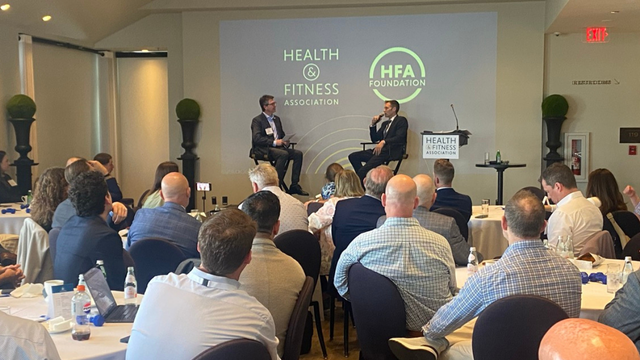
Fireside chat with the Health and Fitness Association: Exercise releases a surge of healthful neurochemicals, including dopamine. Over time, exercise actually remodels the brain’s reward system to make it more sensitive to dopamine.
I spoke to the Health & Fitness Association about how exercise dopamine is the IRL (in-real-life) contrast to digital dopamine, peddled by the social media corporations & online gambling firms. Whereas exercise helps your brain get more from less dopamine, the digital dopamine merchants put the brain — particularly developing ones — on the opposite track, getting less from more.
I expect exercise will be increasingly paired with GLP-1s, which dampen dopamine spikes, by individuals seeking to counter the manipulation of their brains by corporations. Congress must ensure that the FDA & NIH draw on the best science (not influencers) to inform & guide this developing trend. |
|
Defending the NIH from Trump & promoting clinical trials modernization
|
|
|
Rejecting OMB Director Russell Vought’s reckless proposals: In June, I joined colleagues in signing onto a letter opposing the Office of Management and Budget’s (OMB) proposed revisions to Uniform Guidance governing federal grants and research funding, which could disrupt federally funded research, particularly at institutions supported by the NIH. This unlawful attempt to exceed statutory authority would stifle medical and scientific innovation by increasing administrative burdens and creating uncertainty for grant recipients. I’ll remain assertive and unflinching in my defense of the American scientific enterprise, ensuring our gold-standard research remains accountable to evidence and peer review, not the political directives of this lawless administration.
|
|
Do you oppose Trump's measures to change how science is funded? |
|
|
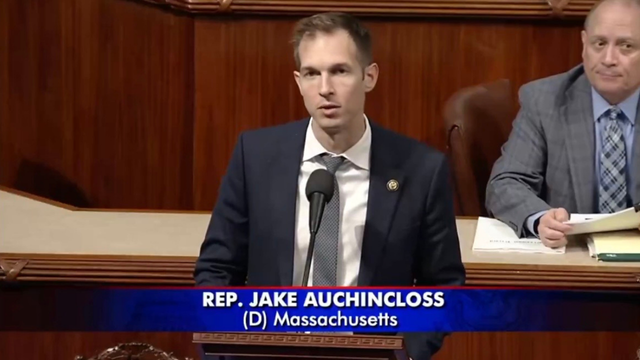
Defending scientists on the House floor: Last month, I entered into the congressional record a few portions of the editorial opposing NIH cuts & the politicization of science written by Steven Kahn and other diabetes researchers. The authors were recently ejected from the American Diabetes Association conference for handing out this editorial, which defends the American scientific enterprise against top Trump aide Russell Vought's machinations. You can read my speech on the House floor below:
Rep. Auchincloss: Mr. Speaker, I rise today to enter into the record a few portions of the editorial written by Steven Kahn and his colleagues regarding the Trump administration’s cuts to US biomedical research. Steven Kahn and his colleagues were removed from the American Diabetes Association's annual meeting, where NIH Director Dr. Jay Bhattacharya was set to speak, while passing out copies of their editorial.
Attacks on science always become attacks on scientists. This leads to policy made by fear or favor, not by evidence.
“Just a year ago, in these very pages, we highlighted the many threats the current U.S. administration posed to the health of our nation. Since then, there have been actions by the administration that have caused grave health consequences, and their current approach will continue to do so. The numerous measles outbreaks and associated avoidable deaths have resulted in part from hyping disproven theories of harm rather than publicizing the effectiveness of the measles vaccine.
…While one would think that this congressional action to preserve the NIH budget was a clear repudiation, it has not stopped President Trump from requesting a 2027 budget that now seeks a $5 billion reduction to NIH.
…We call on all concerned citizens of our beloved country to contact their congressional representatives to declare their alarm about what is happening at HHS.”
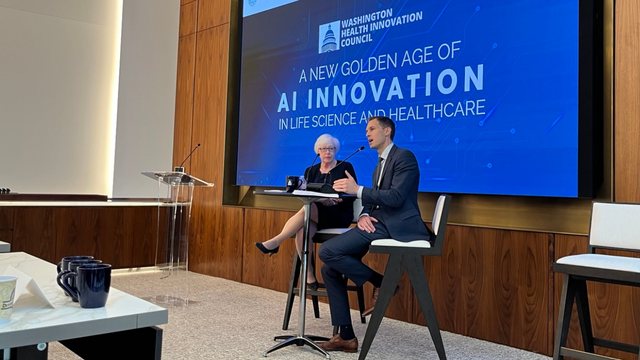
Discussing future breakthroughs at the Washington Health Innovation Council: I also met with the Washington Health Innovation Council, comprised of life sciences and healthcare innovators. They wanted to talk about AI. I wanted to talk about getting the basics right:
- funding curiosity-driven, peer-reviewed research through the NIH. End the freezes, stop the games
- regulating Rx drugs at the FDA based on safety & efficacy, not fear & favor
- paying for the value of medicines & ensuring they go generic without undue delay, instead of signing side-deals with Big Pharma that further complicate and obfuscate the drug-pricing value chain
Get the basics right and the innovators will innovate, with AI & otherwise. But focusing on shiny new tech while the fundamentals are fading is bad business.
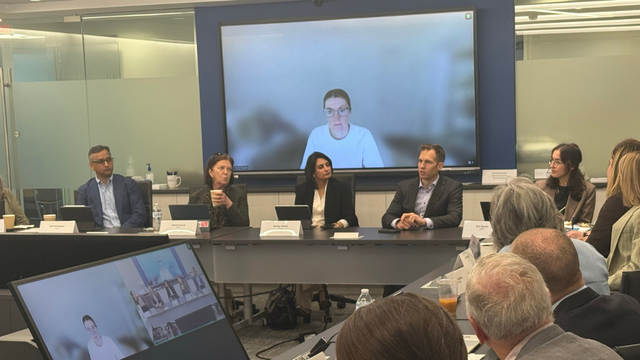
Seeking feedback on clinical trials legislation: I recently met with the Board of the Association of Clinical Research Organizations (ACRO) to get feedback on my draft legislation to modernize clinical trials. Speedier, more rigorous, and more representative clinical trials help medical scientists prove out potential therapies at a faster clip. My bipartisan proposal would tighten the feedback loop between the FDA and investigators and build out clinical trials infrastructure at more sites of care.
ACRO Board members gave me helpful feedback, particularly about institutional review boards, and asked questions about various elements of the bill. I'll be incorporating this and other commentary over the summer into final legislation.
We also discussed the role of China in clinical trials. The Chinese hospital system has become excellent at running early-stage, proof-of-concept clinical trials that allow biotechs to graduate to multi-national trials to prove out safety and efficacy in larger, more diverse populations. As with all interactions with China, this system is not without concerns & challenges, but proposals to simply ban Chinese clinical trial data could slow down discovery without buttressing American biomedical leadership. |
|
| Completing my 37th town hall since Trump’s election |
|
|
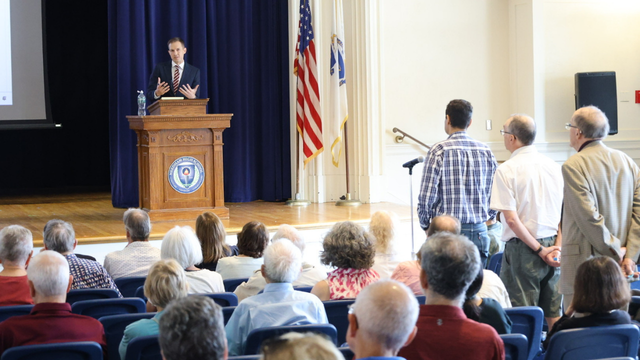
Since Donald Trump's election in November 2024, I have held 37 town halls. Of these 37, 12 have been via telephone, 13 have been by Zoom, and 12 have been in person. I have also visited each of the 35 cities & towns I represent at least once for conversations with elected leaders, the business & non-profit sectors, and constituents directly.
I know how angry Bay Staters are with the state of affairs in Washington. Sometimes I have good answers, sometimes there are no good answers. But know that I hear your frustration about the status quo, I share your determination to shake it up, tackle the corruption, and make government work better for you.
Through November, our office is now limited in how we can advertise town halls (to prevent tax dollars from being used for campaign purposes). When not in Washington, I will be out in the district all summer and fall, though, and if you're subscribed to this newsletter you will continue to get updates & notices.
|
|
|
|
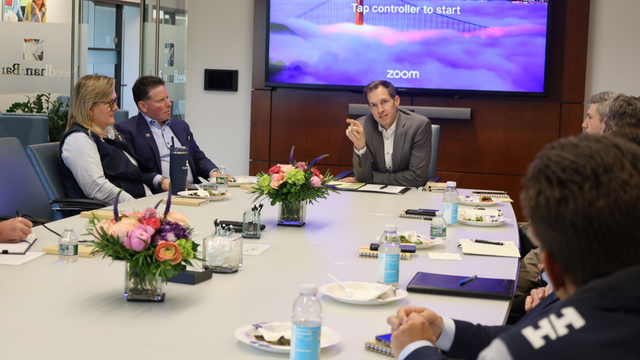
Homebuilding roundtable with small banks in Needham: In May, I met in Needham with leaders of Needham Bank, M&T Bank, and the Mass Bankers Association to discuss how to sustain community banking, which are critical providers of local housing & economic development loans.
Soon after, I voted to pass three bills to support small banks. This bipartisan legislation makes it easier for community and regional banks to attract, keep, and use local deposits to make loans in their own towns and cities. That directly supports banks in Massachusetts that focus on neighborhoods and small businesses.
The Keeping Deposits Local Act (H.R. 3234) lets community and regional banks treat a much larger share of reciprocal deposits as regular, non‑brokered funding, using a tiered system that is most generous for smaller banks. Reciprocal deposits allow a customer’s large balance to be spread across many banks for full FDIC insurance, while the local bank keeps the customer relationship and the funding.
For a Massachusetts community bank, this means it can safely hold more big municipal, nonprofit, and business deposits without tripping stricter brokered‑deposit rules, freeing up more stable money to lend to local homeowners and small businesses.
The Community Bank Deposit Access Act (H.R. 5317) lets well‑run banks under a certain size treat many custodial deposits (like retirement, escrow, or fintech sweep accounts) as non‑brokered, up to 20 percent of their liabilities. That reduces red tape and makes it easier for community banks to partner with fintechs and trust companies while still being viewed as safe and sound.
The American Access to Banking Act (H.R. 4544) tells federal regulators to simplify and speed up the process for starting new community banks and credit unions, and to work more closely with state regulators and applicants. Over time, that can mean more locally owned banks in places like Massachusetts, more competition with big national banks, and more choices for customers and small businesses that want relationship‑based banking close to home.
Meeting with home builders in Washington: America needs to build at least 5 million homes, including 250,000 in Massachusetts. Last month, I met with Bay State home builders to review federal policies to advance this objective. They advocate the Dignity Act — immigration reform on which I’ve been an original co-sponsor — as critical for their workforce. Immigration reform is not only a moral issue, it’s an economic one. |
|
Congratulations to MA-4’s Liz Amster, Chief of Staff of the Year
|
|
|
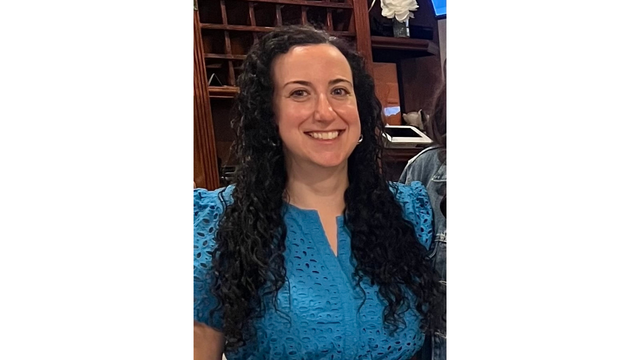
Chiefs of Staff are HR & budget directors, policy & comms advisors, and political confidants. Not easy even when Washington is working. Even harder in these turbulent times.
So I'm proud that my chief of staff, Elizabeth Amster, won the Congressional Management Foundation's 'Chief of Staff of the Year' award, granted annually to one chief of staff of each party, in each chamber. Congratulations, Liz!
|
|
|
|
Question: What can be done to reduce health insurance costs?
- Freddi from Sharon
Answer: Healthcare is a $5 trillion industry, so the answer is – a lot! But I’ll give four specific & actionable policy proposals that I’m currently working on:
- Speed biosimilars to market: Biosimilars are medicines that compete with expensive, complex drugs known as biologics. There are many biologics on the market right now, costing in total well over $100 billion, that do not have competition but could. I’m working on the policies and incentives to generate that competition that lowers prices.
- Reduce hospital pricing power in consolidated regions: In many regions, hospitals are effectively able to price like monopolies because patients have so few options. I’m working on proposals in which the government has more power to push back.
- Tackle health insurance malfeasance: Through vertical integration, self-dealing, and lobbying, the health insurance industry has found scores of ways to capture dollars without creating value. I have been a leader on successful reforms to their drug-pricing operations, and I’m now taking on prior authorization, in order to ensure that insurance companies cannot deny you critical care in an arbitrary and capricious manner.
- Support community health centers (CHCs): Community health centers reach 10% of the American population for 1% of our healthcare spending. They provide quality and cost-effective primary & preventative care. Expanding access, by expanding CHCs, is a good investment in a healthier population.
You can submit a question for a future newsletter here. Please note that casework inquiries for federal agencies must be submitted to my website here. My casework team will respond to these in a timely manner. |
|
Onwards, |
|
|
|
Jake |
|
|
|
|
|
|

|
|