|
|
|
LAST THREE WEEKS IN REVIEW |
|
Good morning. I’m your Representative in Congress, and I write to keep you informed. |
|
|
|
Foreign policy update: Iran & Israel
|
|
|
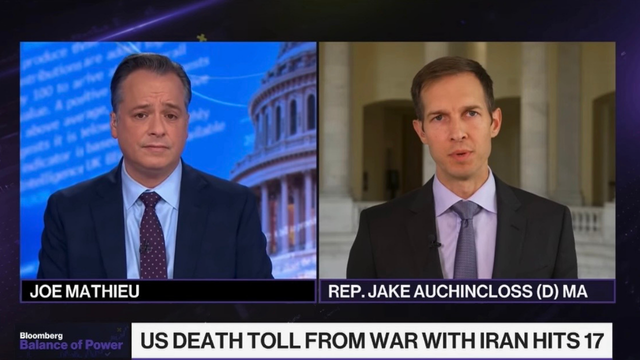
Congress must stop the failed Iran war: Since day one, I have condemned this president’s illegal & disastrous war of choice in the Middle East. Yesterday, I voted again to end the war in Iran. The War Powers Resolution passed the House with Republican support.
I joined Bloomberg’s Balance of Power this week to discuss this president’s failure, why I won’t support any congressional authorization or appropriations for this war, and the dangers of groupthink and sunk cost bias. You can read excerpts of my remarks below or watch the full interview here:
Rep. Auchincloss: The president has already lost this war. I think we need to be clear about that. He's the first president in American history to start and lose a war by himself, and he lost this kinetic war against Iran for the same reason that he lost the trade war against China last year, which is that he does not understand the nature of chokepoint control. With China, it was able to exercise chokepoint control over critical minerals, and so he had to back down from his trade war. With Iran, even though our military is operationally excellent and is able to degrade Iran's infrastructure and military capabilities, Iran was able to exercise chokepoint control over the Strait of Hormuz… He's yielded a new strategic deterrent now to a more hardline and hardened regime. And the question is: Do more American soldiers need to die before he realizes that he needs to prevent further escalation rather than double down on it?
...
History shows that sunk cost bias and groupthink are two very dangerous elements. The reason the United States fought a war in Afghanistan for a full 10 years longer than it should have is not because individuals in Washington, D.C., didn't know it was a bad idea. They definitely did. It's because of sunk cost bias, this concept of, "Well, we already spent a trillion dollars and we already lost these service members, so we've got to keep going," and groupthink, where everyone sits in a room and nobody wants to be the one who says, "Hey, this ain't working." My job as a member of Congress is to prevent sunk cost bias and groupthink from costing more American lives and from leading this country further down the sinkhole of despair and debacle that has become this Iran war. |
|
Do you support a War Powers Resolution to end the war in Iran? |
|
|
My vote to zero out Prime Minister Netanyahu’s military financing authority: Last week, I voted Yes on Congressman Massie’s amendment to State Department Appropriations, which would have zeroed out $3.3 billion in foreign military financing for Israel. The amendment ultimately failed by a vote of 104-314, with 10 voting present.
If enacted, this measure would have prevented the U.S. government from financing and selling attack aircraft, bombs and missiles, and targeting systems to the Israel Defense Forces. Importantly, it would not have prevented U.S. support for Israel’s Iron Dome, David’s Sling, or Arrow air-defense systems.
The authority from Congress to finance and sell American-made weapons to allies is a grant of trust to both a presidential administration and its counterparty heads of government. With their disastrous war against Iran and their empowerment of settler violence in the West Bank, both President Trump and Prime Minister Netanyahu have sacrificed that trust.
Congress must act where the executives have failed.
Those consequences should not impair the State of Israel’s right to defend itself against the atrocities of the terrorist regimes that threaten it. Israel and the United States have common interests, shared values, and a long history. Israel and the United States are allies.
Before the next appropriations cycle in 2027, when this policy will again be up for debate, Israel will hold elections, the repercussions of the debacle in the Strait of Hormuz will become more clear, and negotiations between the United States and Israel over what replaces the Memorandum of Understanding will pick up pace. This presents an opportunity to renew the U.S.-Israel alliance on shared principles and a bipartisan basis. |
|
| Responding to the ICE killings in Maine & Texas |
|
|
This month, two men were tragically killed at the hands of U.S. Immigration and Customs Enforcement (ICE) agents. On July 7th in Texas, Lorenzo Salgado Araujo, a 52-year-old father of three, was shot and killed while driving to work. On July 13th in Maine, Johan Sebastian Guerrero, a 26-year-old man who worked two jobs to support his wife and daughter, was shot and killed outside his home. Neither man was a criminal nor a threat to the officers on duty.
I joined my colleagues last week in demanding from Department of Homeland Security (DHS) Secretary Markwayne Mullin and ICE Acting Director David Venturella independent investigations into the deaths of both men, and that ICE halt removal proceedings as well as deportation threats against the witnesses at the scenes of these tragic killings.
The agency needs radical change at all levels and stages, from recruitment and training to use-of-force standards. Immediately, its agents must stop making traffic stops and start wearing body cameras. That’s why I co-sponsored H.R. 5973, the Stop Excessive Force in Immigration Act, which would mandate these reforms as well as ban masks and militarized equipment like tear gas. I also support an array of measures that would provide pathways to legal certainty for immigrants. I co-sponsored H.R. 4393, the Dignity Act, to establish legal certainty for immigrants by introducing an immediate protected status and a streamlined path to documentation for Deferred Action for Childhood Arrivals (DACA) and Temporary Protected Status (TPS) recipients.
I have also repeatedly opposed funding for ICE when Congressional Republicans voted to provide billions for the agency without meaningful reforms, transparency requirements, protections for constitutional rights, or guardrails to prevent abuses of authority that yield these tragic outcomes.
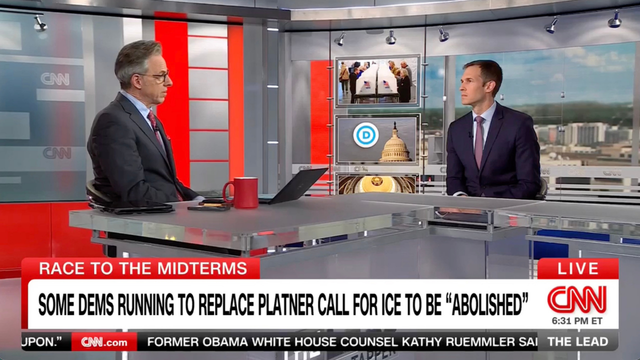
I also discussed the fatal shootings on The Lead with Jake Tapper on CNN. You can read my commentary below:
Rep. Auchincloss: ICE has morphed into a paramilitary. It's sowing fear amongst immigrant communities, and it needs to be reformed, retrained from the root. Right now, it consumes more federal resources than every single other law enforcement agency combined. That's more than crime, guns, drugs, counterterrorism, and corruption. That is not where Americans' priorities are at. Americans want a secure border. Americans want individuals without documentation who are convicted of crimes to be deported after they serve their sentence. Americans do not want their neighbors, who are contributing to the economy and to their society, to be harassed by these thugs. |
|
Alarm and action on antisemitism with the Jewish Community Relations Council (JCRC) and the American Jewish Committee (AJC)
|
|
|

Boston Jewish Now Podcast with Jeremy Burton, CEO of JCRC: Earlier this month, I joined JCRC’s Jeremy Burton in Boston for a wide-ranging conversation on politics, policy, patriotism & more. We also talked about rising antisemitism in American politics on both the left and the right as well as the future of the U.S.-Israel relationship. You can read an excerpt of our conversation below:
Rep. Auchincloss: …You said earlier that I represent the most Jewish community in New England. That is true, probably about 100,000 Jews, a major community, and also very ideologically diverse. So I get to swim in that current… You and I both have seen and recognize how intertwined anti-Zionism and antisemitism can be… What I sense from the Jewish community that I represent is that especially as they think about their kids, antisemitism here in the United States is becoming foregrounded as the number one issue…
Condemning antisemitism regardless of party: Principles must come before party. I have condemned individuals in my own party for antisemitism, and I will continue to speak out against bigotry.
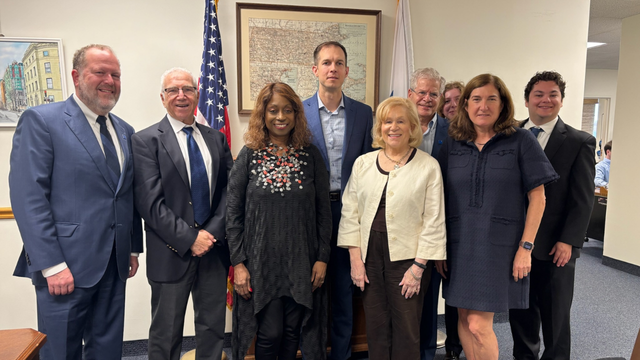
The Jewish American Security Act with AJC: I met with regional leadership of the American Jewish Committee to discuss policy & current events. In particular, we discussed three areas of alignment:
- my co-sponsorship of the Jewish American Security Act, which advances measures to address the hate Jews are experiencing across society, including in education, at worship, and online.
- my co-sponsorship of the Eastern Mediterranean Gateway Act, which seeks to deepen energy & infrastructure cooperation between Greece, Cyprus, and Israel in order to strengthen the India-Middle East-Europe Economic Corridor (IMEC), a complement to NATO and the Abraham Accords and an important counterweight to China's Belt & Road Initiative.
- my early rejection of the president's initial (and now discarded) Memorandum of Understanding with Iran, which would have handed over hundreds of billions of dollars, yielded the Strait of Hormuz, and made no progress on nuclear enrichment, ballistic missiles, or proxy terror funding. |
|
Progress on four bipartisan healthcare bills, including on Alzheimer’s
|
|
|
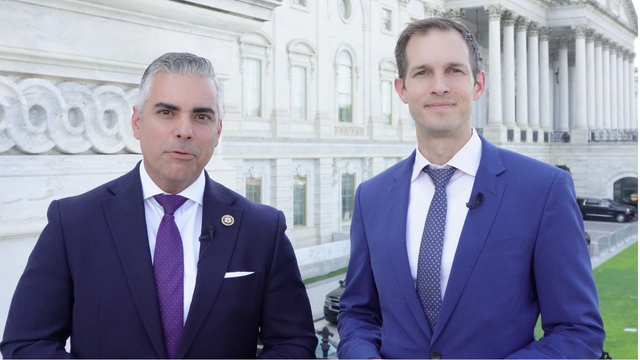
Just introduced — Early Alzheimer’s Detection Act: Few families in America are untouched by Alzheimer’s Disease. My mission is to make my children’s generation the first one with the medical tools to prevent this cruel and costly disease.
My bipartisan Early Alzheimer’s Detection Act, which I introduced alongside Rep. Juan Ciscomani this week, expands coverage for pre-symptomatic detection of the disease. Alzheimer’s disease is usually diagnosed in those over the age of 65, after symptoms appear and progressively get worse.
My bill would allow pre-Medicare-eligible adults to access blood-based biomarker testing that detects pre-symptomatic Alzheimer’s disease. It requires commercial health plans and Medicaid to cover that biomarker testing.
Biomarker testing for Alzheimer’s disease in adults over 50 is an evolving area that combines blood-based tests, brain imaging, and cerebrospinal fluid analysis to detect biological changes linked to the disease. By 2050, on current course, 13 million Americans are expected to suffer from Alzheimer’s, costing an estimated $1 trillion every year in medical and caregiver expenses. Detection and prevention are critical to changing that course.
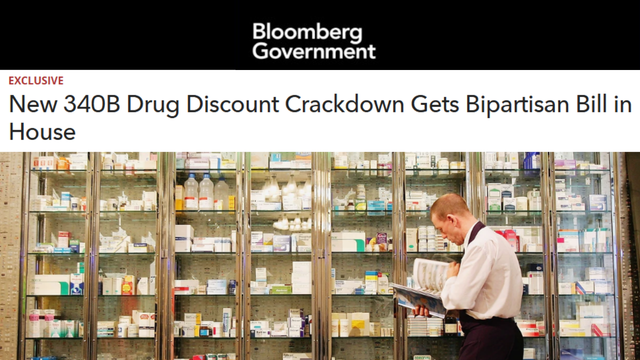
Lowering employee health premiums through landmark 340B hospital pharmacy reforms: I also introduced the SECURE 340B Act, which is the first-ever comprehensive, bipartisan proposal to reform the 340B Drug Pricing Program since it was created in 1992.
The 340B program was designed to help safety-net hospitals buy drugs at a discounted price so they can have more flexibility to spend on other healthcare needs for the community. In the last decade, though, a program that started for 32 hospitals has ballooned into a $100B+ pool of rebates for tens of thousands of providers. This rebate capture is weakening Medicaid and raising health insurance premiums for employees.
The legislation I co-sponsored creates a federal clearinghouse to prevent double-dipping, tightens up legal definitions, and bends the program back to its focus on safety-net hospitals and community health centers. I’m grateful for the partnership of the Boston Medical Center and the National Association of Community Health Centers.
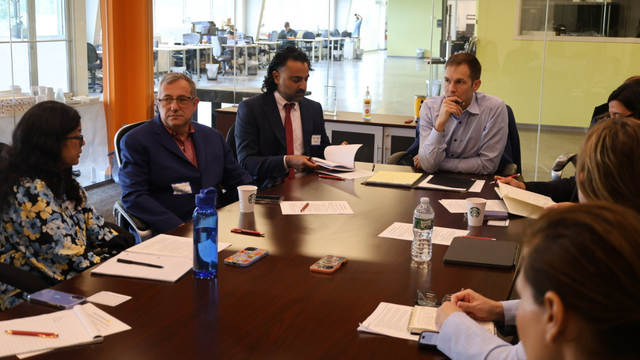
A better way to pay for cell & gene therapies: I recently convened a roundtable with biotech companies at Mansfield BioIncubator to discuss my MVP Act, which helps Medicaid purchase cell-and-gene therapies using contracts based on patient outcomes.
By codifying President Biden’s “multiple best price” regulation, the MVP Act updates the law for an era of medicines that are one-and-done potential treatments, rather than ongoing prescriptions. The bill rewards innovation, and reduces risk for Medicaid, by empowering and assisting state agencies to tie cell and gene therapy payments to patient outcomes.
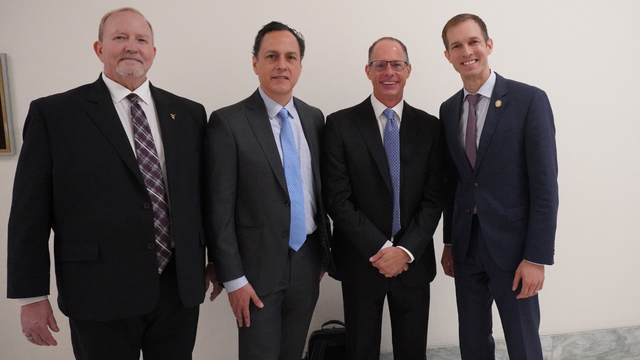
Pharmacists Fight Back moves in committee to lower co-pays for patients: My bipartisan Pharmacists Fight Back Act was marked up in its committee this week; this is the process of amending and debating a bill and is an important step on the way to passage. It passed the House Committee on Oversight and Government Reform by a vote of 40-2. I met with pharmacists to discuss the policy and its prospects. We are together committed to passing legislation that cracks down on drug pricing middlemen abuses, lowers co-pays, and supports small business owners. |
|
Supporting R&D and start-ups in Massachusetts; listening & legislation
|
|
|
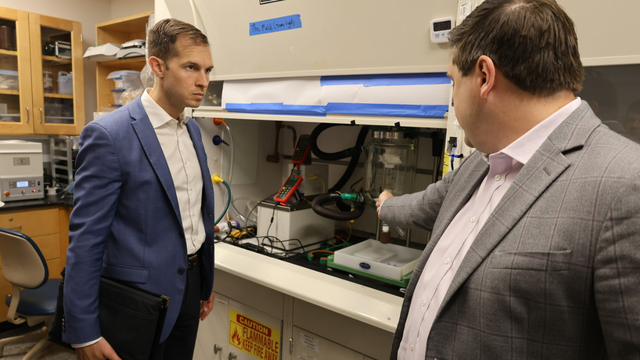
How Mass wins — talent from everywhere: At Boston University, I sat in a room with the people who exemplify what makes Massachusetts R&D world-leading. These scientists, engineers & entrepreneurs are inventing self-amplifying RNA therapies to treat cancer tumors and medical adhesives that reduce infections & complications. They are also manufacturing locally, strengthening the economy beyond the discovery & process engineering stages.
The principal basic researcher is homegrown talent, born in Massachusetts and educated at UMass. Another young star is a biomedical engineer who emigrated from Afghanistan as a girl. The senior leaders, also from around the country & the world, have multiple grants from the NIH & NSF and have founded many successful ventures to treat disease. They are all supported by BU's affordable lab space.

Meeting with the Mass AI Coalition: The Massachusetts AI Coalition is a private-sector initiative to help our state lead in AI innovation and be a better place to build great businesses. I met with the leaders and some of the members to discuss how their growing community of founders can help economic development in the Bay State.
While the frontier model labs are in California, I believe Massachusetts can lead on enterprise AI adoption. Many companies, from healthcare to finance to cybersecurity, will likely incorporate AI by building their own private models on proprietary data, powered by the public frontier models. They will need to deploy those hybrid models across software, hardware, and even biology. Our state's depth of talent & experience in 'tough tech' solutions positions our incumbents & start-ups to execute on both that building & deploying. Bold entrepreneurs should come start companies in Massachusetts.
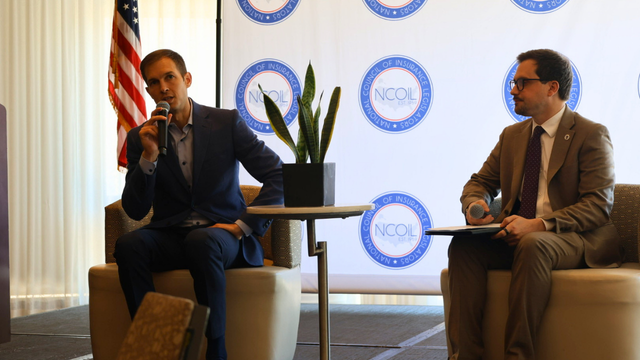
Making the case for Medicaid 1115 waiver negotiations to lower health premiums: The National Council of Insurance Legislators is a bipartisan legislative organization made up of state legislators who are focused on insurance and financial services model legislation. The organization hosted its summer meeting in Boston, and I addressed legislators from around the country as the keynote.
In particular, I encouraged these state lawmakers to use Medicaid 1115 waiver negotiations – the process by which states negotiate terms, conditions, and funding of Medicaid with Washington – to mitigate the negative impacts of Trump's Medicaid cuts & red tape; to better align incentives & take out middlemen in health care; and to responsibly innovate with AI to lower costs and improve outcomes in health care delivery.
Read my opinion column in the Boston Globe, from last fall, about how Massachusetts can use its waiver negotiation to take the lead on strengthening Medicaid.
Taking my drug-pricing policies on tour to build support: In Washington, I've taken my R&D and drug-pricing policies on tour to get feedback and build legislative momentum. As a keynote speaker at Bank of America's Washington Healthcare Policy Conference, as a guest at the Board of Directors for the Association for Accessible Medicines, in meetings with research-university leaders, and in conversation with pharmacists from across the country, I highlighted four efforts that are getting traction:
- opposing the Trump administration's attempts to politicize peer review at the NIH. An astounding 500,000 comments were submitted against the proposed rule, with the overwhelming majority opposed. I'm working all angles to bury this terrible proposal.
- expediting clinical trials through my bipartisan (draft) legislation to embed more patient enrollment at sites of care.
- lowering employees' health premiums through a recently introduced bill I co-lead that reforms the 340B hospital pharmacy program.
- supporting pharmacists & reining in health-insurer greed through my Pharmacists Fight Back Act, which has passed in its committee.
These issues are complicated and nothing happens fast or smooth in Congress. It's hard to predict when your policy train will leave the station, so my staff & I are working to get the bags packed & ready so that no opportunity for policy progress is missed. |
|
| Four more Q&A sessions with constituents, including on corruption |
|
|
One Zoom Q&A with oversight & corruption expert: Hundreds of constituents joined me for a Zoom Q&A with Anne Harden Tindall, a 20-year expert in oversight, investigations, and corruption. She & I discussed my oversight of the FDA & NIH while in the minority, including my whistleblower program for FDA regulators. The FDA commissioner has since been fired.
Ms. Tindall also offered guidance on how Democrats should pursue oversight & investigations when in the majority – how to staff the committees with experienced lawyers & policy experts, draw on both the law & shame to build a narrative & compel compliance from the private sector, and try to update law & practice to cut through executive privilege, unitary executive theory, official immunity, and other doctrines that are far too deferential to an out-of-control president.
Congress must also hold itself to account, with a ban on Members of Congress engaging in stock-trading, meme coins, prediction markets, and other self-dealing activities that undermine trust.
The Republicans recently put a bill on the floor that they claim bans stock-trading by Members, but in fact it is far weaker than the bipartisan bill I have co-sponsored. Furthermore, they added to this bill voter suppression policy at the direction of the president. I voted No.
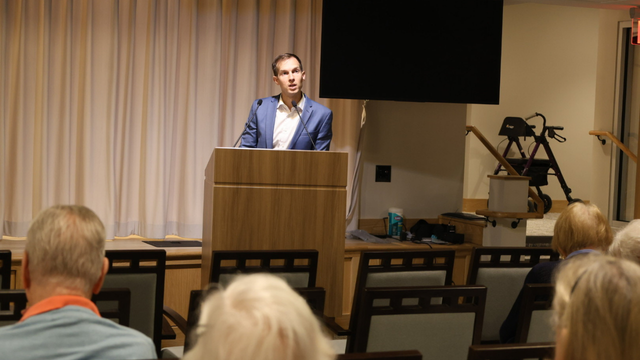
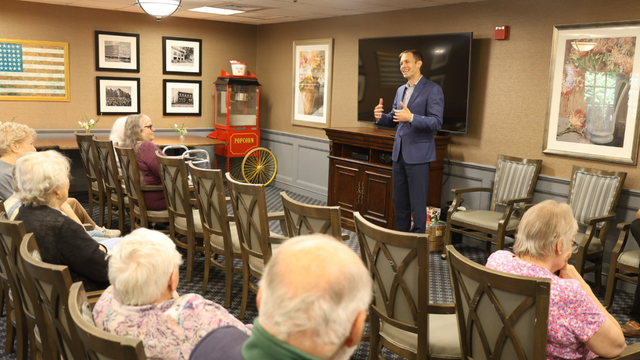
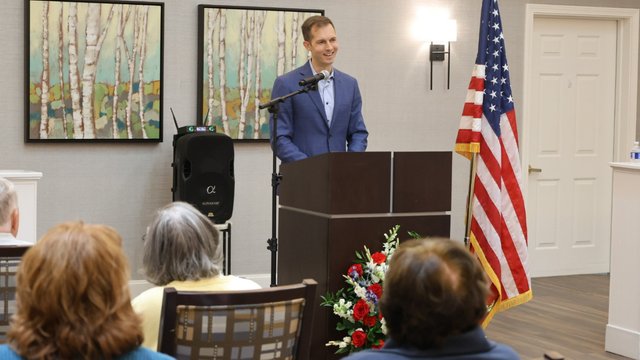
Three in-person Q&A sessions with seniors: North Hill in Needham, Christopher Heights in Attleboro, and Willow Crossings in Mansfield each hosted me for Q&A sessions with seniors in residence, over the course of three days. I spoke about my efforts to lower out-of-pocket costs for Rx drugs, first in Medicare and now for all patients; protecting mail-in voting for the midterms; and fighting back against the corruption & lawlessness of the administration.
We also discussed social media. Most of the seniors in attendance noted their concern with their grandchildren's use of social media & smartphones. I conveyed to them that, as I visit schools throughout the district, these young people express those same concerns themselves. At a point when federal inmates now spend more time outdoors than the typical American child, it's clear that Congress must act against the social media corporations, and I am leading on that legislation. |
|
| Days in the district: Sharon, Mansfield, Norfolk & Needham |
|
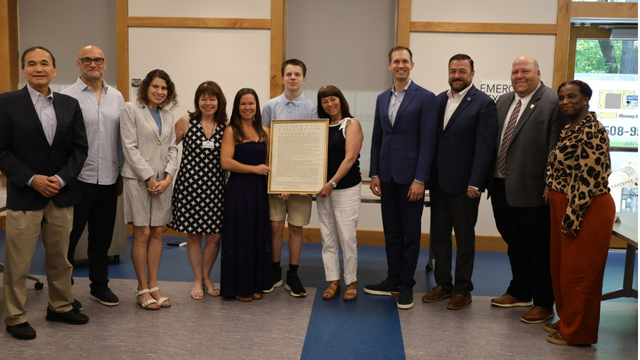
Sharon 250 celebration for Deborah Sampson: Deborah Sampson was the first woman to ever enlist in the United States military. Disguising herself as a man, she fought bravely in the Revolutionary War as a young woman, then went on the lecture circuit as an older woman to electrify audiences with her stories. She was socially censured for both acts, but never backed down from her insistence on equality.
Deborah was a Sharon resident, and I joined Sharon historians & local leaders for a presentation & discussion about her legacy. I also got to meet her descendants, who recently discovered their connection and featured on Good Morning America.
One note of interest to me: after years of wrangling, Deborah finally got a veteran's pension through the good offices of her congressman. Nice constituent services from Dr William Eustis, a fellow Revolutionary War veteran!

Airport & water infrastructure priorities in Mansfield & Norfolk: Last week I met with local officials in both Norfolk & Mansfield to review infrastructure priorities. In Norfolk, we discussed how to build on the $1M earmark I secured two years ago for sewer. Connecting the Department of Corrections sewer facility with the town center will unlock downtown housing & commercial development.
In Mansfield, I toured the airport to learn about upgrades to runways, hangars, fencing, and safety equipment. Joel Brandwine, Chair of the Mansfield Airport Commission, recently received the 2025 Adult Volunteer Award for his efforts to secure federal & state grants for the airport improvements. Beyond the airport, Joel volunteers with Keep Mansfield Beautiful and coaches his children’s sports teams.

Flora & fauna scavenger hunt with Needham summer campers: My staff and I took Congress on a field trip to Needham Summer Camp, where the kids, counselors & I did a scavenger hunt for various insects & plants. I explained to the campers my bipartisan America’s Living Library Act. This bill would direct the Secretary of Interior to phase-in a project to collect, catalog, and sequence genomic information of animals, plants, fungi, and microbes on U.S. public lands, starting with National Parks. The effort would establish physical collections of the samples in addition to a public genomic database. America's flora, fauna & fungi is not just part of our national endowment, it's a strategic biological resource. Combining the great outdoors with science is a win-win. |
|
|
|
Question: What kind of jobs are best suited for success in this fast-changing economy? [an amalgamation of questions I’m frequently asked by high school and college students.]
Answer: Consider jobs based not just on industry or the function, but also based on the employer itself. Different companies offer different upward trajectories.
I hosted Rajiv Chandrasekaran, managing director at the Emes Project, for a conversation with staffers at the Build America Caucus in Washington.
The Emes Project is a policy & advocacy organization focused on economic opportunity. Mr. Chandrasekaran, a veteran journalist, briefed staff on the Project's research on upward mobility for employees of corporate America.
The key finding: where you work matters massively for career growth and job satisfaction. Employers within the same industry vary widely in how they afford opportunities, particularly to young talent. States should consider this metric when deciding which companies to recruit for relocation. And the federal government may want to compel from public companies the data-sharing that makes these outcomes more transparent.
If you or a young person in your life is deciding where to work, point them to this evaluation of 1,750 companies based on the career growth of their employees.
You can submit a question for a future newsletter here. Please note that casework inquiries for federal agencies must be submitted to my website here. My casework team will respond to these in a timely manner. |
|
Onwards, |
|
|
|
Jake |
|
|
|
|
|
|

|
|