|
|
|
LAST TWO WEEKS IN REVIEW |
|
Good afternoon. I’m your Representative in Congress, and I write to keep you informed. Shana Tova! |
|
.png "9.10_e-newsletter_(1).png")
|
|
Secretary of Defense Pete Hegseth must be fired
|
|
|

Secretary of Defense Pete Hegseth must go. On both CNN and Fox News, I am making the case that his abysmal leadership of the Department of Defense, characterized by purges, gaslighting, and incompetence, warrant his removal. If he is not fired, I will push for his impeachment should Democrats take back the House and Senate. You can read an exchange I had about the Secretary of Defense on Fox News’ The Big Weekend Show over Labor Day weekend below:
Rep. Jake Auchincloss: Pete Hegseth…has made this country less safe by misleading the American public and his own commander-in-chief about the state of munitions and this war.
Fox News: Do you believe that's an impeachable offense as far as munitions and not being accurate in terms of what we have and what we don't?
Rep. Jake Auchincloss: I think the pattern of conduct by the Secretary of Defense, starting with Signalgate, with munitions readiness, with the absolutely incompetent execution of this war that has brought in a nuclear power to the Middle East through the Mecca Pact, far from actually getting rid of a nuclear enrichment strategy, warrants impeachment. This Secretary of Defense is a clear and present threat to the American public.
The Secretary’s poor stewardship is not just a national security problem. It’s also undermining good order & discipline within the ranks. This week, I spoke to a Navy Commander and medical professional, born in the Massachusetts Fourth, who is being denied promotion – and potentially even demoted – for serving in a billet, designated by the Biden administration, that included gender-affirming care. Punishing officers for carrying out lawful orders is a terrible precedent that will politicize our military. I am supporting this Commander as she fights back. |
|
Should Pete Hegseth be impeached? |
|
|
Celebrating & safeguarding diversity in our district
|
|
|
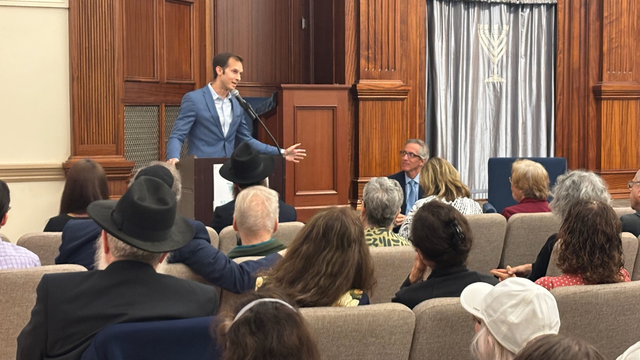
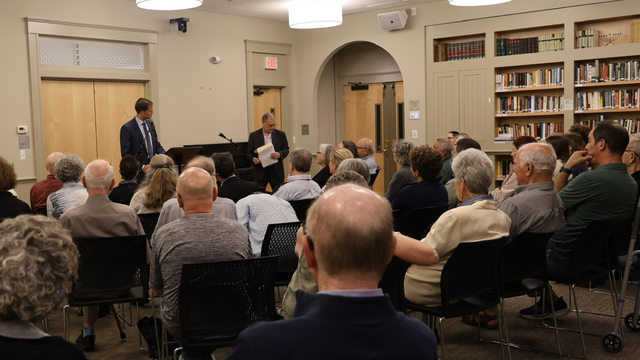
Beth Menachem Chabad in Newton and Temple Sinai in Brookline hosted me for Q&A. It included intense testimony from my Jewish constituents about what antisemitism feels like in daily life. Many of the Chabad's congregants are visibly Jewish, because of their attire, so antisemitism is not an abstraction to ideologically oppose; it is a clear & present threat to physically guard against. I will take this testimony with me to Congress as I use my voice & vote to condemn & counter antisemitism.
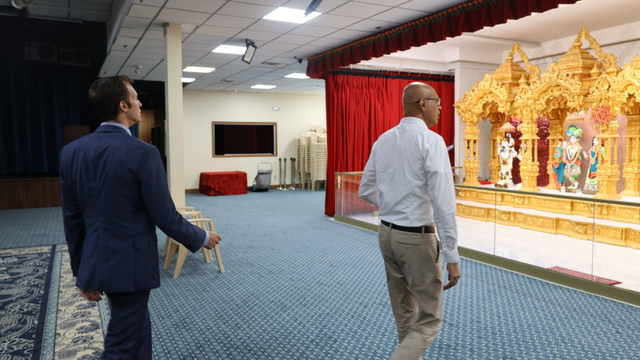
BAPS Swaminarayan Sanstha is a Hindu denomination that is growing along with the Indian community in Massachusetts. BAPS combines traditional religious practice with extensive volunteerism and youth & family programming, and it operates Hindu temples and community centers throughout the United States. I visited the Sharon mandir (temple) to meet with its leadership, learn about their faith tradition and programming, and discuss their policy priorities. I'm grateful for their warm welcome and look forward to more time together.
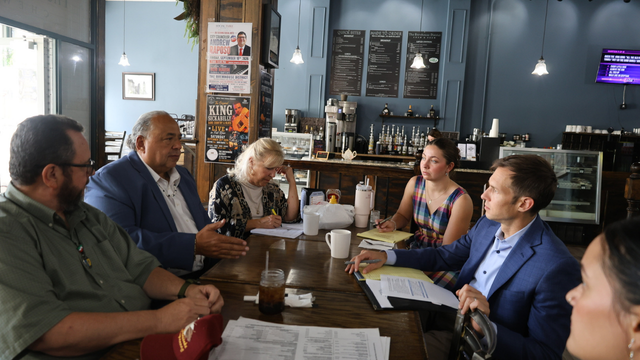
The name Wampanoag translates to "People of the First Light" or "Easternmost People" because their ancestral homelands catch the first sunrise of the day. I met with the leadership of the Seaconke Wampanoag tribe, which encompasses southeastern Massachusetts and Rhode Island, to discuss federal recognition, funding, and health services for the Seaconke Wampanoag. I learned a lot about the history & present status of the 500-member tribe from the Seaconke historian who joined us.
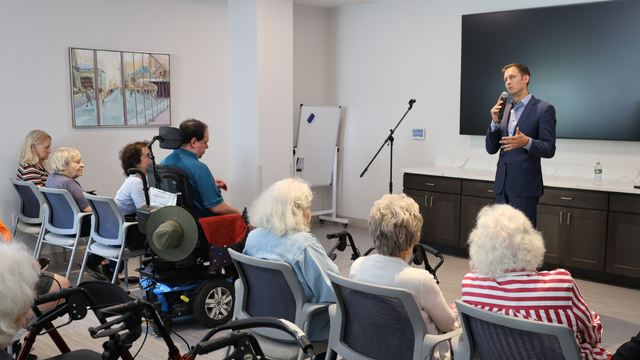
Center Communities of Brookline, a Hebrew SeniorLife establishment that offers supportive apartment living for seniors, welcomed me for a Q&A session. One new question that came up was about death with dignity, which is medical aid-in-dying legislation meant to empower everyone to choose end-of-life care that reflects their priorities and beliefs.
I support death with dignity policy that aligns with the objectives of the non-profit Compassion & Choices:
- Expand authorization & accessibility for end-of-life care options, including medical aid in dying, for qualified terminally ill adults
- Address care for those living with dementia by normalizing advance-care planning so people can pre-claim their right to the kind of care they want, nothing more and nothing less
- Transform the ER experience for dying patients by broadly implementing an existing model of care that integrates palliative medicine into emergency settings
I believe in the liberal tradition in which individuals are empowered to author their own lives. That includes writing the final chapter.
Global LGBT protection legislation: Human dignity does not stop at our borders. Everyone deserves equal protection regardless of sexual orientation or gender identity. I recently co-sponsored two bills aimed at preventing violence towards LGBT individuals worldwide. The first, the International Human Rights Defense Act of 2025, would direct the State Department to combat anti-LGBT violence globally and establish a dedicated Special Envoy to coordinate policies. The second, the Global Respect Act, would mandate presidential sanctions against foreign actors responsible for flagrant abuses against LGBT individuals. |
|
The R&D jobs impact: for every 10 biotech jobs, 16 non-biotech jobs are created
|
|
|
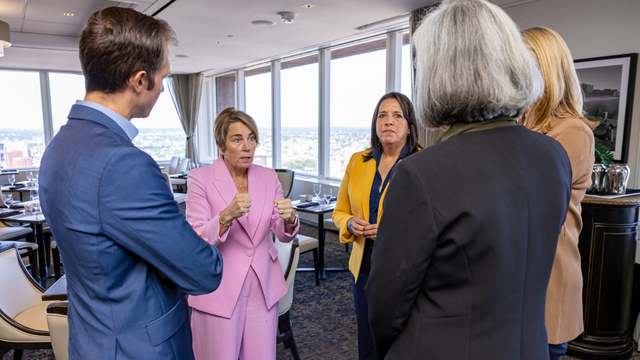
Every 10 biotech jobs created generates another 16 non-biotech jobs. Massachusetts federal & state leaders must work together to oppose & overcome Trump's anti-science agenda. Not only therapies for patients around the world, but jobs right here at home, are in the balance. I recently organized a meeting with the governor, lieutenant governor, and congresswomen Katherine Clark and Lori Trahan to discuss federal policies that strengthen medical science in Massachusetts. I'm committed to working with them to set funding, regulatory, and reimbursement policy for a thriving science & medicine sector.
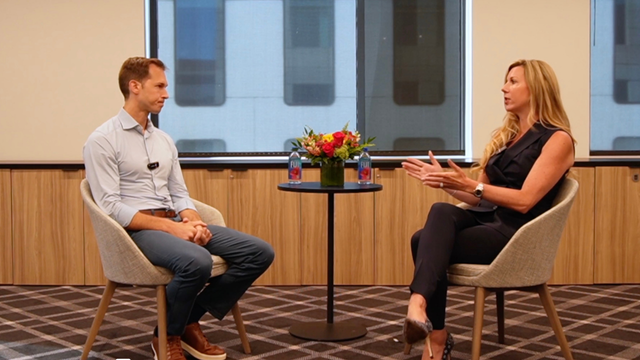
To close out August, I joined MassBio CEO Kendalle Burlin O'Connell in Cambridge to discuss how biotech has become a strategic tug-of-war between Washington and Beijing, what Washington must do to win, and why Massachusetts cannot be complacent about remaining a life sciences capital.
Rep. Jake Auchincloss: [Biotech] is the jewel in the crown of Massachusetts economic development, and it's under stress right now. It's an obligation of federal and state policymakers to ensure that this industry thrives, not just for patients, but for our constituents whose jobs and mortgages rely on it. And right now there is too much conversation about Asia, and not enough conversation about Washington. The most important capital is not the capital halfway around the world. It's the capital about a couple hundred miles south of here that is not doing a very good job right now…We got to fix that.
If Eds and Meds is the engine of the Massachusetts economy, NIH funding is a fuel injector through that engine. Massachusetts gets $2 billion of NIH funding every year, and this administration considers basic research funding to be a blue-state subsidy…They view this as: ‘This is just money for Massachusetts. They didn't vote for Trump.’ That attitude is so dangerous and damaging.
[Budget Director] Russ Vought is an enemy of science. I have worked extremely hard on the committee of jurisdiction to protect and insulate the NIH from that. I would say we've had big success. We've protected the NIH overall top-line appropriations number modestly. We have been able to push back on some of the most counterproductive proposals, but the grants are not coming out fast enough. They're using forward funding to deprive young researchers of early-stage grants that change careers and start companies. Now Russ Vought is proposing this uniform grants regulation that would politicize peer review. If you were a mad scientist in a lab trying to cook up a policy to destroy U.S. biomedical leadership, politicizing peer review would be a darn good place to start. I have a bipartisan proposal that would immediately nullify that rule if it were to go into effect. But we're going to continue to need industry and academia to rally against this because it's a terrible idea.
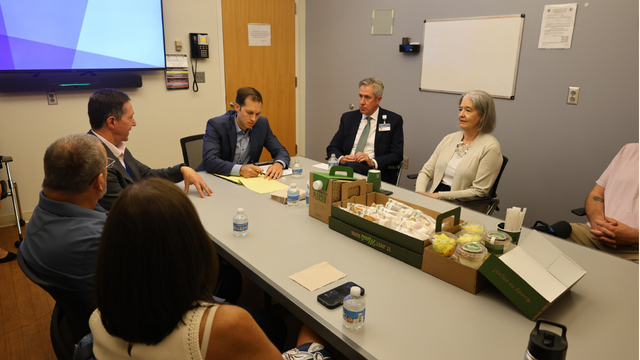
Clinical trials modernization for Huntington’s Disease: Huntington’s Disease (HD) is a progressive genetic disorder that causes the degeneration of nerve cells in the brain, leading to movement, cognitive, and psychiatric disorders. There is no cure. There are, though, treatments to manage symptoms, which often first present when patients are in their 30s and 40s.
Because HD is inherited on a single gene, it ravages families. Individuals who spent a decade caring for a mother with HD then discover that their son has the disease too – and spend another decade in shared suffering. I went to Beth Israel's Huntington Disease center to meet with patients, caregivers, and experts about HD. They spoke of the wrenching toll that HD puts on families, including the decision as prospective parents about whether & how to have children, knowing they could carry the gene.
I also heard of hope, in the medical science and clinical trial network of which Beth Israel is a global leader. We discussed how my bipartisan clinical trials modernization legislation can help HD centers of excellence enroll and support patients, so that medicines can sooner come to market that prevent this dreadful disease.
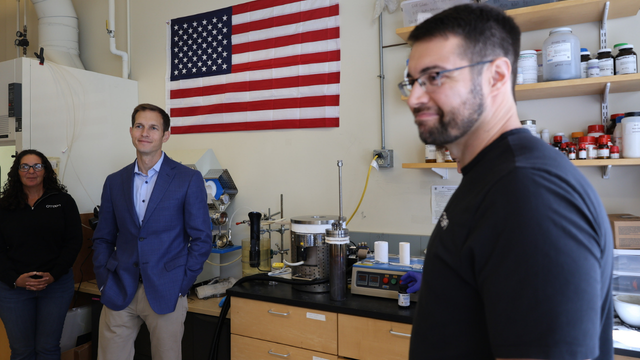
R&D in another sector – energy – with Project Omega in Fall River: The Department of Energy spends more than $2 billion annually to handle spent nuclear fuel. Meanwhile, fuel is a third of the cost of nuclear energy production at large plants. Project Omega, operating out of a UMass industrial lab in Fall River, is working to solve both problems for a win-win on clean, affordable & reliable energy. With a federal R&D contract, Project Omega is recycling spent nuclear fuel to be used by reactors.
This would prevent the fuel from being stored underground, where it might leach, lower taxpayers' bill for managing spent fuel, and reduce energy prices. As a Member of the Energy subcommittee, I am a strong proponent of nuclear energy and am seeking the policy & technology to build more reactors, faster & cheaper. This is especially critical for Bay Staters, who pay some of the highest utility bills in the country – and would pay a lot less if more nuclear were on the grid. |
|
Reforming the Supreme Court through Congress
|
|
|
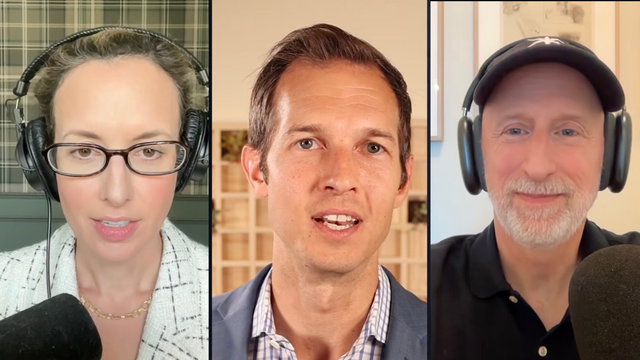
Late last month, I joined The Dispatch’s Advisory Opinions podcast with Sarah Isgur and David French to debate how to fix Congress. We discussed why Congress must restore its Article I powers over war, tariffs, appropriations, law enforcement, and agencies. I also put a marker down for multi-member districts as a way to neuter the power of gerrymandering.
We debated ideas for reforming the Supreme Court to hold justices and the institution itself accountable. You can read some of my remarks on the topic below:
Rep. Jake Auchincloss: I'm a co-sponsor of the 18-year term limit, where you cycle the Supreme Court justices into senior status. I think that's in keeping with the intent of what a lifelong appointment meant back in the 1700s. Number one, from an originalist perspective, but also, two, I think it stabilizes what has become too overtly political of a process in terms of the nominations. I'm in favor of [Congress] imposing a code of ethics on the Supreme Court. Shame on them for not doing it themselves… And I'm very open to changing the number of justices, so long as it doesn't become a ping-pong game of court-packing by both sides. Nine is not sacrosanct.
|
|
Young lawmakers for social media accountability
|
|
|
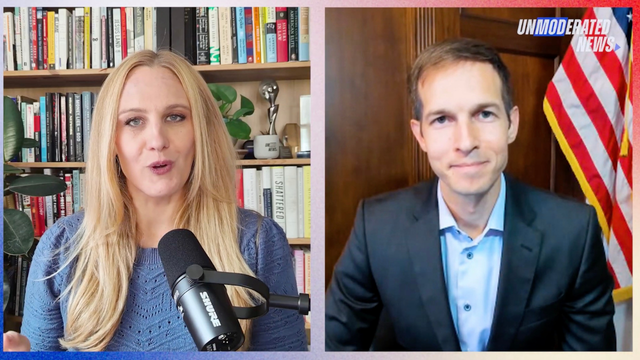
Earlier this summer, I joined Sarah McCammon from Unmoderated News for a discussion that included how to hold social media corporations accountable for the harms they have caused, as well as my ongoing bipartisan efforts to protect Americans from those harms. The episode is now live. You can check it out here, or read an excerpt of our conversation below:
Sarah McCammon: You've called for what you describe as a patriotic, productive populism. What does that look like?
Rep. Jake Auchincloss: It’s about channeling the righteous anger over a lack of upward mobility for the middle class in a way that is productive [and] has a positive-sum rather than a zero-sum view of solutions. I'll give you an example. I have legislation that would tax the social media corporations, levy their digital advertising revenue, and take that revenue and invest it in one-on-one tutoring for kids and building 1,000 trade schools across the country. I think this has elements of both populism and productive policy...the economics is good, the politics is good, and I think we should pick that fight.
Sarah McCammon: It almost makes me think of models where states tax or use the lottery or something to fund education, taxing vices, what you might call vices, to pay for public services.
Rep. Jake Auchincloss: …What's been interesting about the social media issue is that it's cross-partisan, and the way to unlock that energy is generational. Younger lawmakers at all levels view this differently because we have kids and we're fed up. And you're able to flip it from an argument about speech towards an argument about public health…This is about: ‘What is your product doing to the developing brain, and what is the public interest in regulating that to protect the developing brain?’ |
|
| Understanding extremism in America |
|
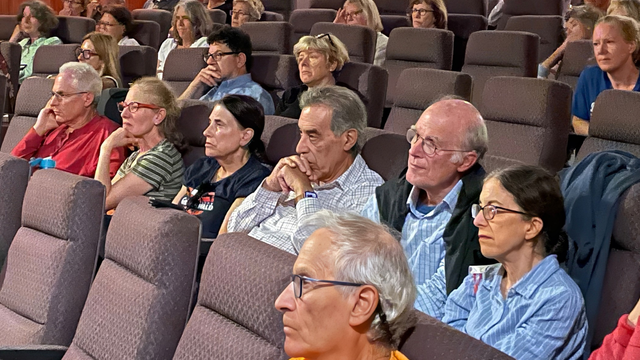
The West Newton Cinema screened Homegrown, a film that examines the lives and political evolution of three young men involved in the American far-right movement, which took violent form in the insurrection on January 6. I joined a panel afterwards along with the film-makers. I am so impressed by the producer and director's capacity to both unsparingly depict extremism & violence while maintaining curiosity and empathy about the subjects. Both of them (a husband & wife team) were surprisingly & refreshingly optimistic about the American character and our prospect for renewal based on common sense and decency.
For my part, I noted how January 6th was my second day in Congress and my first hard lesson: I watched so many Members of Congress vote to de-certify the election results, not out of conviction but from fear. I resolved to never take a vote out of fear.
The biggest city I represent – Fall River – voted for Donald Trump in 2024, while in the second biggest city – Newton – 3 out of 4 voters chose Kamala Harris. There are even bluer & redder pockets throughout. I engage with constituents who have sharply different opinions about MAGA, immigration, guns, taxes, health care, Israel and much else besides. I have spoken in hundreds of rooms over the last 6 years, and have yet to find one where everyone agrees with everything I say. But I always seek to listen with curiosity, explain my positions based on shared values and candid trade-offs, and avoid abstractions in favor of specific deliverables. |
|
| Driving infrastructure funding to Massachusetts |
|
|
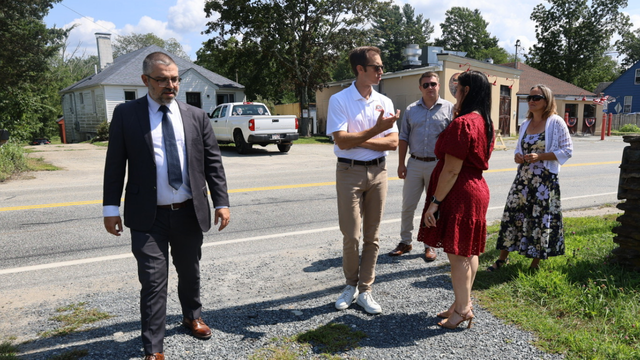
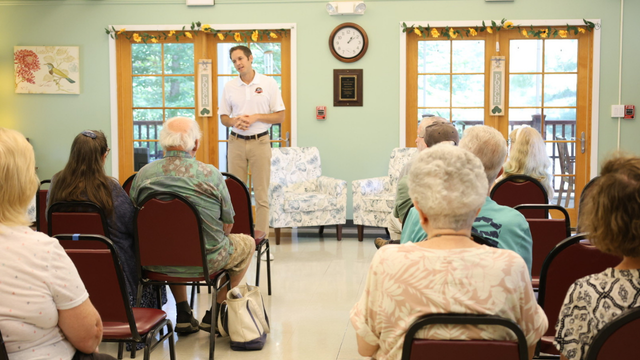
With visits to Freetown, Berkley and Lakeville I completed my annual circuit of each of the 35 cities & towns that I represent. I conducted Q&A sessions at the Freetown and Lakeville Councils on Aging, while in Berkley I reviewed education & infrastructure priorities with town leadership, including walking a potential pedestrian pathway, connecting the middle school with the town common, for which I have earmarked federal funding.

Track Improvement Program repair work.
Image: Massachusetts Bay Transportation Authority
Last month, I joined two efforts to support infrastructure development in Massachusetts. The first urges the Federal Highway Administration (FHWA) to restore safety measures for pedestrians and cyclists and to protect funding for cycling and walking infrastructure. This administration has a car-only perspective on mobility.
I am also demanding accountability from the Department of Transportation over unjustified delays in the Capital Investment Grants (CIG) pipeline. This particularly affects Boston’s Green Line improvements, which would increase capacity and upgrade tracks, stations, signals, and other infrastructure in the city. Reliable public transit and walkable streets are essential for economic mobility and quality of life across our communities. I’ll keep working to ensure political delays and bureaucratic rollbacks don’t compromise safety or stall the transit investments that Bay Staters deserve. |
|
| The American Experiment, 25 years after 9/11 |
|
|
I was honored to deliver the keynote remarks at Taunton’s commemoration of the 25th anniversary of September 11. Below are my remarks:
It’s an honor to address this solemn assembly as we commemorate the 25th anniversary of the attacks on September 11. That day is increasingly used as a marker – a pivot point – for what came before and what came after. It ended the innocent 1990s sense of one global village that had taken hold since the fall of the Soviet Union. It launched a series of wars whose seismic shocks are still shaking the Middle East today.
Yet we owe it to the victims and heroes who experienced that day – and to my children’s generation who did not – to memorialize September 11 unto itself. Not for what came before. Not for what came after. But for the blood, sweat and tears of that awful event itself.
It was a day of unbearable tragedy. Office workers jumped from skyscrapers rather than burn in an inferno. Airplane passengers lurched to collision in terrifying final moments.
It was a day of remarkable heroism. Police officers and firefighters ran into those skyscrapers, into those infernos; many did not return. Airplane passengers stormed the cockpit, so that the final, terrifying collision did not kill other innocents.
And it was a day of solidarity. Ferry boat pilots flocked to southern Manhattan to shepherd hundreds of thousands of New Yorkers to safety. Allied leaders pledged support and mutual defense. Americans from all walks of life felt strum those mystic chords of memory that bind us together as a proud people.
Tragedy and heroism are with us still, every day, in measures grand and mundane. Solidarity, though, feels in short supply. We as Americans must restore our unity by reminding ourselves that we, all of us, are in a covenant to defend one another’s natural rights.
These self-evident truths about equality and freedom are set forth in our opening statement as a people, the Declaration of Independence.
Every one of us has a set of intrinsic rights:
- to survive;
- to not be tyrannized;
- to live the life we choose for ourselves;
- and to take part in determining who represents us and in holding them accountable.
That’s the American Promise, our mutual pledge to uphold these inalienable rights.
And the American Experiment is a project to protect one another’s rights by governing ourselves.
We are a people united by our commitment to uphold and defend this Experiment, lest it perish from the Earth.
These are the ideals Frederick Douglass championed in every speech he gave. This is the Founding Fathers in Philadelphia, Lincoln at Gettysburg, and Martin Luther King Jr. on the National Mall.
Americans fought for these ideals at Valley Forge, Shiloh and Normandy; we advanced them at Seneca Falls, Selma and Stonewall. The American Experiment is what the enemies on 9/11 so despised, and also why we felt so stubbornly proud that day, amidst the tremendous sorrow and suffering.
We honor the heroes and victims of September 11 – and we re-animate our shared spirit as a people – when we recommit ourselves to our American Promise, our covenant to defend one another’s natural rights. |
|
|
|
Question: What is Congress doing to regulate AI?
- Mary from Hopedale
Answer: I have bipartisan legislation to impose liability for deepfakes and harassment on the platforms, like Meta and Google, that deploy AI. My legislation also makes clear that AI agents trained by OpenAI and Anthropic do not have immunity from tort law, which means they can be sued for harms caused. Liability is a critical tool by which policy-makers can regulate fast-moving technology, because liability is ‘outcomes-based’ rather than ‘product-based’ – it doesn’t matter what technology underpins the product, the product-maker is strictly responsible for negative effects.
My Massachusetts colleague, Lori Trahan, has also put forward a bipartisan framework for AI regulation, here.
You can submit a question for a future newsletter here. Please note that casework inquiries for federal agencies must be submitted to my website here. My casework team will respond to these in a timely manner. |
|
Onwards, |
|

|
|
Jake |
|
|
|
|
|
|

|
|