|
|
|
LAST TWO WEEKS IN REVIEW |
|
Good morning. I’m your Representative in Congress, and I write to keep you informed. |
|
|
|
In Fall River to act against mass arrests
of immigrants
|
|
|
The Immigration and Customs Enforcement (ICE) arrest wave in New Bedford and Fall River is sowing fear in the immigrant communities I represent. This broken agency continues to undermine public safety, which requires trust, due process, and professional law enforcement. ICE must provide a rationale & update for each individual arrested in this operation, and my office is ready to assist constituents. Congress should pass the Stop Excessive Force in Immigration Act, which I have co-sponsored.
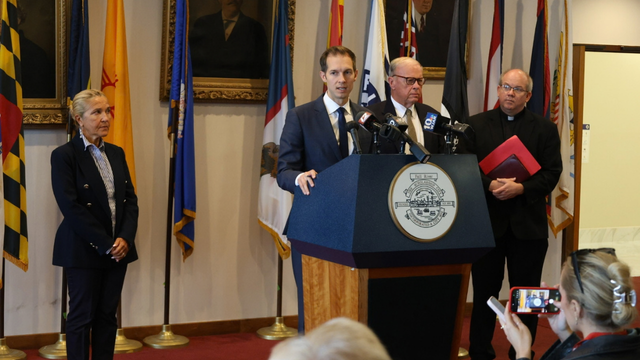
On Thursday, I called together Fall River Mayor Paul Coogan, Immigrants’ Assistance Center President Helena DaSilva Hughes, and Reverend Richard Wilson of the Fall River Diocese at City Hall to speak out against the recent ICE surge. Looking ahead to the next term, a Democratic majority should prioritize using its power of the purse to deny further no-strings-attached funding to ICE, which already consumes more money than federal action against gun & drug trafficking, corruption, terrorism, and crime, combined.
You can read an excerpt of coverage from MassLive below:
After three days of a federal immigration enforcement surge on the South Coast of Massachusetts, U.S. Rep. Jake Auchincloss, D-4th District, gathered with a Fall River priest, the city’s mayor and a nonprofit to discuss what they called a wave of mass arrests targeting local immigrant families.
“This (Trump) administration and its paramilitary arm in ICE are trying to make our neighbors feel afraid,” Auchincloss said.
...
Auchincloss said the federal immigration enforcement operations on the South Coast over the past three days are an example of “mass arrests and dragnet operations that are not targeted towards individuals who are a threat to public safety.”
…
“I feel a deep sense of anger against the way that ICE is operating,” Auchincloss said.
“Their recruitment, their training, and their operations are all falling below the bar that Americans should expect from uniformed law enforcement .... (Americans) want to see an immigration policy that deports individuals who are a threat to public safety,” he continued.
“They want to see an immigration policy that does not harass or intimidate individuals who are here in the United States — working, building community, paying taxes and raising families,” Auchincloss said. |
|
Preventing exploitation by Big Tech: 16 & Up Social Media Act
|
|
|
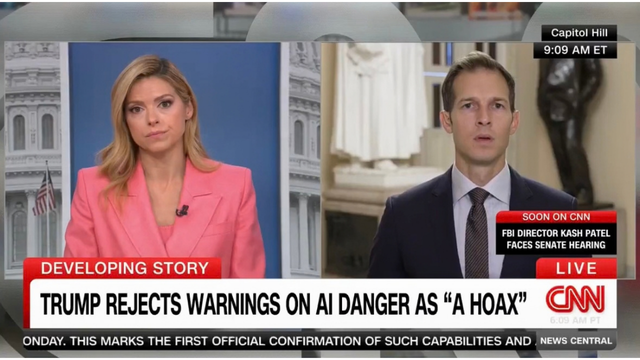
Public concern about AI has crested in recent weeks. Three years ago, I delivered the first floor speech written by AI to raise awareness about the technology inside Congress. Then I introduced bipartisan legislation. But neither House nor Senate has acted with a sense of urgency, repeating the same mistakes made twenty years ago with social media. Before Speaker Mike Johnson canceled votes, I made the case on CNN for how Congress can thoughtfully regulate AI. You can read an excerpt of the interview below:
CNN: You're one of the few who has talked early and often about AI in Congress. The latest person speaking out is the President. He's lashing out against the concept of new guardrails and protections on the industry…How much do you think he could get in the way if Congress did want to take action here?
Rep. Jake Auchincloss: … [AI] capabilities are doubling every six to 12 weeks. Congress obviously does not move that fast. Fortunately, there is a legal tool that is designed for technologies that move very fast, and that tool is liability. It's the concept that policymakers define outcomes that we consider to be vital to the health and safety of the American public, and then the creators of that technology are accountable if they violate those outcomes. This is why my bipartisan Deepfake Liability Act is such a critical tool in regulating AI, is that we define things not in terms of the technology, but in terms of outcomes that we care about—harassment and cyberbullying and intimate privacy violations through deepfakes—and say you're liable. [We’ve got to pass other legislation as well], but liability is a strong start.
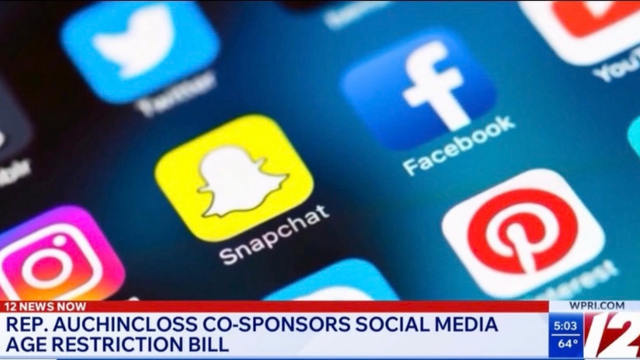
This month, I introduced the 16 & Up Social Media Act with Representative Erin Houchin, a Republican from Indiana and another young parent, to establish a national age standard of 16 for social media platforms. The bill would protect children from infinite scroll, autoplay, push alerts, and personalized feeds designed to keep users hooked. Social media corporations addict children for profit. The exploitation must stop. Our kids deserve their childhood back. You can read more about my bill in an excerpt of WPRI’s coverage below:
The bipartisan “16 & Up Social Media Act,” introduced just a few days ago by Congressman Jake Auchincloss of Massachusetts and Congresswoman Erin Houchin of Indiana, would make kids ineligible to use social media until they turn 16.
Auchincloss told 12 News he believes features like autoplay, push notifications and infinite scrolling can get kids hooked on social media, adding that, as a parent, he’s passionate about child development.
“We’re all anxious about the negative impact of social media on kids’ emotional development, on their ability to enjoy time in real life with friends and family, and on their attention spans,” the congressman said.
Under this bill, social media platforms would have to block underage users from creating accounts, as well as identify and delete existing accounts operated by underage users. |
|
Should the age limit for social media accounts be 16 & up? |
|
|
Treating cost disease in health care
|
|
|
Last year, I wrote in The Economist about the imperative to diagnose the driver of high prices before prescribing solutions. The diagnosis is cost disease, otherwise known as the Baumol effect: service industries with low productivity growth inflate fast. I wrote:
"Democrats earned Americans’ trust on health care by expanding coverage. Now, we must lower its cost.
There are two ways to treat cost disease in health care. The first is more conventional: turn custom services into mass-produced goods. Generic drugs, therapy bots and over-the-counter hearing aids are examples. Each affordable product meets a need that was previously addressed through expensive clinical services. Democrats should accelerate this service-to-product pipeline, which will require taking on various special interests within the health-care system.
The other way to reduce health costs is to deflect patients from the most expensive sites of care. In America, those sites are generally intensive-care units, emergency rooms, nursing facilities and jails. Interventions that reduce demand for beds at those sites help treat cost disease. Examples include lowering co-pays (deductibles) for prescription drugs, promoting tele-health for the old, expanding community health centers’ footprint and taxing sugary beverages.
Health-insurance executives are likely to object that they do this already through their plans—or so they claim to Congress. Yet health-insurance premiums keep rising faster than inflation. Democrats should square off against the big insurers and show that we can lower costs where they will not."
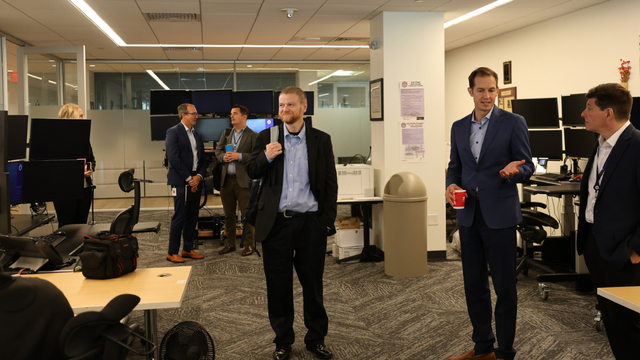
Since writing this more than a year ago, the imperative and the opportunity to treat cost disease in health care has only picked up pace. I visited the UMass Digital Hub in Worcester to see solutions up close. Using tele-health, remote monitoring, wearables, medication adherence tools, mobile health clinics, and more, UMass Memorial is treating cost disease and improving patient outcomes by deflecting in-patient stays in the most expensive loop in health care: Emergency Room → Intensive Care Unit → Skilled Nursing Facility.
This is a win for patients who address a spike in blood pressure without an 8-hour wait in the ER, or who rehab at home instead of a shared room in a nursing facility. It's also a win for healthy, premium-paying Bay Staters who cannot afford 10% annual hikes in their health insurance, driven in large measure by the 10% of healthcare consumers who use 70% of all healthcare resources, oftentimes shuttling around the ED → ICU → SNF loop.
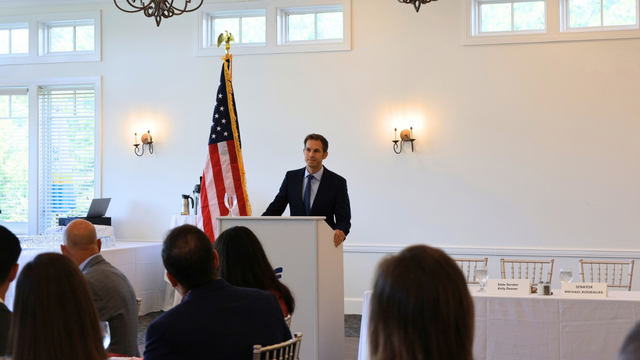
I met with a group of Bay Staters at the most painful edge of this perennial 10% inflation: small business owners. At the Cranberry Country Chamber of Commerce in Lakeville, I described the premise of cost disease, outlined solutions in healthcare, and made the case for Massachusetts to lead the way in lowering prices and improving outcomes as the nation's hub of health innovation. |
|
| Science is a public good, not a blue-state subsidy |
|
|
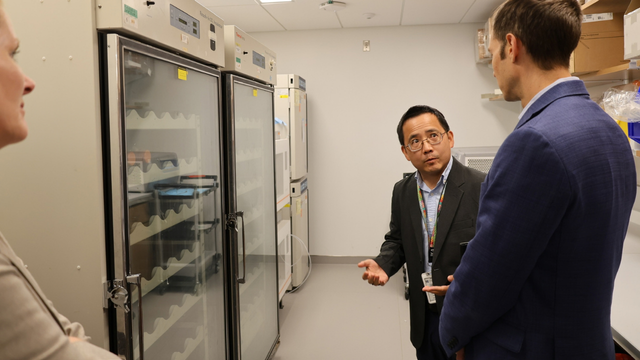

The Trump Administration does not consider medical science to be a public good. It views it as a blue-state subsidy – something that generates jobs & cures in places that did not vote for Trump. For this reason, Russell Vought, an architect of Project 2025 and now the director of the powerful Office of Management & Budget, is attacking medical science on a multi-front campaign that aims to (a) defund the NIH and (b) politicize peer review so that favored scientists win, not the best science. 'Favored scientists' are born in America, work in red states, and publish results aligned with the Administration's priorities.
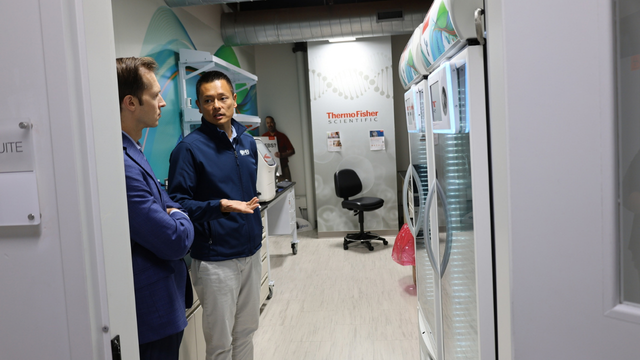
In the last week, I met with R&D leaders at every stage of medical science development. At UMass Medical School, academic researchers shared results that allow patients with genetic disorders to manufacture their own, unique therapies. At Massachusetts Biomedical Initiatives in Worcester, I toured start-up and scale-up research & manufacturing facilities for biotechs that are taking ideas from the bench to the market. And when speaking at the grand opening of Roche Genentech's new hub for cardiovascular, renal, and metabolic diseases on Harvard's campus, I huddled with the CEO and senior executives of this major pharmaceutical corporation.
Whether from the post-doc researcher or the pharma executive, the message to Washington is the same: America wins when the best science wins. There is no place in the scientific method for political agendas. Science supporters inside & outside Congress must:
- support & defend the NIH against Vought, whether it's his Uniform Grants Regulation (undercut peer review) or his insistence on forward funding (undercut funding), which is starving young researchers.
- welcome & celebrate immigrant scientists against xenophobic policies. Canada is already recruiting away top talent.
- rally red-state researchers to lobby their House & Senate representatives. The mindset that medical science 'happens in blue states' is not just narrow-minded, it's flat wrong. Brilliance is everywhere and Republican representatives & senators need to hear from their own constituents about how America is sacrificing its biomedical leadership.
I am working on all these fronts and more to support medical science. It's a jobs engine for Massachusetts and a bounty of hope for patients everywhere. You can help by telling R&D boosters in red states to call their Member of Congress!
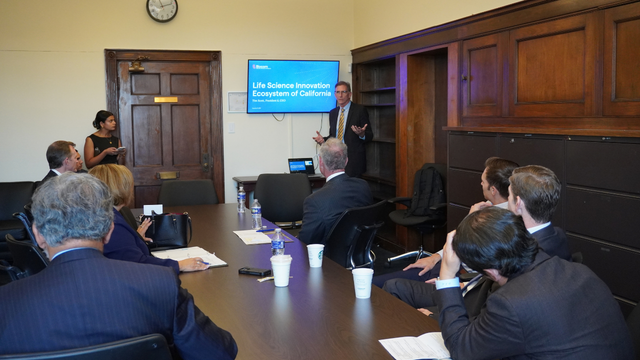
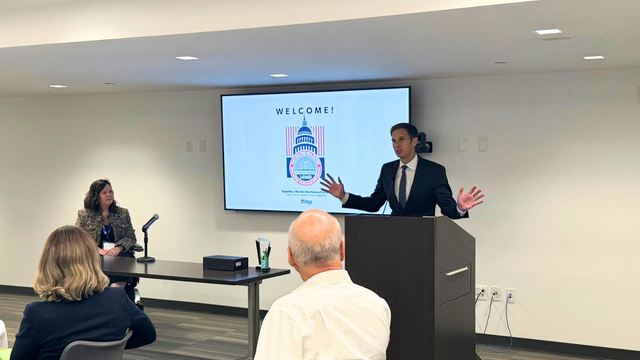
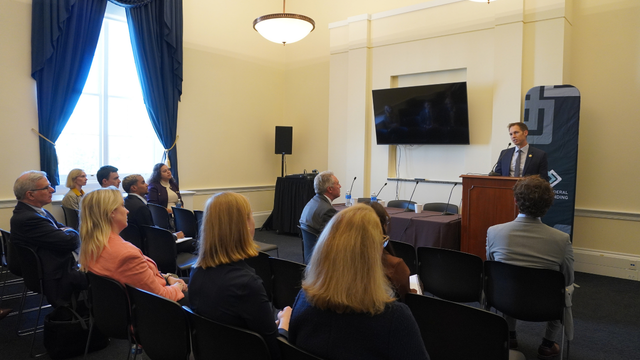
In Washington, I continue to build broad support for clinical trials modernization and R&D funding. I met with the life sciences trade associations for California & Massachusetts; the Speak Foundation, which advocates for Limb Girdle Muscular Dystrophy patients; and the Business for Federal Research Funding Coalition roundtable.
In each, I made the same points: America is not investing enough in medical science, and too many of the dollars it does invest get swallowed up by bureaucracy around clinical trials, rather than in experimentation & testing itself. My work to support & defend the National Institutes of Health and to build out a national clinical trials infrastructure are both aimed at more – and more efficient – research & development.

The Cure Sanfilippo Foundation hosted its ADVANCE virtual conference, and I was honored to address these parents. Sanfilippo syndrome is a rare genetic disease that causes childhood dementia, slowly taking away a child's language, mobility, and cognitive function. There is no FDA-approved treatment.
In addition to describing my legislation to modernize clinical trials to test rare-disease treatments with more agility, I also asked the parents to meet with their Members of Congress. Sanfilippo syndrome is not a red-state or blue-state issue. However, this Administration handles medical science with political gloves. Congress must act, and parents & patients represented by Republicans can help kick Congress into gear. Many Republican representatives quietly disagree with Trump's approach; they will get louder if their constituents hold them to account. |
|
The First Amendment is not a “privilege”
|
|
|
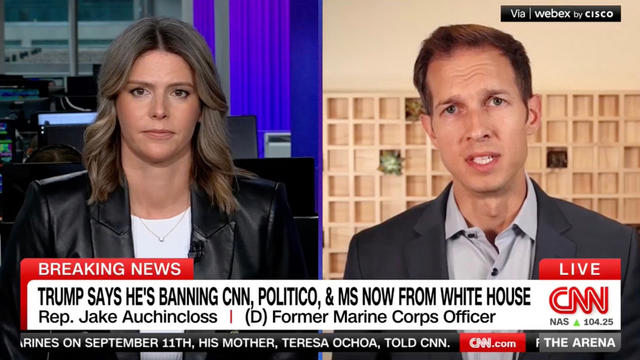
Last week, the White House announced that it would be banning CNN, MS NOW, and Politico from covering the White House. The Administration argued that “access to the White House is a privilege, not a right.” A federal judge rightfully ruled that their access be restored, which has now been granted.
I immediately called on Fox to boycott White House pressers in solidarity with these organizations, and I am glad that they did along with CBS & NBC. I also welcome statements put out by the Associated Press, New York Times, Washington Post, and more criticizing the ban as the attack on free speech and free press that it is.
I spoke about the media ban – and Trump’s attacks on other truth-seeking institutions – on CNN last Friday night shortly after it was announced. You can read some of my remarks below:
CNN: What impact does the President taking this action, and more broadly attacking the news media and its ability to report freely and fairly, have on Americans’ trust that our elections are free and fair?
Rep. Auchincloss: It undercuts that trust. What is unique about Trump is his declaration that he is truth unto itself. Traditionally, this country has tried to define truth in the public realm through at least four different institutions: elections; the law, particularly common law; a free and open press; and science. Those are four institutions that this large republic has traditionally used to grope its way toward a consensus about what is fact. It is interesting to note that he has attacked all four of those institutions: science, the media, the courts, and elections. He wants to declare that he is [the] truth and that there is no other source of truth. This is yet another blow in that narcissistic dynamic, one that we have to make plain to the American public as we work to secure these [midterm] elections. |
|
Clean energy sovereignty, not Russian oil
|
|
|
Putting the pressure on Russia: Last week, I voted to pass tough Russia sanctions legislation in the House. It had already passed the Senate, 86-11, and has now been signed into law. The law will impose tariffs on the top importers of Russian oil.
I voted Yes because this legislation is critical to the support and defense of Ukraine as it fights on the front lines of the free world. Appeasement does not work. Victory is vital.
To achieve a victory in which Ukraine's eastern border is secure; it can transport goods through the Black Sea; and it joins the European Union; NATO and partner nations must sanction Russian oil & gas exports while authorizing & equipping our ally to strike Russian oil & gas infrastructure directly. Only sanctions and strikes can strangle Vladimir Putin's war economy, for which oil is the lifeblood.
Concerns have been raised that this legislation empowers the President's expensive and chaotic trade policy. This legislation does not create broad, unilateral tariff authority or give the President a new general-purpose trade weapon. It is Congress finally exercising its Article I authority to direct targeted tariffs at countries providing material support for Russia’s war against Ukraine. The Trump Administration’s damaging national security and trade strategy underscores the importance of Congress reasserting itself as a constitutional check on the President’s authority.
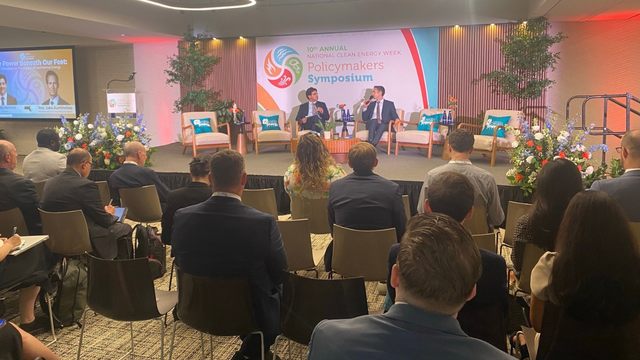
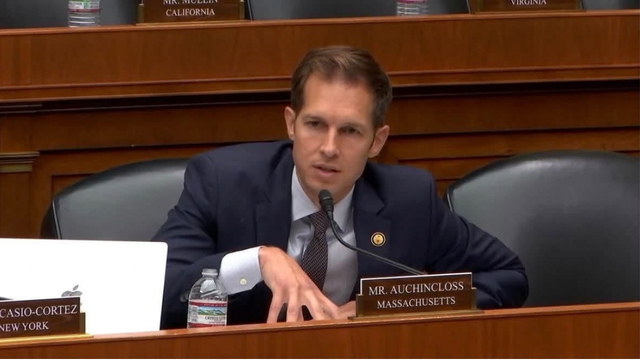
Teaming up on energy against Russia with India: At both an Energy sub-committee hearing and speaking to the National Clean Energy Week conference, I emphasized the potential for nuclear-energy partnership with India. India imports a lot of Russian oil, which is bad. It's also making reforms to enable more nuclear deployment, which is good. Congress just passed (and I voted for) legislation that makes it harder for India to import that Russian oil, which funds Vladimir Putin's war economy. We should pair that 'stick' with the 'carrot' of combined efforts on R&D and manufacturing of AP1000s and other nuclear reactors.
It's a win-win. Nuclear power is deeply affordable — when it's built on time and at scale. Two big countries, with lots of good engineers and electricity demand between them, working together to build out nuclear baseload could achieve economies of scale & scope faster than either one by itself.
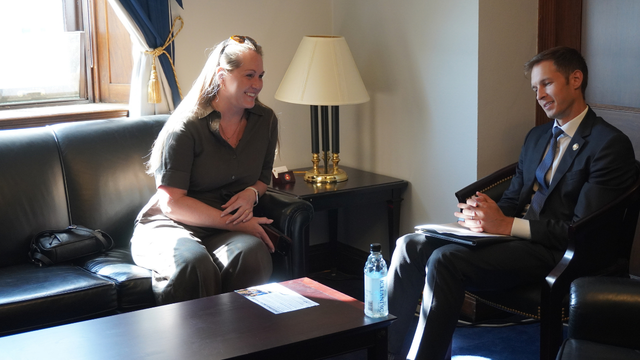
…and Iceland: Icelanders can often be spotted in Massachusetts, taking advantage of direct flights to shop and see everything on offer. Vice versa, too – Bay Staters travel frequently to our near-Arctic ally. I met with the Icelandic Ambassador to emphasize congressional support for our alliance at a moment when the President is embarrassing and undermining the nation and its allies; to discuss geothermal innovation and collaboration; and to encourage Iceland to deploy its own polar ice-cutter. The Arctic Circle is increasingly contested, and it's critical that the United States and its partners, like Iceland and Finland, work together to ensure freedom of navigation year-round. Without Arctic Security Cutters, which are medium-sized icebreaking ships, we cannot. America & Finland are partnering to build 11 more ice-cutters, and Iceland could enhance this partnership. |
|
| Addressing affordable housing for Bay Staters |
|


What does the renovation of an affordable housing complex in Attleboro & Polar Park (home of the WooSox) in Worcester have in common? Both were complex, state/local developments that are yielding more housing options for Bay Staters. Massachusetts is short 220,000 homes; the supply crunch is shooting up prices and driving out the 25 - 40 year-olds who cannot afford to start families in our state.
We need more housing choices: subsidized one-bedrooms (like Attleboro's), mixed-use apartments near amenities (like Worcester's), triple deckers, starter homes, memory care & assisted living, senior communities, ADUs, room rentals, group homes, and more. With interest rates rising, it's more important than ever that government at all levels speed up & simplify permitting, invest in water & transportation infrastructure, and unlock creative financing to build the housing that millennials & Gen Z desperately need. |
|
| Infrastructure & economic development on Route 1 |
|
|
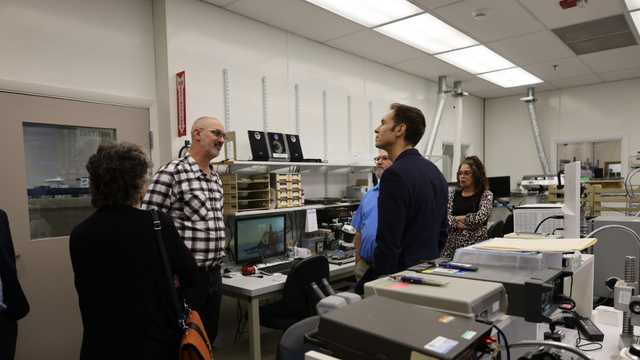
Mini Systems, Inc (MSI) builds small resistor chips for military and aerospace applications. They are "hiring like crazy" across their sites in North Attleboro, Attleboro, and Plainville, all in my district. I visited MSI to see how I can help with workforce development and to learn about the jobs they are creating. I was struck by the low employee turnover and the diversity of the workforce. The work is specialized, with tight tolerances and strict quality assurance, but does not require a degree or prior training. This is a theme that emerges across the precision manufacturing base in southeastern Massachusetts — companies recruit for a willing mind & ready hands and are eager to train on the job.
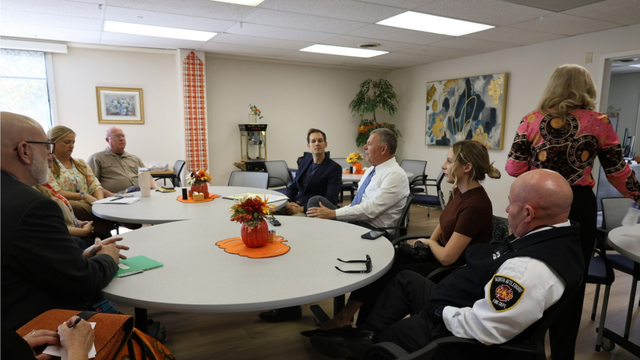

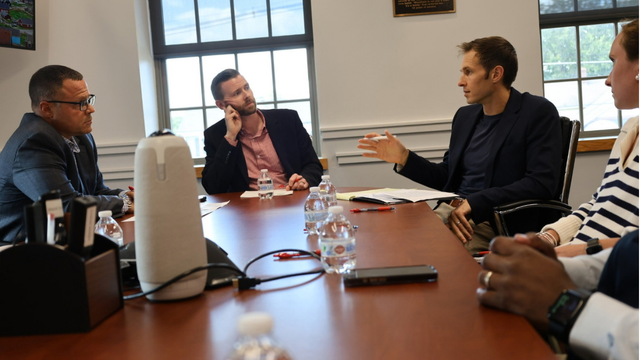
I spent the day meeting with state & local officials in North Attleboro, Foxboro & Wrentham to discuss federal support. Each town is different (only Foxboro has Gillette Stadium, for example) but all these Route 1 / I-495 communities are seeing land values & development pressure increase, based on convenient location to jobs & quality local services, without sufficient water infrastructure to support development. Since taking office, I have directed millions of dollars in federal water & sewer funding to the district and will continue to prioritize the water infrastructure, including along Route 1, that unlocks housing & industry.
It was especially gratifying to see in these towns the benefits from the 2021 American Rescue Plan funding, one of the first bills I voted for and a significant infrastructure boon to municipalities. North Attleboro used the funding to create a multi-purpose community center, featuring a library, senior center, food pantry, and day care. Wrentham renovated a park in its downtown. |
|
|
|
Question: Middle class retired independent seniors (who care for themselves) living on a fixed income, struggle to pay ever increasing rent in retirement communities. What can be done to ensure retired seniors are not treated as “cash cows” to be harvested by imposition of rent increases way above the cost of living index?
- Philip from Millis
Answer: Policymakers need to expand middle-income housing supply for seniors by unlocking more projects like Opus, a first-of-its-kind senior community (built in the MA-4!) that is designed for the ‘forgotten middle’ of seniors whose assets exclude them from subsidized housing but who do not earn enough for high-end communities. Opus required creative local & state financing, regulatory reform, and an operating model in which seniors both live & volunteer in the community. The template now exists and must be scaled.
Further, fixed incomes need to be protected from two inflationary pressures: healthcare & utilities. I’ve written above, in this newsletter, about treating cost disease in healthcare. On utility bills, the most immediate action is to end a failed and illegal war that has doubled the price of diesel to $6.50 a gallon.
You can submit a question for a future newsletter here. Please note that casework inquiries for federal agencies must be submitted to my website here. My casework team will respond to these in a timely manner. |
|
Onwards, |
|

|
|
Jake |
|
|
|
|
|
|

|
|