|
News from Representative Bentz
|
|
|
Dear Friend,
We have finished another month of legislative business in Washington, D.C. I apologize for the lateness of this edition, but the press of events over the past weeks has made it impossible to find the uninterrupted time it takes to review and edit. If you would like to see daily updates on my work in Washington D.C. and Oregon's Second District, please follow us on Facebook, HERE! |
|
|
|
|
Thank you to those who participated in our Telephone Town Hall!
.png "Telephone_Town_Hall_Graphic_(1).png")
Thanks to everyone who participated in my telephone town halls! We have held three– the first on May 21st, the second on September 8th and the third on September 17th.
In addition to telephone town halls, I have held four in-person town halls this year: Baker City (230 people), La Grande (500 people), Pendleton (300 people), and Port of Morrow (150 people). The numbers attending these live events this year were significantly greater than in previous years, but sadly many of the attendees were participating not to exchange thoughts and information but instead engaged in rude, repetitive, and practiced.
Therefore, I decided, for the time being, to switch to telephone town halls. The first one, held on May 21st, focused on Jackson, Josephine, and Douglas counties. It was a huge success, with almost 13,000 people, out of the 100,000 we dialed, participating. There were no interruptions, I didn’t need to ask local law enforcement to attend, and the misleading “mediscare” statements were significantly reduced.
On September 8th, we held our second telephone town hall. We focused this call on Klamath, Deschutes, Crook, Jefferson, Wasco, and Sherman counties. We called about 50,000 people and about 9000 participated. Questions covered forest management, water policies, health care and the economy. It also was a great success!
My third Telephone Town Hall was held on Wednesday, September 17th, and this call focused on Umatilla, Union, Baker, Gilliam, Malheur, Grant, Harney, Lake, Wallowa, Morrow, and Wheeler Counties. We again dialed about 50,000 people and about 8,500 constituents participated. Our conversation covered a wide range of issues, including the future of rural hospitals, challenges facing our schools, concerns about wildfires, timber revenues, wolves, and even nuclear power.
These three telephone town halls affirm the value of the telephone format. They allow me to engage with thousands of constituents, giving those who choose to participate the chance to raise their concerns while also allowing me to provide uninterrupted updates on what I am doing in Washington, D.C. Additionally, outside people aren’t able to hijack the event, turning it into a circus replete with misinformation, intimidation, and practiced recitations of language designed to scare people.
These three telephone events allowed me to speak directly to around 31,000 people, a number vastly greater than what would have been the case with live town halls. We estimate that my in-person town halls, had I continued to use the in-person format, would have resulted in my reaching about a third of the 31,000 number.
Thank you for joining my telephone town halls! |
|
Keeping the Government Open
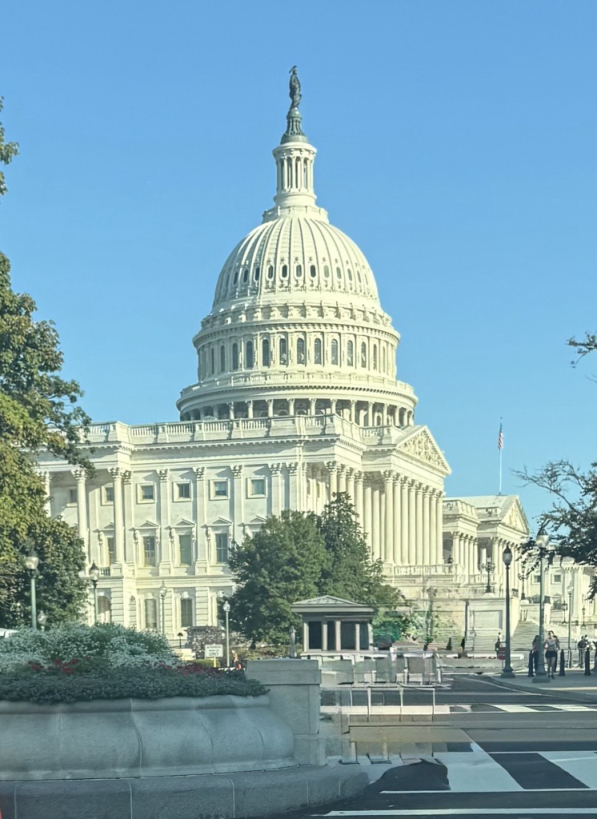
Once again, we are facing the possibility of the government running out of appropriated money. When this happens, the government “shuts down”. The money appropriated by Congress will run out at midnight September 30th, the end of the government’s fiscal year.
One of the most important responsibilities the Constitution gives Congress is the “power of the purse.” That means deciding how taxpayer dollars are raised and spent. The government is supposed to be funded each year through the passage of 12 individual appropriations bills, passed before October 1st, the beginning of the federal fiscal year. If those 12 bills are not signed into law by September 30, Congress and the President usually agree on a temporary spending bill, known as a “Continuing Resolution” (CR), which provides stopgap spending during a specified period of time. The CR the House passed last week, which I voted for, provides funding equal to President Biden’s 2024 fiscal year spending levels. If passed by the Senate, this CR will keep the government operating until November 21st. If the Senate fails to act, parts of government will shut down, halting many services that Americans depend on every day.
Shutdowns are more than just disruptive. They weaken public trust in government’s ability to carry out its most basic duties. That is why it is so important that the Senate actually passes the CR.
Some have tried to cast the House vote as partisan maneuvering, but it is worth noting that this is the very same approach that a majority of Democrats supported back in March. Those who voted against the similar CR back in March it made clear that they were willing to risk a government shutdown now over language they had already backed, simply to show their opposition to President Trump’s Big Bill.
Government shutdowns are bad. They waste money. They leave much of our military without pay. They can interfere with Social Security payments. They cost government workers money spent on credit card debt that they will not get back. They interfere with the production of military equipment necessary for our defense. The Democrats in the Senate know this. Let’s hope that if this shutdown occurs, we find a path to passing a CR in the very near future. |
|
Natural Resources Committee Hearing: Protecting the Snake and Columbia River Dams
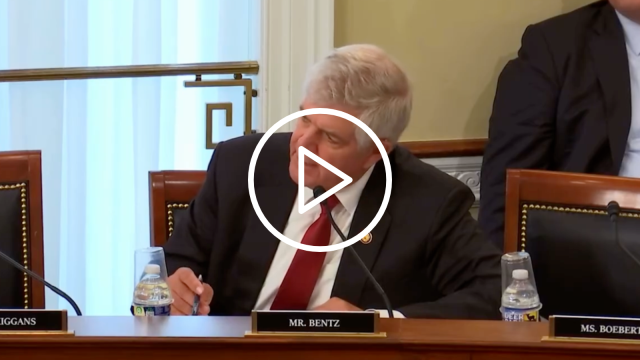
During a recent Natural Resources Committee hearing in the Water, Wildlife, and Fisheries Subcommittee, I joined the discussion on protecting the Snake and Columbia River Dams.
As the waterways of the Pacific Northwest continue to be unfairly targeted, I pressed administration officials and stakeholders during the Water, Wildlife, and Fisheries Subcommittee hearing to weigh in on the value of the dams on the Snake and Columbia rivers. The goal for this hearing was to bring transparency and science into the discussion. I directly questioned Clark Mather, Executive Director of Northwest River Partners, highlighting the science on salmon and steelhead populations. The facts are clear: populations today are nearly three times higher than they were 15 years ago. The dams are not the problem. Mortality of salmon in the ocean is the problem. I concluded my questioning with emphasizing that these dams play an important role in our national security, transportation of goods, the ability to provide affordable and clean energy and even making sure America’s competitive edge in the race for artificial intelligence with China. |
|
|
The Energy and Commerce Hearing: Appliance and Building Policies: Restoring the American Dream of Home Ownership and Consumer Choice
.png "Energy_and_Commerce_Picture_(1).png")
As a member of the Energy and Commerce Committee Subcommittee on Energy, I participated just a few days ago in an hearing titled “Appliance and Building Policies: Restoring the American Dream of Home Ownership and Consumer Choice.” In this hearing we examined reforming appliances and building policies to reduce costs and preserve consumer choice.
Just last week, I had the opportunity to question the Chairman of the National Association of Home Builders, Mr. Hughes, about Oregon’s costly building standards, often adding 10–20%, to the price of a home. While Mr. Hughes said these codes are “essential,” Hughes did agree they should ultimately be the homeowner’s choice. The real problem is inconsistent enforcement by inspectors, whether on “green” codes or not.
Those in Oregon deserves affordable homes, not endless red tape and arbitrary enforcement. |
|
|
Honor America's Veterans
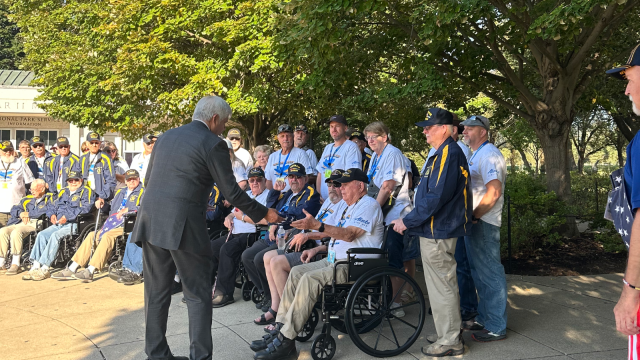
On September 18th and 19th I had the privilege of meeting with Korean and Vietnam War Veterans at the steps of the Capitol and at the WWII Memorial in Washington, D.C. In appreciation of their service, I presented each of these heroes, part of the Central and Southern Oregon Honor Flight, with an American flag that had been flown over our U.S. Capitol. This gesture is just a small token of our deep gratitude for their sacrifices. We remain forever grateful for their service to our nation. |
|
|
|
|
|
.png)
The Dalles Community Outreach Team
I met with the Dalles Community Outreach Team to discuss reauthorizing Secure Rural Schools, increasing timber production, and supporting the growth of The Dalles. We also discussed my legislation, The “Dalles Watershed Development Act”, which will advance responsible development and long-term water security for the City of the Dalles. |
|
|
|
|
|
|
|
|
|
|
|
|
|
|
|
|
|
|
|
|
|
|
|
|
|
|
|
|
|
.png)
Family Farm Alliance
This week, I met with the Family Farm Alliance to discuss changes the farming community has experienced since the beginning of this new Congress and in the beginning of the second four years of the Trump Administration. Our conversation focused on improvements to the Klamath and Deschutes Basin water projects.
|
|
.png)
Elmer's Restaurant Inc.
Thank you to Jerry Scott, CEO of Elmer’s Restaurant Inc., here with the International Franchise Association for meeting with me here in my Washington, D.C. office. We discussed the new Elmer’s Diner opening in Bend and the importance of the American Franchise Act in strengthening the franchise model and supporting small business owners. |
|
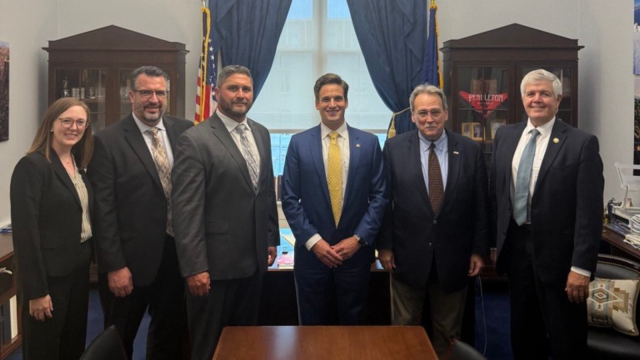
The Associated General Contractors: Oregon-Columbia Chapter
This week, I had the opportunity to meet with the Oregon-Columbia Chapter of the Associated General Contractors to discuss priorities for the upcoming Surface Transportation Reauthorization and their support for key Oregon projects like the I-5 Bridge Replacement and the Pacific Coast Intermodal Port at Coos Bay.
|
|
Direct Selling Association and Amway Independent Business Owner
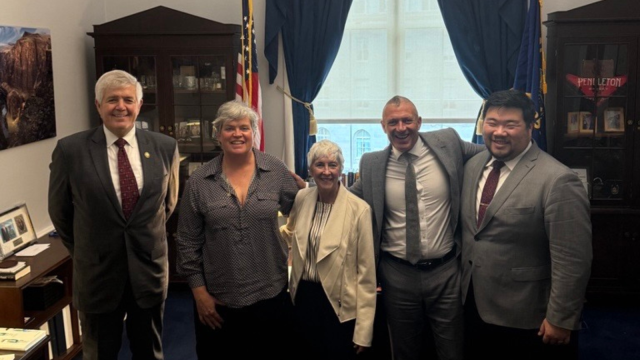
I met with the Direct Selling Association and Amway Independent Business Owners from Medford. In our meeting we discussed the Congressional Direct Selling Caucus and H.R. 3495, legislation ensuring direct sellers are recognized as independent contractors under federal law. |
|
.png)
National Association of Head Start
This week, I joined a discussion with the National Head Start Association regarding the important services their organization provides, and their arguments for continued funding.
|
|
American Cancer Society and Cancer Action Network
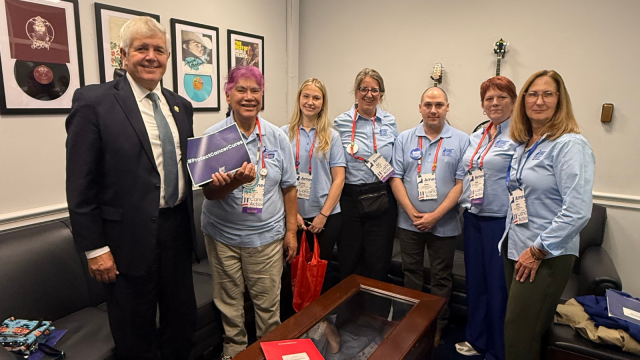
It was a great opportunity to meet with the American Cancer Society Cancer Action Network to discuss advancing cancer research, improving access to care, and supporting patients and families across Oregon. |
|
Eastern Oregon County Commissioners
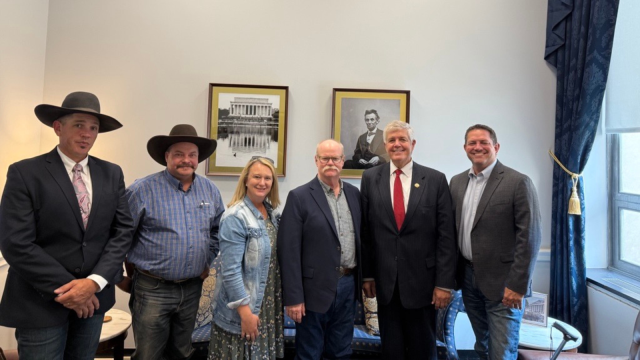
It was great to see the Eastern Oregon County Commissioners, Lisa Collier, Jake Seavert, Derrick DeGroot, Rob Frank and Paul Anderes for visiting me in Washington, D.C.!
In our discussion, I spoke about my legislation to delist gray wolves in Oregon and Washington, the urgent need to reauthorize Secure Rural Schools (SRS), and how local counties will continue to be supported through the Working Family Tax Cuts. Thank you for the visit!
|
|
.png)
National Association of Counties
Recently, I had the opportunity to speak at the National Association of Counties in Washington, D.C. Fly In about the importance of PILT (Payments in Lieu of Taxes) and Secure Rural Schools (SRS) for our rural communities.
In my speech, I gave an update on my ongoing efforts in the House to reauthorize SRS. I also spoke about the Working Family Tax Cuts Act and how it will benefit business and people in our counties. |
|
Oregon's Credit Unions
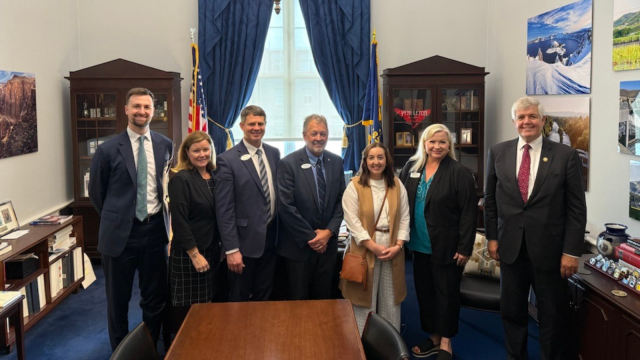
Last week, I sat down with Oregon’s Credit Unions to discuss their legislative priorities and what Congress can do to improve the business environment in Oregon. We also spoke at length about the growing threat of fraud, including how bad actors are using AI and other new methods to defraud our citizens.
|
|
.png)
National Auto Dealers Association
During my meeting with the National Auto Dealers Association (NADA). The group thanked me for my support in the efforts to overturn California’s EPA waiver. Our discussion included protecting catalytic converters from theft and updates on tariffs and their impact on the broader auto industry.
|
|
President and CEO of Providence Health Plan
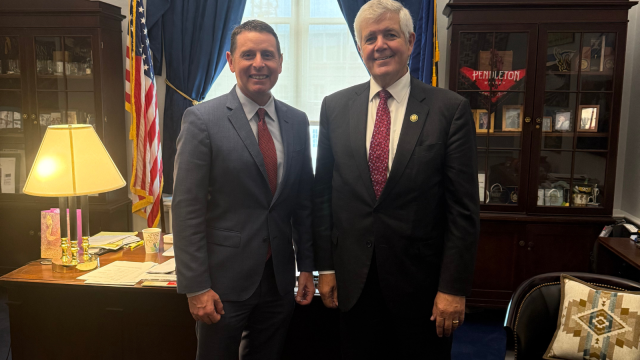
I met with Don Antonucci, CEO and President of the Providence Health to discuss the growing challenges in the commercial health insurance market. We spoke about why costs continue to rise and shared ideas on how to bring together a broad range of healthcare stakeholders. Our shared goal is to identify practical solutions that Congress can implement, solutions that meet the needs of patients, providers, and insurers while making healthcare more affordable for everyone.
|
|
|
Votes and Legislation
H.R. 4553, Energy and Water Development and Related Agencies Appropriations Act
Voted YES. This bill safeguards U.S. national security, increases the ability of American businesses to improve energy production, and advances economic competitiveness. This bill provides $57.3 billion in discretionary funding, $766.4 million below the FY25 enacted level. The defense portion of the allocation is $33.2 billion, and the non-defense portion of the allocation is roughly $24.1 billion. The bill champions America’s nuclear deterrent; allocates $20.7 billion to modernization of the nuclear weapons stockpile; allocates over $2 billion to the U.S. Navy’s nuclear fleet; and prohibits the sale of crude oil from the Strategic Petroleum Reserve to the Chinese Communist Party. It drives down energy costs, and facilitates economic growth by supporting mining production technologies, reducing reliance on foreign sources; and it funds small modular reactor and advanced reactor demonstration projects. The bill also increases funding for the Nuclear Regulatory Commission, a significant step toward achieving the Trump Administration’s goal to expand nuclear energy capacity to 400 gigawatts by 2050.
H.R. 3838, the Streamlining Procurement for Effective Execution and Delivery (SPEED) and National Defense Authorization Act for Fiscal Year 2026
Voted YES. This annual authorization bill strengthens our national defense and the effectiveness of our fighting force by reforming defense acquisition, improving servicemember quality of life, investing in top defense priorities such as the Golden Dome, revitalizing the defense industrial base, supporting our allies, and cutting wasteful spending from our military.
H.R. 719, Honoring the life and legacy of Charles “Charlie” James Kirk
Voted YES. This resolution condemns in the strongest possible terms the assassination of Charles “Charlie” James Kirk, and all forms of political violence; commends and honors the dedicated law enforcement and emergency personnel for their efforts in finding the suspect responsible for the assassination of Charlie Kirk and urges the administration of justice; extends its deepest condolences and sympathies to Charlie Kirk’s family, including his wife, Erika, and their two young children, and encourages prayer for comfort, peace, and healing in this time of loss; honors the life, leadership, and legacy of Charlie Kirk, whose dedication to the Constitution, civil discourse, and Biblical truth inspired a generation to cherish and defend the blessings of liberty; and calls upon all Americans – regardless of race, party affiliation, or creed – to reject political violence, recommit to respectful debate, uphold American values, and respect one another as fellow Americans.
H.R. 3486, the Stop Illegal Entry Act
Voted YES. This commonsense legislation increases penalties for aliens who illegally enter or reenter the United States in order to discourage migrants from coming to the U.S. illegally and keep criminal illegal aliens that disregard federal immigration law out of American communities.
H.R. 5125, District of Columbia Judicial Nominations Reform Act of 2025
Voted YES. This bill abolishes the Judicial Nomination Commission, authorizing the President to appoint judges through the normal Senate confirmation process and helping to restore law and order in our nation’s capital city.
H.R. 5143, District of Columbia Policing Protection Act
Voted YES. This bill lowers the age of eligibility for juveniles to be tried as adults in D.C. for certain violent offenses committed after the date of enactment from 16 to 14 years of age.
H.R. 4922, DC CRIMES Act of 2025
Voted YES. This bill reduces the maximum age for youth offenders from 24 to under 18, ensuring that adults who commit crimes are always tried as adults. Additionally, the bill mandates that the Office of the Attorney General for D.C. publish and update monthly youth offender crime data on a publicly accessible website. |
|
|
Sincerely,
Cliff Bentz
Member of Congress
It is the honor of a lifetime to represent you in Congress. Should you need to contact me or my staff, please do not hesitate to do so. You can visit my website here.
Don't forget to follow me on Twitter, Facebook, Instagram, and YouTube!
|
|
|
|
|
|
| |
| Unsubscribe |
|