|
News from Representative Bentz
|
|
|
|
|
We must remove the thousands of excess small trees from our forests if we want to save the forests and the communities around them from drought and wildfire.
Studies indicate that huge amounts of our national forests are overgrown with small trees- in some places by as many as thousands of excess stems per acre. These stems slurp up precious water, robbing other trees of necessary nutrients, resulting in sickly fire prone stands of thousands upon thousands of trees so thick that even a squirrel cannot get through. These areas need to be thinned for not only the health of the forest, but also to prevent cataclysmic wildfire and the drying up of streams and lakes in forested areas.
The danger and water related costs created by excessive trees have been known for many years. The challenge has been finding an economical way to cut and transport this previously low-value brush and woody material from the millions of acres where it has accumulated to facilities where it can be processed.
A multipart solution is finally at hand. It involves (1) recognizing that there is now a market for the cellulosic biofuel that is in these small trees; (2) that the fuel that can be made from these trees (replacement for kerosene) is essential to the future of aviation; (3) that the cost of wildfire suppression will be reduced if those trees can be physically removed from the forest; and (4) that the water saved when the overgrown condition is fixed will be used by other trees making the forest healthy again, and the streams and watersheds viable again; and finally, (5) that the sawmills which still remain must have a place to dispose of the sawdust, chips, and residual wood to make their operations viable. When the money from that market is combined with the money saved from fire reduction costs, the RINS from the RFS, and the benefits to communities, forest health, and rural economies, it becomes financially feasible and politically attractive to clean up millions of acres of forest.
This was the reason I led the effort to have the biomass bill (as amendment 241) made part of the Farm Bill. The vote failed, but just barely- 216 no’s to 210 ayes. I intend to file the bill again. It is too valuable to our rural economies and our forests to let fall by the wayside. |
|
|
|
|
Letter Regarding Onions, Potatoes, and other “specialty” crops from Congressman Bentz to the U.S. Trade Representative
There are few things more important than the amount that farmers in my district are paid for the Onions, Potatoes, and other specialty crops they raise. These prices have been driven down to ridiculously low and unacceptable levels by the flood of onion and other specialty crop imports from Mexico and other foreign nations. The link below will take you to a copy of a congressional letter I joined alongside my fellow farm-state colleagues addressed to United States Trade Representative (USTR) Ambassador James Greer. The letter asks that farmers' concerns regarding the flood of Mexican fresh fruit and vegetable imports be addressed in the upcoming review of the United States Mexico Canada Agreement (USMCA).
The letter urges Ambassador Greer to address the damage that imports from Mexico are causing U.S. specialty crop farmers. It notes that Mexican imports of fruits and vegetables have increased dramatically over the past two decades, driving prices below the cost of production for American growers. The letter highlights major disparities in labor and regulatory costs, noting that Mexican producers operate with significantly lower wages and fewer regulatory burdens compared to U.S. farmers. We congressmen and congresswomen also encourage USTR to closely review the commodity-specific comments already submitted as part of the USMCA review docket.
If you have thoughts or comments, please call our office at (202) 225-6730. |
|
United States conflict with Iran
The President was justified in initiating an attack on Iran to prevent it from completing its construction of a nuclear weapon. Information provided by the International Atomic Energy Agency supports the conclusion that Iran had processed and amassed a stockpile of about 970 pounds of uranium enriched to 60% purity. 60% percent is just a short step away from the 90% threshold required for weapons grade material. It would take less than a week to produce fissile material from its enriched uranium. It is estimated that it would have taken up to nine months to one year to produce a functional nuclear weapon.
970 pounds of uranium is enough for 10 to 11 nuclear warheads. Each warhead is capable of generating 10-20 kilotons of TNT. The bomb dropped on Hiroshima was about 21 kilotons in size. It killed about 70,000- 80,000 people instantly.
Iran, by enriching uranium to 60% was in direct violation of the Joint Comprehensive Plan of Action (the 2015 Iran nuclear deal). It was also in breach of its legally binding international safeguard agreements under the Nuclear Non-Proliferation Treaty.
The Iranian regime consistently lied about its nuclear program while building its nuclear infrastructure in complete secrecy in direct violation of its international treaty violations.
The talks between Iran and the U.S. occurring prior to the initiation of the attack by the US and Israel on Iran were going nowhere. They were seen by the US as an attempt by Iran to “run out the clock”- that is, while “negotiating” Iran would continue to develop its nuclear capability.
The fact that Iran was close to having a nuclear weapon does not mean that the U.S. has an obligation to stop it from getting one. The decision by the U.S. to attack Iran is based upon a determination by the President that a nuclear armed Iran would trigger consequences that: would cost us more in the future than intervention will cost now; the protection of global markets from Tehran’s leverage over the world’s primary energy transit corridor; and security agreements with Israel, Saudi Arabia, Qatar, UAE, and others in the Mideast.
The attacks by Iran, following the U.S. attack, on neighboring countries’ oil refineries, desalination plants, and oil production facilities, and its use of the threat to destroy oil tankers in the Strait of Hormuz, illustrate how far it is willing to go to become a nuclear power and to use the threat of destruction to control the “oil spigot of the world”.
President Trump’s blockade of the Strait of Hormuz, choking off Iran’s flow of oil out and money in, may bring this stand-off to a close. The consequences to the people of Iran are many. Skyrocketing inflation, food shortages, shortages of gasoline and job destruction are a few of the negative impacts of the blockade on the population. Additionally, it is estimated that Iran’s oil storage capacity is now exhausted (every oil tank, tanker ship, train, and other storage facility is full) and this means that oil production is slowed, which can cause permanent structural damage to oil reservoirs, running the risk of causing long term damage to Iran’s ability to access its own oil. How long Iran can stand this is the question.
Here at home, oil prices are higher than would be the case if the Strait of Hormuz was open, and that is not good. However, it must be understood that one of the important consequences of this situation is that Iran has now shown it is willing to attack its neighbors and to cause worldwide economic destruction to get an atomic weapon. Why exactly Iran needs such a weapon given its ability to stop the flow of oil through the Strait with just a few drones is unclear. Also unclear is what other goals Iran has in mind that would cause it to engage in extortionary Hormuz interference again, and when that happens, what the world’s response will be. |
|
|
House Natural Resources Committee: FY27 Department of the Interior Budget
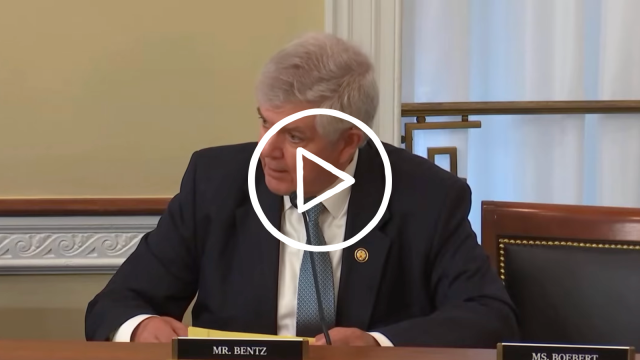
Last week, I joined the House Natural Resources, on which I serve, to discuss the FY27 Department of Interior Budget with Secretary Burgum. I pointed out to the Secretary the dismal state of the economy in Oregon and suggested that it was his department that could help us get back into the woods, increase the mining of rare earth minerals, and offset some of the damage done by 40 years of Democrat rule of Oregon. By clicking on the arrow in the picture above, you can watch my discussion with the Secretary. I emphasized the importance of the O&C Resource Management Plan reaffirming that O&C lands are to be managed for their intended purpose of sustained timber production; the opportunity to develop Oregon’s vast critical mineral resources to improve Oregon’s rural economy and to strengthen America’s domestic supply chain and reduce reliance on China. I concluded by thanking Secretary Burgum for his continued efforts to balance the water needs of farmers, ranchers, and communities in the Klamath Basin. |
|
|
|
|
|
|
|
|
|
|
|
|
|
|
|
|
|
|
|
|
|
|
|
|
|
|
|
|
|
|
|
|
|
|
FY27 Military Construction and Veterans Affairs Bill, Secures Inclusion of $80 Million for Kingsley Field
.png "F35_Training_(1).png")
I am pleased to report that I had the opportunity to vote YES for the Fiscal Year 2027 Military Construction, Veterans Affairs, and Related Agencies Appropriations Act, legislation that INCLUDES $80 million for the construction of an Academic Training Center at Kingsley Field Air National Guard Base in Klamath Falls!!! The bill now moves to the Senate.
This funding is an essential and important step forward as the 173rd Fighter Wing prepares for its future mission as an F-35A training base. Kingsley Field plays a critical role in our nation’s defense and remains an essential economic driver for Southern Oregon. I look forward to continuing to support the 173rd Fighter Wing and the Klamath Falls community as preparations for the training mission move forward.
The Academic Training Center is part of the infrastructure necessary to train future F-35 pilots and will help position Kingsley Field at the forefront of next-generation fighter pilot training. |
|
|
Voting to Lower Fuel Costs and Support Rural America
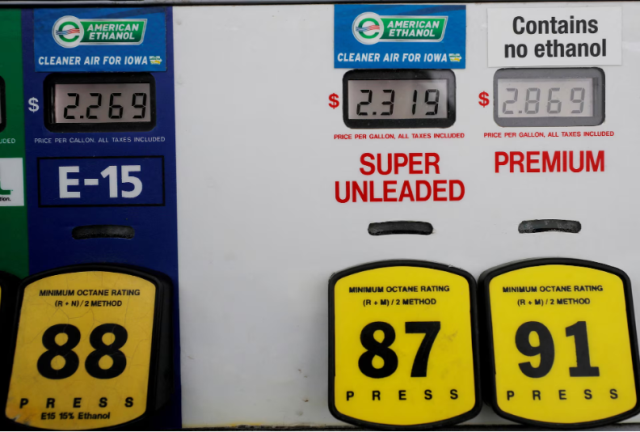
This week, I voted in favor of H.R. 1346, the Nationwide Consumer and Fuel Retailer Choice Act of 2025, legislation that permanently allows the year-round sale of E15 fuel nationwide. Expanding access to E15 gives consumers more affordable options at the pump while supporting America’s farmers, ranchers, and energy producers.
Allowing year-round E15 sales is expected to save drivers up to 25 cents per gallon, providing much-needed relief for families, commuters, and small businesses already facing high fuel costs. At the same time, this bill strengthens and stabilizes demand for corn grown by American producers by ensuring ethanol markets remain reliable and accessible throughout the year.
I also supported this legislation because it helps reduce our nation’s reliance on foreign oil by increasing the use of domestically produced biofuels. Stronger demand for ethanol allows farmers to compete more effectively in the marketplace rather than relying only on government risk sharing and support programs. |
|
|
National Police Week

This National Police Week, I ask you to join me in thanking our law enforcement officers for all their efforts in keeping us and our communities safe. |
|
| Winner of the 2026 Congressional Art Competition

Congratulations to Yi-jia Lu (Lyra Lu), a junior at Burns High School, for being selected as the winner of OR-02’s 2026 Congressional Art Competition. Lyra’s artwork, titled “Still, She Rises,” will be displayed in the national art exhibit at the U.S. Capitol.
I congratulate Yi-jia on her achievement. I look forward to seeing “Still, She Rises” almost every day during the up-coming year, along with my 434 congressional colleagues, as we pass by the display of student art on our way to and from the House Chamber. I thank her for her extraordinary work. Congratulations!
I also want to recognize three regional winners whose artwork will be displayed in one of my offices in Medford, Ontario, or Washington, D.C.:
- “The Pillars that Built a Nation” – Phoenix High School, Grade 12
- “To My Great-Grandfather May He Rest” – Phoenix High School, Grade 12
- “Two Promises” – Crater High School, Grade 12
The Congressional Art Competition is a nationwide program for students to showcase their artistic abilities and to highlight the importance of art education. Since its start in 1982, more than 700,000 high school students from around the country have participated. |
|
|
|
|
Votes and Legislation
H. Res. 1251 – Calling on elected officials and civil society leaders to counter antisemitism and educate the public on contributions of the Jewish-American community
Voted YES. The resolution celebrates Jewish American Heritage Month, highlights several Jewish-American service members who received the Medal of Honor, and highlights the frequency of antisemitic incidents targeting Jews in the United States.
H.R. 2853 - Combating Organized Retail Crime Act of 2025
Voted YES. This bill establishes a Center to Combat Organized Retail and Supply Chain Crime within the Department of Homeland Security (DHS) Homeland Security Investigations (HSI) and makes changes to federal criminal laws to make it easier to prosecute organized retail crime. The bill defines organized retail crime as coordinated theft by professional groups that steal and resell goods, often through online marketplaces, and increasingly engage in fraud, cargo theft, and other complex schemes.
H.R. 2071 – Save Our Shrimpers Act
Voted YES. This bill would prohibit federal funds from being made available to international financial institutions (e.g., the International Monetary Fund) for financing activities related to foreign shrimp farms. The bill also requires an annual report on compliance by U.S. leadership of international financial institutions with policies to oppose financing for certain commodities or minerals.
H.R. 1346 – Nationwide Consumer and Fuel Retailer Choice Act of 2025
Voted YES. This bill would amend the Clean Air Act to address the limitations on Reid Vapor Pressure (a measure of gasoline's volatility) that are placed on gasoline during the summer ozone season. Specifically, the bill applies the waiver for Reid Vapor Pressure requirements that is applicable to gasoline blended with 10% ethanol (E10) to gasoline blended with up to 15% ethanol (E15). This change allows gasoline that is blended with 10% to 15% ethanol to be sold year-round. |
|
| Meetings in Washington, D.C. |
|
|
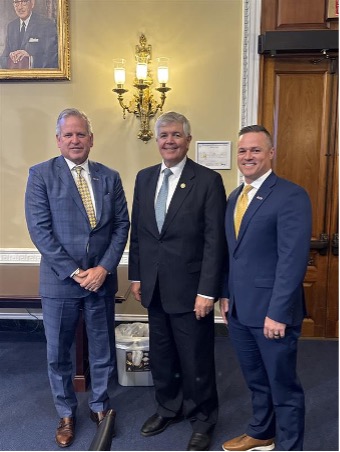
U.S. Bank
This week, Congressman Bentz met with Seth Tindall and Steve Isaak with U.S. Bank to discuss the business climate in Oregon, ongoing investments in affordable housing to address shortages across the state, the need to modernize America’s financial infrastructure, and the growing conversation surrounding cryptocurrency and digital asset regulation. |
|
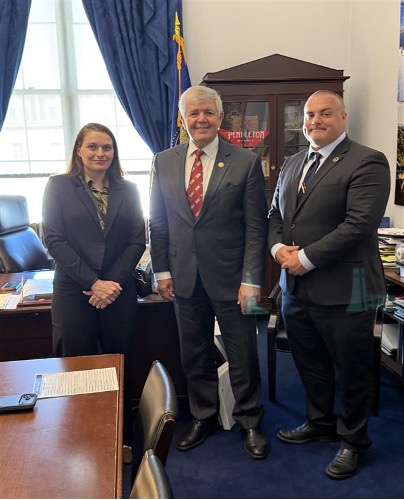
ORCOPS
Congressman Bentz was joined by Aaron Schmautz and Jennifer Johnson from Oregon COPS to discuss the need to reform the federal consent decree process.
|
|
|
|
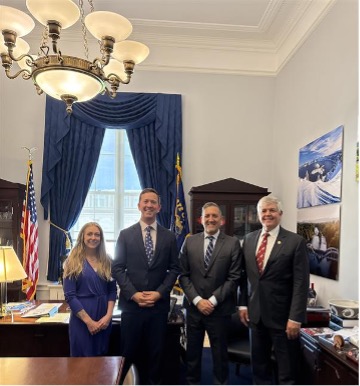
Integra Resources
Congressman Bentz met with representatives from Integra Resources to discuss ongoing efforts to advance mining operations outside of Jordan Valley. The conversation focused on the project timeline, engagement with local stakeholders, and the company’s commitment to being a long-term partner in the community during and after mining operations. |
|
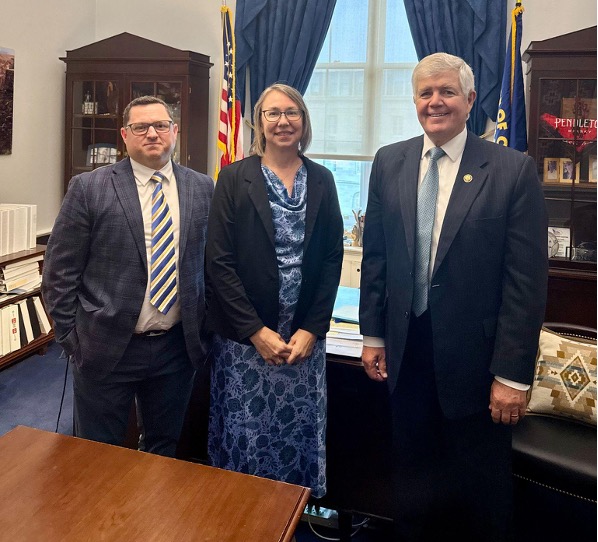
Oregonians for Food and Shelter and Oregon Forest Council Industries
Congressman Bentz met with Katie Murray of Oregonians for Food and Shelter and Seth Barnes with Oregon Forest Industries Council to discuss ongoing work surrounding Oregon’s Habitat Conservation Plan and efforts focused on species recovery. They also discussed Farm Bill priorities impacting Oregon agriculture, including support for specialty crop producers across the state.
|
|
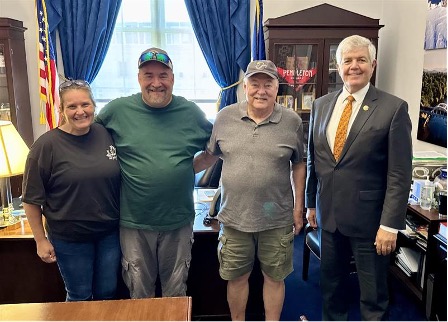
Constituents: Dave, Matthew, and Leanne Klym
Congressman Bentz met with Dave, Matthew, and Leanne Klym from Crooked River Ranch during their visit to our Washington, D.C. office! Our offices always appreciate the opportunity to hear directly from my constituents and discuss the important legislation that impacts our communities. |
|
|
Sincerely,
Cliff Bentz
Member of Congress
It is the honor of a lifetime to represent you in Congress. Should you need to contact me or my staff, please do not hesitate to do so. You can visit my website here.
Don't forget to follow me on Twitter, Facebook, Instagram, and YouTube!
|
|
|
|
|
|
| |
| Unsubscribe |
|