Chairman Brett Guthrie and Oregon AI Leaders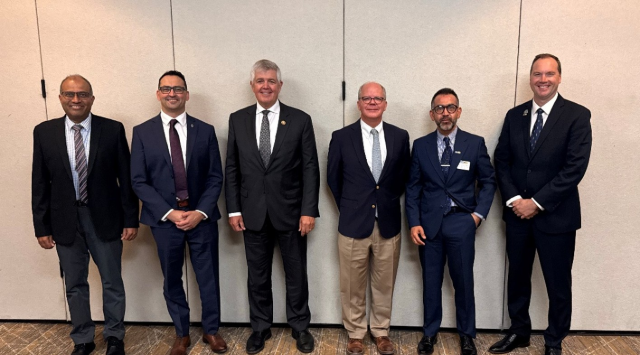
Data Centers and Artificial Intelligence are on the front burner when it comes to issues that are of concern to Oregonians. The Energy and Commerce Committee is one of the three committees in Congress charged with addressing these topics. With this in mind, I arranged a meeting between Chairman Brett Guthrie and several of those in Oregon who deal with AI and data centers. Attendees included Dr. KC Santosh from the Oregon Institute of Technology, K.S. “Venkat” Venkatraman, the former Senior Director of AI Computing at NVIDIA, and John Davis, the Board Chair of the OIT Board of Trustees.
We discussed the challenges presented by AI, what congress should be doing to protect people, and what “winning” the AI race realistically looks like. The primary focus was on what Congress and businesses can do to keep AI safe, how best to address the impact of AI on existing jobs, and who should take the lead in addressing these extraordinarily important issues.
Chairman Brett Guthrie, Hospital CEOs, Cancer Research leaders, and community health experts.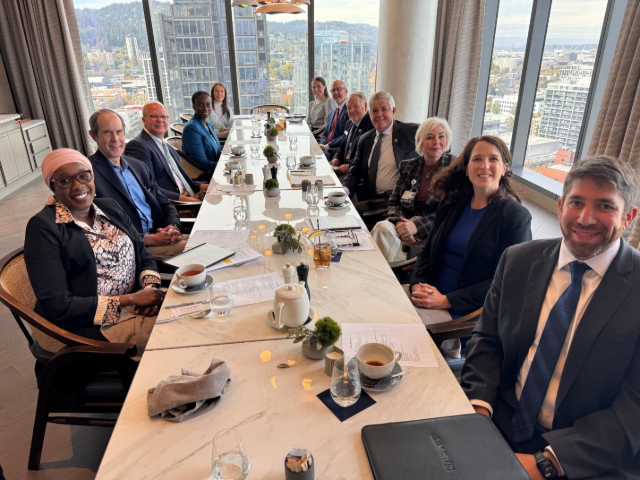
The Energy and Commerce Committee has significant jurisdiction over the healthcare area. I sit on the E&C healthcare subcommittee. The cost and availability of healthcare is one of the most important issues we are struggling with in D.C. My background, as the attorney for our local hospital (18 years), after serving in the Oregon legislature (12 years) and now in Congress (6 years), I have had the opportunity and privilege to meet and work with many of the leaders in the healthcare arena. This background allowed me to reach out to and arrange a meeting with healthcare leaders in Oregon and Chairman Brett Guthrie to discuss healthcare affordability, research, hospital challenges, and rural healthcare.
Those present included Dr. Chuck Hoffman, the Chair of Eastern Oregon University Board of Trustees and the former President of the Oregon Medical Association, Ken Hart, the CEO of Valley Family Healthcare, Dr. Brian Druker, the President of the Knight Cancer Group, Dr. Shereef Elnahal, the President of the Oregon Health and Science University, Susan Sauder, the CEO of Providence Southern Oregon, David Jacobson, Asante’s Public Affairs and Associate General Counsel, Astou Gaye, the Vice President of Genentech Hillsboro, Ndeye Makalou, the President and CEO of Oregon Life Sciences, and Jackie Fabick, Providence’s Government Affairs Director.
We structured the meeting in a location convenient to those in the Portland area, but several who attended flew in from Boise and Medford or drove miles to attend. I want to thank them for their time and commitment to the care and treatment of their many patients, and of course for taking the time to meet with the Chairman and me. We structured the meeting as a roundtable discussion and thus all present were able to communicate directly with Chair Guthrie and to share how they thought we could better achieve quality healthcare for Oregonians. We also discussed the focus of the E&C Committee and its efforts to create effective healthcare reform and legislation.
Klamath Water Users Association Tour of the Keno and Link River Dams
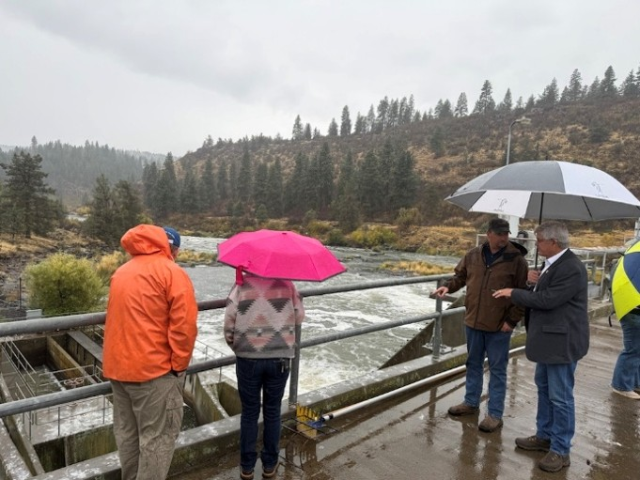
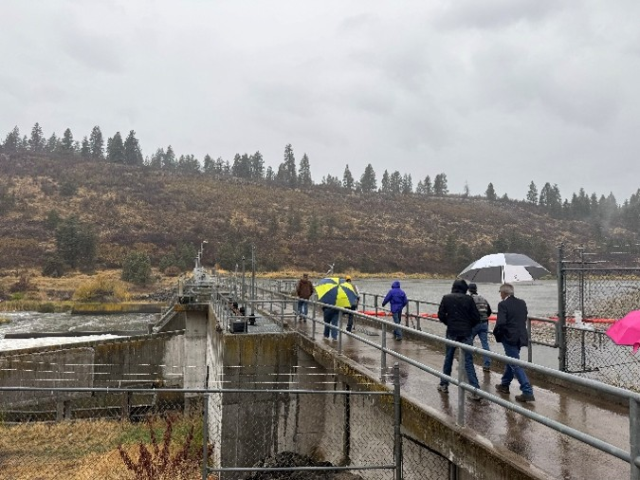 On Thursday, October 22, the Klamath Water Users Association, after a brief meeting in the Water Users headquarters, took me on a tour of the Keno Dam (left) and the Link River Dam (right). It was raining, so we all were happy! We talked about the importance of these two dams to the Klamath Basin and how without the Link River dam, the river would be dewatered in low water years and without the Keno dam, (assuming the reef under the dam was rebuilt) the city of Klamath Falls would be at serious risk of flooding. We looked at the fish passage facilities, and at the volume of water passing down the river. It was hard not to notice the shoulder-to-shoulder line of cormorants reaching bank to bank across the river above the Link River dam. I asked how many and what type of fish they gobbled up each day. The answer was the sucker fish, but the number was unknown. We also discussed my bill, the Klamath Basin Water Agreement Support Act of 2024, which was signed into law on January 4th of 2025 and protects Klamath water users from shouldering refurbishment costs of these two dams previously owned by PacifiCorp.
Roseburg Veterans Home Group
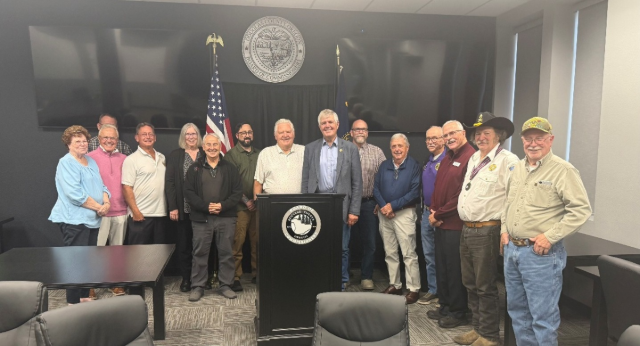
During our “southern swing” across the south part of CD2 I met with Oregon veterans and representatives. We discussed the status of funding for the Roseburg State Veterans Home, which is intended to provide long-term care for veterans in southern Oregon. We discussed the fact that the total funding requests for repair and construction of veterans’ homes across the United States was around 850 million dollars. The construction of new homes for veterans is a modest percentage of this amount, but repairs take precedence and therefore the home in Roseburg finds itself far down the list. I will be asking, again, that the leader of the Veterans’ Committee request this entire sum in next year’s budget so that the Roseburg facility has a chance of becoming a reality.
Meeting with Lake County Commissioners Williams, Shullanberger, and Albertson
During my visit to Lakeview on Friday, October 23, I met with Lake County Commissioners Williams, Shullanberger, and Albertson. We had an excellent discussion about all sorts of topics, including the Over-The-Horizon Radar, which will start construction soon in northern Lake County and will employ around 150 workers during the construction phase.
We also discussed the potential new gold mine near Bly on the Lake County side, which is owned by Q-Gold, delisting of the gray wolf, work being done to explore the possibility of locating a regional landfill in the north part of the county, solar projects, diesel prices, and the status of Collins Pine in Lakeview.
Homeowners’ Insurance challenges in Medford
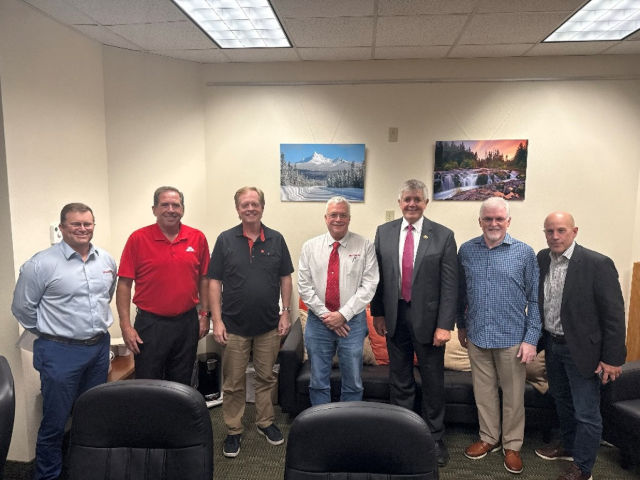
On Wednesday, October 21, I met with a group of people who are in the insurance business in my office in Medford. We discussed the work that their company (State Farm) is doing to maintain home insurance coverage by better defining what could be done to “fire-harden” homes. These men have spent much of their lives working to design insurance protection for the property and lives of people in CD2. I appreciated their thinking on these important issues. While they were there, we also discussed legislation to reduce the incidence of wildfire, including my Wildfire Reduction Market Expansion Act, the Wildfire Crossings Reauthorization Act, and the Fix Our Forests Act.
U.S. Forest Service and Bureau of Land Management
On October 22nd, I met in Klamath Falls with leaders of the U.S. Forest Service and Bureau of Land Management. We discussed readiness for next year’s fire season, the number of firefighters, fuel reduction in Oregon forests, timber production, the Fix Our Forests Act, and my Wildfire Reduction Market Expansion Act. Merv George, Deputy Regional Forester of the Fremont-Winema National Forest, mentioned the success his forest has had in reducing excess fuel and the need for additional equipment such as masticator machines to chop up brush. It was a productive conversation.
Tour of Hillcrest Veterans Village
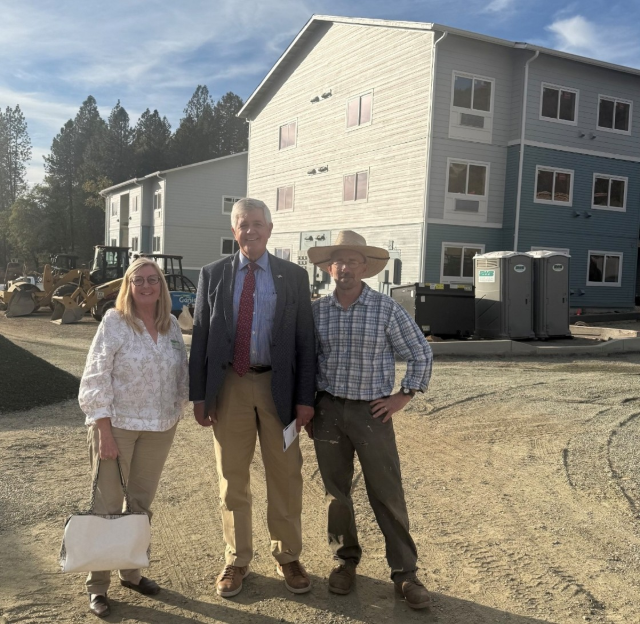
On Tuesday, October 20, Susan Clark, Executive Director of the Mid Rogue Foundation, and Doug Walker, the President of the Mid Rogue Foundation and Hillcrest Veterans Village project manager, gave me a tour of the Hillcrest Veterans Village. It has 36 apartments for low-income veterans needing housing. It will include its own resident services coordinator to assist low-income veterans in finding and maintaining housing. The Grand Opening Ceremony for the Village will be on Wednesday, November 11th, 2026, and residents will begin moving in on December 1st, 2026. The Veterans Village was built by the Mid Rogue Foundation, whose mission is to promote healthy and vibrant communities through support, advocacy and partnerships with a focus on housing, education, and transportation. Its efforts are truly impressive.
Breakfast with John Schleining and the Wes Howard Memorial Foundation
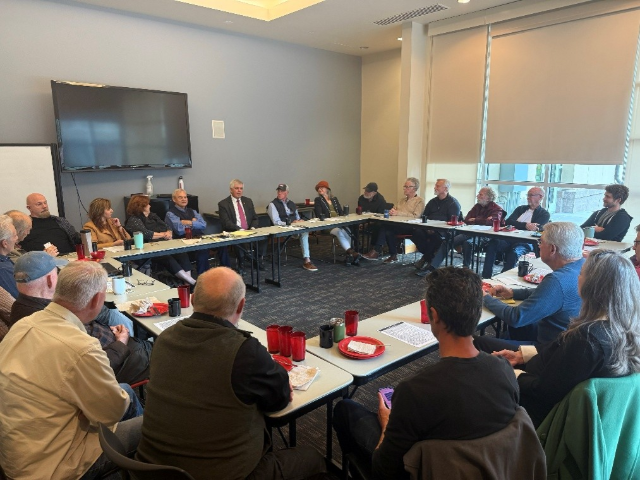
On Wednesday, October 21, I was invited to a breakfast with John Schleining, the President of the Wes Howard Memorial Foundation, held on the campus of Southern Oregon University. We discussed Oregon’s dismal record concerning education, reduced affordable living options, how to make Oregon affordable again, the Iran conflict, interest rates, the Federal Reserve, and the work my team and I have done to secure F-35A Lightning II jets for Kingsley Field. The meeting was very interesting and I learned a lot.
County Commissioner Randy Sparacino
On Wednesday, October 21, I also met with Jackson County Commissioner and former Medford mayor Randy Sparacino. We discussed Medford’s South State Interchange, the Medford Airport expansion project, and my Wildfire Reduction Market Expansion Act.
Veteran Lunch
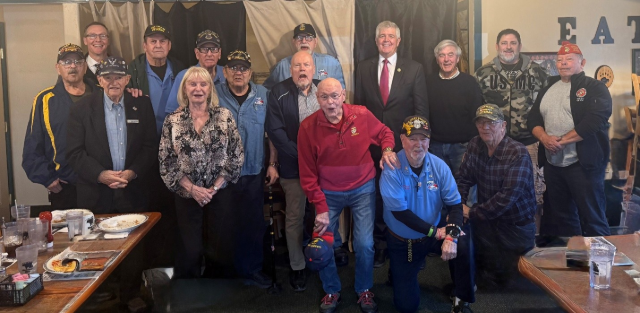
On Wednesday, October 21, I joined Medford veterans for lunch. We discussed Iran, Ukraine, military deployments, and the Vietnam Wall Memorial in Medford. Wyndess James of my office took the above picture and suggested that everyone yell “Go Navy!” which resulted in a mixed response—as is clear from the expressions on participants’ faces!
Forest Bridges
On Monday, October 19, I met with Forest Bridges, a grassroots organization focused on developing consensus in difficult areas such as timber production on O and C lands. We discussed the BLM’s forest management plan, active forest management already happening in Oregon, the Fix Our Forest Act, and my Wildfire Reduction Market Expansion Act. It was a good conversation!
Lake County Chamber of Commerce
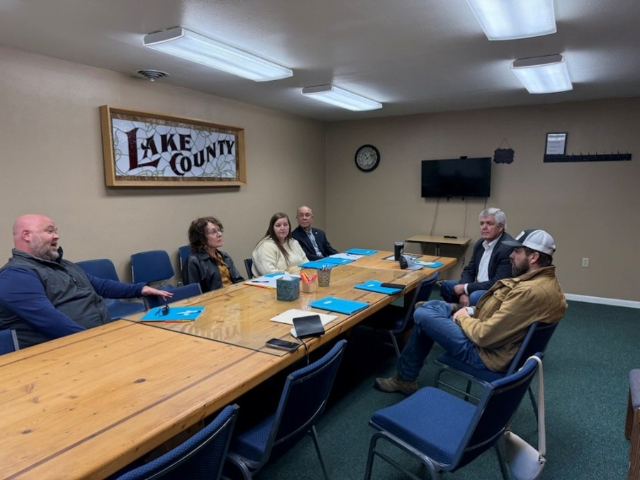
On Friday, October 23, I met with Mark Smith, Marie Tucker, Darian Telle, Scott Dayley, and Commissioner Williams of the Lake County Chamber of Commerce Board. We discussed the economic state of Lake County and the Chamber’s current projects including promoting tourism, supporting local businesses, and helping with neighborhood events like the Lake County Roundup and Irish Days.
We also discussed Lake Health District, the local hospital, and the green cement plant recently built in Lakeview.
BASO Board
On Wednesday, October 21, I also met with the Builders Association of Southern Oregon. We discussed the current state of mortgage and interest rates, housing affordability, and the National Flood Insurance Program Clarification Act. We also discussed the 21st Century ROAD to Housing Act, which became law in July.
County Commissioners Need to Make Volunteer Opportunities Accessible to Allow People to Maintain Medicaid Coverage
H.R. 1 (The Big Beautiful Bill) introduced work requirements for able-bodied people insured by Medicaid and on SNAP between the ages of 19-64. The able-bodied, unless found to be exempt for various reasons, must, as a condition of eligibility, work, volunteer, or attend school. The hours of work vary depending upon the minimum wage. The estimate is at least 80 hours a month, but it may be less.
As has been said many times, it takes all of us to make something like this work. To that end, I have suggested that hospitals, food banks, county commissioners, and others create lists of volunteer and work opportunities for those who are able bodied and who wish to remain eligible for these important programs.
In my many meetings with Oregon’s County Commissioners, hospitals, chambers of commerce and others, I have suggested that they help make local volunteer and employment opportunities easier to access by finding and posting them on their cities’ websites. Making these openings for work and volunteering easier to find will help Oregonians qualify for coverage and SNAP benefits.