|
Dear Neighbor,
This week in Washington, I joined an overwhelming bipartisan majority of members in U.S. House of Representatives who voted for the Ratepayer Protection Act.
This legislation makes it clear: data center companies -- not hardworking American families -- should pay for the power to run those facilities.
Below, I've outlined more details about the legislation and what it means for our communities here at home.
In this week's newsletter:
- The Ratepayer Protection Act passes the House
- How my legislation establishes tax framework for digital assets
- The 17th Annual Childhood Cancer Summit
- Two new editions of "Congress in the Community" are out now

The Ratepayer Protection Act passes the House
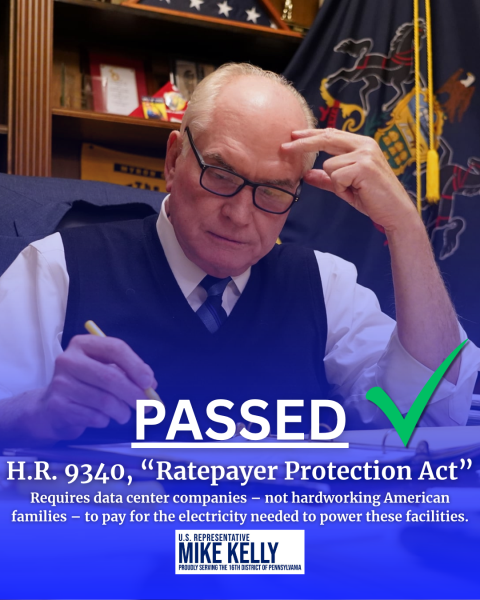
On Wednesday, I voted in favor of the Ratepayer Protection Act, legislation which codifies a Trump administration executive action requiring that the companies building data centers are the ones paying for the electricity needed to power them, instead of hardworking American families.
What the bill does:
- Protects consumers from rate increases resulting from data center construction by having state utility commissions consider large-load standards for data centers drawing more than 100 MW of power, which would ensure they pay for the full incremental costs to serve their loads.
- By drawing on existing Public Utility Regulatory Policies Act authorities, this light touch approach provides a federal recommendation while preserving state power to regulate electricity markets, drawing on what 24 states are already doing to protect residential homes and small businesses.
- By establishing large-load standards, states can ensure that American families are not left footing the bill for AI data center growth.
Pennsylvania families shouldn't be footing the bill to power data centers. This legislation puts local families first and reestablishes commonsense energy policy in the United States.
How my legislation establishes tax framework for digital assets
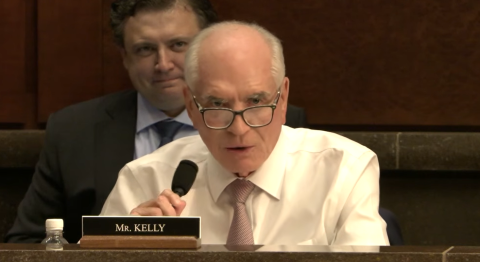
On Wednesday, the Ways & Means Committee passed the bipartisan H.R. 10357, the Digital Asset Tax Certainty Act, legislation I'm proud to co-lead as Chairman of the Ways & Means Tax Subcommittee. The bill, which passed by a 38-5 vote, provides a comprehensive framework for the tax treatment of digital assets, such as cryptocurrencies and stablecoins.
The legislation modernizes the federal tax code for digital assets by simplifying rules for ordinary crypto users while establishing clearer tax reporting and compliance requirements for investors, businesses, and digital-asset brokers, among others.
The Digital Asset Tax Certainty Act also includes my legislation, the Charitable Deductions for Digital Asset Donations Act, legislation that would allow for widely traded digital assets to be eligible for charitable contributions.
Digital assets are an increasingly important part of our economy, and the Digital Asset Tax Certainty Act allows our tax code to keep pace with innovation. This legislation provides a clear roadmap for Americans who use digital assets, and it establishes rules of the road for taxation and enforcement without granting special treatment.
Watch my full remarks here.
The 17th Annual Childhood Cancer Summit
.png "091726_mk_childhood_cancer_summit_(2).png")
As Co-Chair of the Congressional Childhood Cancer Caucus, I was honored to speak at the annual Childhood Cancer Summit on Capitol Hill. We were joined by children and families who shared their stories of trial and triumph. Hearing these stories is incredibly important as we work to fund pediatric cancer research and ultimately seek to find cures.
September is Childhood Cancer Awareness Month. It's a time to recognize the courageous children and families impacted by pediatric cancer, and the doctors and researchers working every day to find better treatments and cures.
As Co-Chair of the Congressional Childhood Cancer Caucus, and also of the House Cancer Caucus, I’m proud to continue supporting efforts that advance lifesaving research and give every child battling cancer hope for a brighter, healthier future.
Two new editions of "Congress in the Community" are out now
Our latest editions of "Congress in the Community" are now live on my YouTube channel!
Improving Healthcare for Pennsylvania Seniors
For the 35 million Americans, including more than 1.5 million Pennsylvanians, who are enrolled in Medicare Advantage, prior authorizations can be a big challenge. In many cases, they delay necessary care that is later approved anyway.
My legislation, the Improving Seniors' Timely Access to Care Act, would modernize this process.
Prior authorization is a tool used by health plans to reduce unnecessary care by requiring health care providers to get pre-approval for medical services. But it’s not without fault. The current system often results in unconfirmed faxes of a patient’s medical information or phone calls by clinicians which takes precious time away from delivering quality and timely care.
In this edition of Congress in the Community, we visit an Erie doctor who shares the real-world impact of delayed care his patients experience because of burdensome red tape related to prior authorizations.
How the Working Families Tax Cuts are Helping Local Small Businesses & Workers
The Working Families Tax Cuts leverage the tax code to work for Americans, not against them. The tax law has been a game changer for local small businesses and hardworking Pennsylvanians by allowing them to keep more of the money they earn. For small business owners, that means reinvesting the capital into their business. For workers, that means more take-home pay.
In this edition of Congress in the Community, we visit Saxonburg where owners of Sprankle's Neighborhood Market explain how the Working Families Tax Cuts law passed in 2025 is helping to grow their family-owned business and support employees for years to come.
You can watch the full Congress in the Community series on my YouTube channel.
As always, my team and I are here to serve you. If you need assistance with a federal agency, please contact us -- we are just one call or email away.
God Bless America!
Sincerely,
Mike Kelly
Member of Congress
Click here to subscribe to my eNewsletter |